Water Hyacinth
The water hyacinth is an aquatic plant belonging to the genus Eichhornia in the pickerelweed family (Pontederiaceae). Native primarily to tropical America…
What is Water hyacinth?
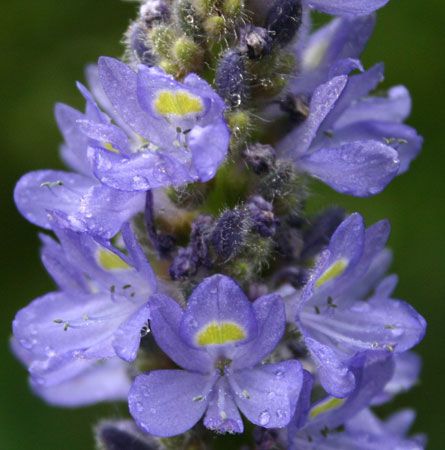
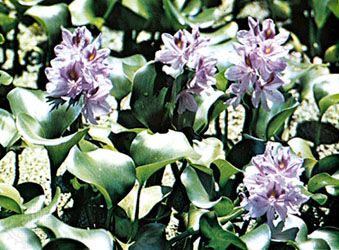
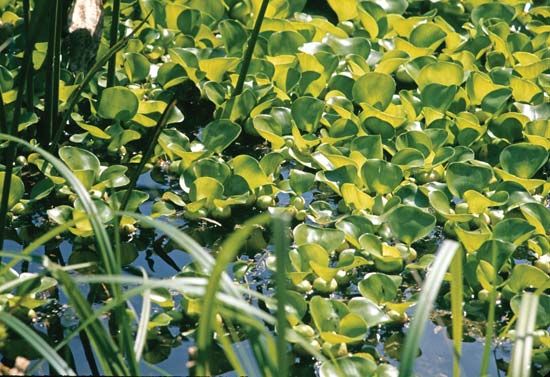
The water hyacinth is an aquatic plant belonging to the genus Eichhornia in the pickerelweed family (Pontederiaceae). Native primarily to tropical America, these plants feature feathery roots, rosettes of stalked leaves, and flowers arranged in spikes or clusters. While some species are rooted in muddy banks, others float in shallow water.1
The most widely distributed species is the common water hyacinth, which is often used as an ornamental in aquariums and outdoor pools. However, because it reproduces rapidly, it is considered an invasive species in many regions, such as the Nile River system. In these areas, the plant can cause significant disruption by clogging waterways, hindering boat travel, interfering with hydroelectric power generation, and threatening local fishing-based economies.12
How do invasive species disrupt local ecosystems?
Invasive species disrupt local ecosystems by modifying or displacing native organisms, often leading to a reduction in biodiversity and the potential for localized extinction. These species frequently thrive in new environments because they lack natural predators to keep their populations in check, allowing them to outcompete indigenous species for essential resources like food, sunlight, and living space.34
The mechanisms of disruption include:
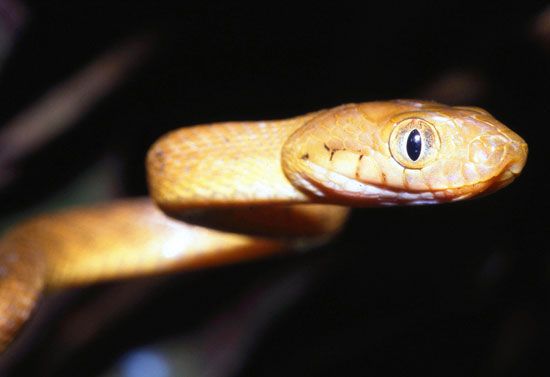
- Predation: Invasive predators, such as the brown tree snake on Guam or feral cats on islands, can decimate native prey populations that have no evolutionary experience with them.354
- Resource Competition: Species like Asian carp consume vast amounts of food, effectively starving out native fish, while plants like kudzu deprive native flora of necessary sunlight.34
- Disease Transmission: Invasive organisms often act as vectors for parasites and pathogens, spreading diseases to native populations that lack natural resistance.34
- Hybridization: Introduced species may interbreed with rare native species, genetically swamping them and threatening their survival.5
What methods are used to control the spread of water hyacinth?
To control the spread of the water hyacinth, various management strategies are employed, primarily focusing on biological control methods.
Biological Control
Biological control is often preferred due to its long-term ecological benefits compared to chemical alternatives. This approach involves introducing natural predators to environments where the plant has spread without its native enemies.
- Invertebrates: The giant ramshorn snail (Marisa cornuarietis) is known to feed on water hyacinth, helping to keep its population in check.1
- Vertebrates: Certain fish species, such as the grass carp, are utilized to manage aquatic vegetation, including water hyacinth, by consuming the plants.1
Considerations and Limitations
While biological control is a powerful tool, it is not without risks or limitations:
- Periodic Effectiveness: Populations of the plant may fluctuate in cycles; as the predator population declines due to a lack of food, the weed may recover.1
- Ecological Risk: Introducing non-native organisms to control a pest can be hazardous, as these control agents may themselves become invasive pests in the new habitat.1
- Scope: Biological methods are generally most effective in uncultivated areas and are less feasible for managing weeds within annual crop systems, where herbicides are often more practical.1
What are some other examples of invasive aquatic plants?
Beyond the water hyacinth, several other aquatic plants have become invasive, often causing significant disruption to local waterways and native ecosystems:
- Eurasian water milfoil (Myriophyllum spicatum): This submerged plant is considered an invasive species in North America and various other regions outside its native range. It reproduces readily through both sexual means and asexual fragmentation, allowing it to spread rapidly.8
- Purple loosestrife (Lythrum salicaria): Native to Eurasia, this plant was introduced to North America in the 19th century. It is now classified as a noxious weed in many parts of the United States and Canada, where it forms dense colonies that crowd out native wetland vegetation, negatively impacting food sources and habitats for local wildlife.910
- Canadian waterweed (Elodea canadensis): While native to the New World, this species has naturalized in Africa, Asia, Australia, and Europe. It is known to be an obstacle to lake navigation and, like other invasive aquatic plants, reproduces easily through fragmentation.11
- Brazilian elodea (Egeria densa): Similar to the Canadian waterweed, this species is widely recognized for its fast growth and has established itself as an invasive presence in various quiet waterways.11
Sources
- water hyacinth — Encyclopædia Britannica
- 11 Fascinating Nile River Plants and Animals — Encyclopædia Britannica
- invasive species — Encyclopædia Britannica
- invasive species - Solutions — Encyclopædia Britannica
- conservation - Introduced species — Encyclopædia Britannica
- invasive species - A global problem — Encyclopædia Britannica
- weed - Biological control — Encyclopædia Britannica
- water milfoil — Encyclopædia Britannica
- loosestrife — Encyclopædia Britannica
- Elodea — Encyclopædia Britannica
- Seed - Dispersal by water — Encyclopædia Britannica
- Seed dispersal - Hydrochory: dispersal by water — Encyclopædia Britannica
Published on · 3 min read