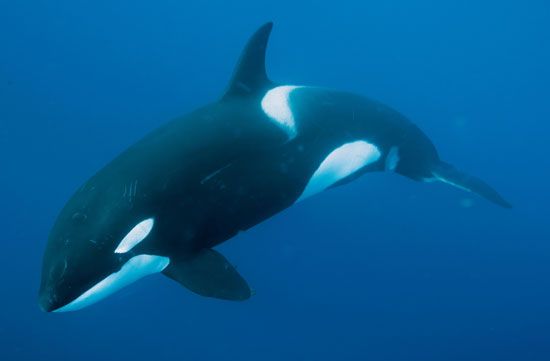
What Is the Loudest Animal on Earth?
The sperm whale is recognized as the loudest animal on Earth, capable of producing clicks that reach an astonishing 230 decibels. These powerful…
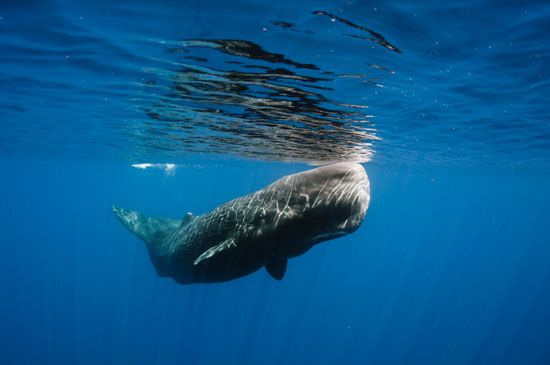
What is the loudest animal on Earth?
The sperm whale is recognized as the loudest animal on Earth, capable of producing clicks that reach an astonishing 230 decibels. These powerful vocalizations are primarily used for echolocation, allowing the whales to navigate and hunt in the deep ocean.1
It is important to note that while sperm whale clicks are exceptionally intense, some biologists have also identified blue whales as producing the loudest sounds known from any animal. Blue whales generate extremely low-frequency, powerful sounds that can potentially travel across entire ocean basins, serving as a means of long-range communication. Because the decibel scale is logarithmic, comparing the intensity of these different types of vocalizations—high-frequency clicks versus low-frequency calls—highlights the diverse ways marine mammals utilize sound.21
How does echolocation help whales navigate the deep ocean?
Toothed whales utilize echolocation—a biological form of sonar—to navigate and hunt in the deep ocean, an environment where light is often limited. By emitting a rapid series of high-frequency clicks, these animals create sound waves that travel through the water and reflect off objects, such as prey or obstacles, returning to the whale as echoes.453
The process functions through several key mechanisms:
- Sound Production: Toothed whales generate these clicks using specialized structures, including the larynx and complex nasal passages associated with the blowhole. In species like the sperm whale, massive fatty structures known as the “melon” or “junk” assist in the emission and focusing of these sounds.46
- Spatial Resolution: By analyzing the returning echoes, whales can determine an object’s size, shape, and distance. Because sound travels faster in water than in air, whales use extremely high frequencies—up to 200,000 hertz—to achieve the precision necessary for effective object discrimination.547
- Environmental Awareness: This sensory mechanism allows whales to navigate featureless waters, avoid obstacles, and locate food even in total darkness or murky conditions.45
What is the difference between vocal and mechanical sound production in animals?
In the animal kingdom, sound production is categorized based on the biological mechanisms used to initiate information transmission. The primary distinction lies between vocal and mechanical methods.2
Vocal Sound Production
Vocal sounds are produced exclusively within the respiratory system and are restricted to vertebrate animals.2
- Mechanism: These sounds are generated by moving air through specialized structures. In mammals, this occurs in the larynx, while birds utilize the syrinx, both of which are modifications of the trachea.2
- Resonance: Animals may use the mouth, or specialized outpouchings of the esophagus or trachea, to filter or resonate these vocalizations.2
Mechanical Sound Production
Mechanical sounds are produced by the contact of body parts with each other or with elements in the environment. This method is used by many invertebrates and some members of all vertebrate classes.2
- Invertebrates: Many insects use stridulation, such as crickets and grasshoppers rubbing rasplike structures on their wings. Others, like cicadas, use specialized membranous timbal organs.28
- Vertebrates: Mechanical sounds include birds using modified feathers during flight, the tail tip of a rattlesnake, or aquatic mammals slapping the water with their tails. Some fishes produce sound by moving bones or teeth against one another, often using the swim bladder as a resonator.2
How do insects like cicadas create such loud noises?
Male cicadas create their characteristic, high-volume sounds using a specialized organ called the tymbal organ, which is almost unique among insects.1011
Each male possesses a pair of these circular, ridged membranes located on the sides of the first abdominal segment. The process works as follows:1011
- Muscle Contraction: A powerful tymbal muscle attached to the membrane contracts, causing the membrane to bend and produce a sharp clicking sound.1011
- Rapid Vibration: When the muscle relaxes, the tymbal springs back to its original position due to its own elasticity. This cycle of contraction and relaxation occurs between 120 and 480 times per second, which is fast enough to create a continuous sound to the human ear.1011
- Amplification: Cicadas possess large, internal air sacs that act as resonance chambers. These chambers have resonant frequencies that match the vibrations of the tymbals, significantly amplifying the sound and producing the loud, high-pitched buzzing associated with late summer.1011
These songs are used primarily by males to establish territory, attract females, or signal distress.1012
Sources
- What is the loudest animal on Earth? — Encyclopædia Britannica
- sound production — Encyclopædia Britannica
- cetacean - Sound production and communication — Encyclopædia Britannica
- sound reception - Echolocation in other mammals — Encyclopædia Britannica
- Echolocation — Encyclopædia Britannica
- seawater - Acoustic properties — Encyclopædia Britannica
- Why do whales sing? — Encyclopædia Britannica
- sound reception - Auditory structure of mammals — Encyclopædia Britannica
- Orthoptera - Sound production and hearing — Encyclopædia Britannica
- Why are cicadas so noisy? — Encyclopædia Britannica
- homopteran - Sound production — Encyclopædia Britannica
- cicada — Encyclopædia Britannica
- heteropteran - Sound production and reception — Encyclopædia Britannica
Published on · 3 min read