What Would Happen If All the Bees Died?
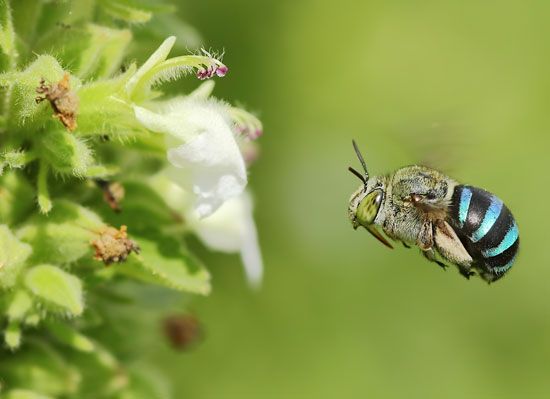
If all of the world’s approximately 20,000 bee species were to die off, the consequences for global ecosystems and human society would be profound.
What Would Happen If All the Bees Died?
If all of the world’s approximately 20,000 bee species were to die off, the consequences for global ecosystems and human society would be profound.
Ecological Impact
Bees are essential pollinators that have coevolved with many flowering plants. Their disappearance would trigger a dramatic decline in plant biodiversity. Plants that rely exclusively on specific bees for pollination, such as many bee orchids, would likely face extinction without human intervention1. This loss would disrupt food webs, affecting wildlife that depends on these plants for food and shelter, as well as predators like bee-eater birds that rely on bees as a food source.12
Agricultural Consequences
While a total bee die-off would not cause global famine—as primary human calorie sources like cereal grains are wind-pollinated—it would severely impact human nutrition. The production of many fruits and vegetables, such as blueberries, cherries, and almonds, would become significantly more expensive and labor-intensive. Hand-pollination is not a scalable solution, and current robotic alternatives remain prohibitively costly.21
What are the main differences between honeybees and solitary bee species?
The primary distinction between honeybees and solitary bees lies in their social structure, nesting habits, and life cycles. While honeybees are highly organized social insects, the vast majority of bee species are solitary.67
Social Structure and Castes
- Honeybees: These bees live in complex, permanent colonies that function as a single organism. They exhibit a strict division of labor among distinct castes: a single fertile queen, thousands of sterile female workers, and male drones. Communication is maintained through pheromones and sophisticated behaviors, such as dancelike movements used to share information about food sources.87
- Solitary Bees: These bees do not live in colonies and have no castes. Each female is responsible for her own nest, where she performs all the tasks of construction and provisioning.69
Nesting and Life Cycle
- Honeybees: They build elaborate wax honeycombs to store food and rear their young. Their colonies are perennial, often persisting for years through the process of swarming, where a queen and a portion of the workers leave to establish a new home.810
- Solitary Bees: Most solitary bees nest in ground burrows, wood, or plant stems. They provide all the food their larvae will need at once, seal the cell, and move on to the next. Because they do not have a colony to support them, many solitary species are short-lived as adults, often in flight for only a few weeks of the year.69
How do neonicotinoids and other pesticides specifically harm bee health?
Neonicotinoids are a class of systemic insecticides that pose significant risks to bee health by contaminating the pollen and nectar of treated plants. Because these chemicals are absorbed into the plant’s tissues, they remain present throughout the plant’s life, exposing foraging bees to toxic substances even when the pesticide was applied long before blooming.123
Mechanisms of Harm
- Neurological Impact: Neonicotinoids bind to nicotinic receptors in the insect’s central nervous system, causing paralysis and death.3
- Sublethal Effects: Even at low concentrations, these chemicals can impair a bee’s ability to navigate and locate food sources. They are also associated with suppressed immune function, which leaves bees more vulnerable to pathogens and parasites, such as the varroa mite.133
- Synergistic Stress: Pesticide exposure often works in tandem with other stressors—including habitat loss, poor nutrition, and disease—to weaken colonies and contribute to colony collapse disorder.1314
Other pesticides can also contaminate food stores and beeswax, further compromising the health of the hive. Due to these environmental concerns, the use of neonicotinoids has been heavily restricted in the European Union and several other regions.1331
What role do varroa mites play in the decline of honeybee colonies?
The varroa mite (Varroa destructor) is a significant threat to western honeybee populations worldwide, acting as a primary driver of colony decline and colony collapse disorder (CCD).1516
How Varroa Mites Harm Colonies
- Direct Parasitism: As ectoparasites, female mites attach to adult bees and brood, feeding on their tissues. This weakens individual bees, often resulting in malformations or underweight development.1516
- Disease Transmission: Mites act as vectors for harmful viruses, such as the deformed wing virus. These infections cause severe physical damage to bees’ wings, bodies, and legs, which is often more lethal than the mites’ feeding alone.1516
- Colony Collapse: If left untreated, a varroa infestation typically destroys a honeybee colony within two to three years. The mites spread rapidly between hives through “drifter bees,” human intervention, and colony raiding.1516
- Synergistic Stress: Mite infestations often compound other stressors, including pesticide exposure, which may suppress the bees’ immune systems and increase their vulnerability to the parasites.16
Sources
- What Would Happen If All the Bees Died? — Encyclopædia Britannica
- Why are bees important? — Encyclopædia Britannica
- colony collapse disorder - Suspected causes — Encyclopædia Britannica
- Botanical Sex: 9 Alluring Adaptations — Encyclopædia Britannica
- colony collapse disorder - History of CCD and its economic impact — Encyclopædia Britannica
- How long do queen bees live? — Encyclopædia Britannica
- bee — Encyclopædia Britannica
- Hymenoptera - Solitary forms — Encyclopædia Britannica
- insect - Insect societies — Encyclopædia Britannica
- western honeybee - Colony and life cycle — Encyclopædia Britannica
- Hymenoptera - Social forms — Encyclopædia Britannica
- Neonicotinoid: Top Questions — Encyclopædia Britannica
- Neonicotinoid — Encyclopædia Britannica
- Pesticide — Encyclopædia Britannica
- varroa mite: Top Questions — Encyclopædia Britannica
- varroa mite — Encyclopædia Britannica
Published on · 4 min read