Why Are Bees Important?
Bees are essential to the health of our planet, primarily serving as the world's most important insect pollinators. Their role in the reproduction of…
Why are bees important?
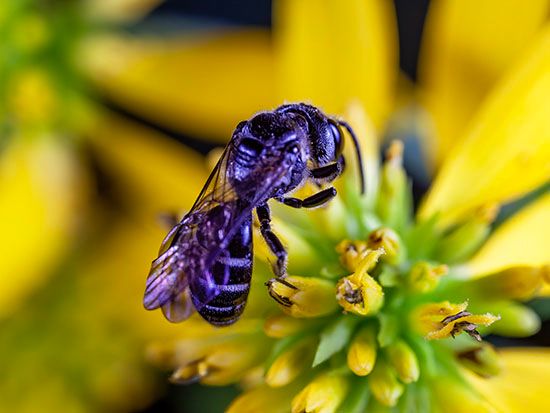
Bees are essential to the health of our planet, primarily serving as the world’s most important insect pollinators. Their role in the reproduction of flowering plants is vital for maintaining biodiversity and supporting complex ecosystems.12
Agricultural Impact
Bees are critical to agriculture, as they pollinate approximately 90 crops in the United States alone, including almonds, apples, and blueberries. While staple cereal grains are wind-pollinated, the loss of bees would drastically reduce the availability and diversity of fresh produce, making fruits and vegetables significantly more expensive and difficult to grow.12
Ecological Importance
Beyond food production, bees sustain the food web by supporting plants that provide habitat and sustenance for diverse wildlife. Because many plants have coevolved with specific bee species, a decline in bee populations threatens to trigger a ripple effect of extinctions and habitat degradation.12
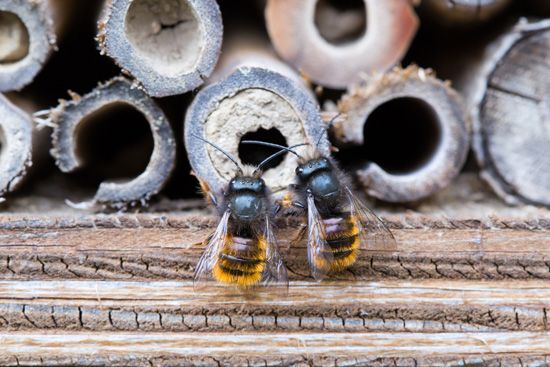
What is colony collapse disorder?
Colony collapse disorder (CCD) is a mysterious phenomenon affecting western honeybee (Apis mellifera) colonies, first reported in the United States in 2006. It is characterized by the sudden disappearance of adult worker bees from a hive, leaving behind the queen, immature bees, and food stores like honey and pollen.345
Characteristics and Impact
Affected hives often show evidence of recent brood rearing, yet the adult population vanishes, seemingly due to an impaired ability to navigate back to the hive. Interestingly, these abandoned colonies often experience delayed robbing by other bees and slower-than-normal infestations by common pests like wax moths. While the disorder has been reported globally, its impact has been most severe in the United States, posing a significant threat to the $15 billion worth of crops pollinated by honeybees annually.34
Suspected Causes
The exact cause remains unknown, though researchers suspect a combination of factors acting synergistically:34
- Pathogens and Parasites: Hives often contain high levels of viruses, Nosema species, and the invasive varroa mite, which weakens bees and transmits diseases.64
- Chemical Exposure: Pesticides, particularly neonicotinoids, are suspected of impairing bee immune function and navigation.64
- Environmental Stress: Factors such as poor nutrition, lack of genetic diversity, and the use of certain antimicrobial agents like fumagillin may increase colony susceptibility.64
We could dive deeper into the specific genomics research being used to identify these underlying causes.
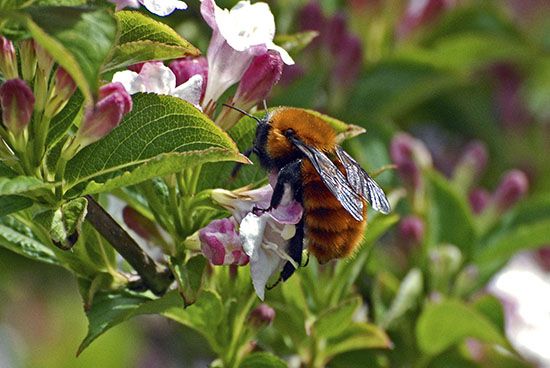
How do bees and flowers coevolve?
The coevolution of bees and flowering plants is a remarkable example of mutualism, where both groups have developed specialized traits to ensure their survival and reproduction.78
Evolutionary Adaptations
As flowering plants evolved, they moved beyond simple “deceit” or wind pollination by producing nectar—a sugar-rich reward—to attract pollinators. In response, bees evolved physical and behavioral adaptations to access this food source, including long tongues for reaching deep into flowers and hairy bodies or specialized “pollen baskets” to collect and transport pollen.910
Sensory and Structural Synchronization
- Visual Signaling: Bees can perceive ultraviolet light, allowing them to follow “nectar guides”—patterns on petals invisible to humans that point toward the nectar.910
- Floral Design: Many “bee flowers” feature landing platforms that allow bees to sit comfortably while they push into the flower, ensuring efficient pollen transfer.9
- Buzz Pollination: Some plants, such as tomatoes, have evolved to release pollen only when vibrated at specific frequencies, a behavior known as sonication that limits access to specific bee species.8
- Deception: In extreme cases, such as the bee orchid, plants have evolved to mimic the scent and appearance of female bees to trick males into facilitating pollination.8
What are the main threats to bee populations?
Bee populations worldwide are facing significant declines due to a combination of interconnected environmental and human-driven factors. The primary threats include:
- Pests and Diseases: Honeybee colonies are frequently devastated by parasites, most notably the varroa mite and Tropilaelaps clareae, which weaken bees and act as vectors for various diseases. Other serious threats include bacterial infections like American foulbrood and microsporidian infections such as Nosema disease.1112
- Chemical Exposure: The widespread use of insecticides, particularly neonicotinoids, poses a major risk. These systemic chemicals can contaminate pollen and nectar, causing lethal or sublethal effects such as impaired navigation, weakened immune systems, and reduced reproductive success.132
- Colony Collapse Disorder (CCD): This mysterious phenomenon, first reported in 2006, involves the sudden disappearance of adult worker bees from a hive. While the exact cause remains unknown, it is suspected to be a synergistic result of multiple stressors, including pathogens, pesticides, and poor nutrition.11132
- Habitat Loss and Climate Change: Deforestation, urbanization, and the loss of floral diversity reduce the food sources and nesting sites necessary for bee survival. Additionally, global warming is increasingly cited as a driver of population declines for various bee species.214
Sources
- Why are bees important? — Encyclopædia Britannica
- What Would Happen If All the Bees Died? — Encyclopædia Britannica
- colony collapse disorder — Encyclopædia Britannica
- colony collapse disorder - Suspected causes — Encyclopædia Britannica
- Beekeeping - Colony collapse disorder — Encyclopædia Britannica
- colony collapse disorder — Merriam-Webster
- Pollination - Bees — Encyclopædia Britannica
- Pollination - Evolution of insect pollination — Encyclopædia Britannica
- community ecology - Convergence — Encyclopædia Britannica
- Botanical Sex: 9 Alluring Adaptations — Encyclopædia Britannica
- western honeybee - Pests and diseases — Encyclopædia Britannica
- Neonicotinoid — Encyclopædia Britannica
- Beekeeping - Diseases — Encyclopædia Britannica
- stingless bee — Encyclopædia Britannica
Published on · 4 min read