Zorille
The term "zorille" refers to the zorille (Ictonyx striatus), which is an African carnivore belonging to the weasel family (Mustelidae). It is important to…
What is zorille?
The term “zorille” refers to the zorille (Ictonyx striatus), which is an African carnivore belonging to the weasel family (Mustelidae). It is important to distinguish this animal from the “zorillo,” which is a completely different organism—a tropical American shrub or small tree known for its skunklike odor.12
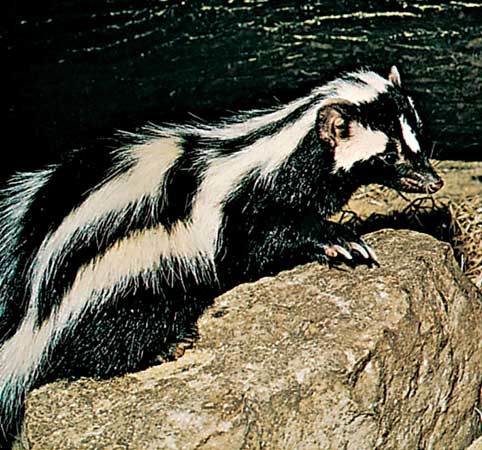
The zorille is a solitary, nocturnal hunter that feeds primarily on insects and rodents. Physically, it is characterized by a slender body measuring 29–39 cm in length, long black fur with white stripes on the back, white spots on the face, and a bushy white tail.1
What other animals belong to the weasel family?
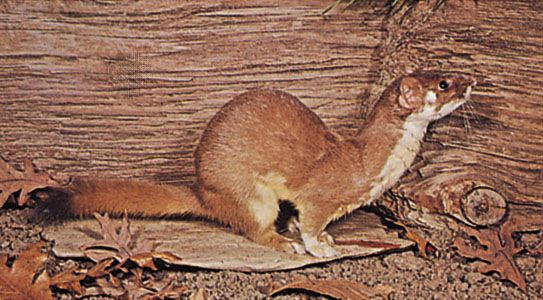
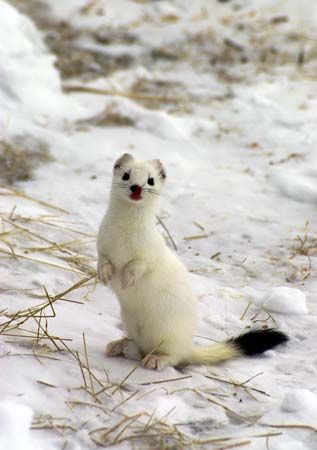
The family Mustelidae comprises approximately 62 species of fur-bearing carnivores. While the family is named after the weasel, it includes a diverse array of animals categorized into eight subfamilies.3
Key members of the weasel family include:
- Otters (Lutrinae): Including freshwater otters, the sea otter, and the giant otter.43
- Badgers: Such as the Eurasian badger, American badger, and ferret-badgers.43
- Martens and Relatives (Guloninae): Including martens, the fisher, the sable, the tayra, and the wolverine.43
- Polecats and Allies (Ictonychinae): Including grisons, the marbled polecat, the Patagonian weasel, and the zorille.43
- Other Mustelids: The honey badger, mink, and ferrets.43
Notably, while skunks were historically classified as mustelids, genetic research has placed them in their own separate family, Mephitidae.43
How do nocturnal animals adapt to hunting at night?
Nocturnal animals have evolved a variety of specialized adaptations to hunt and navigate effectively in low-light environments. These adaptations primarily involve enhanced sensory perception and behavioral strategies.
Sensory Adaptations
- Vision: Many nocturnal animals possess specialized eye structures to maximize light intake. For example, cats have slit pupils that can expand wide in dim light to improve night vision and constrict in bright light to protect the retina. Some species, such as certain bats, can make visual discriminations at light levels far lower than humans can.67
- Hearing: Auditory cues are critical for many nocturnal hunters. Owls are well-known for their ability to locate and capture prey in total darkness by listening for the rustling sounds of small animals on the ground.8
- Echolocation: Highly refined auditory systems allow animals like bats and dolphins to navigate and detect prey by emitting sounds and interpreting the returning echoes. This process provides a sense of spatial awareness that approaches the reliability of vision.9
- Other Senses: Predators like coyotes rely on a combination of keen vision, smell, and hearing to track and seize prey at night.10
Behavioral Strategies
Nocturnal activity provides a significant advantage by allowing predators to hunt prey when it is inactive or sleeping. Furthermore, foraging at night protects many species from visual predators and the physiological stresses of daytime heat and low humidity, which can lead to water loss.11
Why do some animals develop strong odors as a defense mechanism?
Many animals develop strong odors as a defense mechanism to deter predators and protect themselves from threats. This chemical strategy is employed by a wide range of species, from vertebrates to insects, to create an environment that is offensive or repellent to potential attackers.1314
Mechanisms of Defense
- Chemical Composition: Animals like the skunk utilize specialized anal glands to produce a potent, noxious liquid containing sulfur compounds known as thiols and thioacetates. These compounds are highly offensive and persistent, often breaking down slowly in the air to maintain their strength.1314
- Ejection and Volatilization: Many insects, such as stinkbugs, beetles, and stick insects, possess glands that release volatile compounds upon contact with air. Some species can even eject these sprays over a distance to ward off predators.14
- Warning and Learning: Strong odors often serve as a conspicuous signal, particularly in species that also produce poisons. This association helps predators learn to avoid the animal, thereby enhancing the overall protective effect of the chemical defense.14
Before resorting to chemical discharge, many animals engage in warning behaviors—such as the skunk’s posturing—to give threats a chance to retreat, which helps the animal conserve its limited supply of defensive fluid.1314
Sources
- zorille — Encyclopædia Britannica
- zorillo — Merriam-Webster
- weasel — Encyclopædia Britannica
- List of mustelids — Encyclopædia Britannica
- mustelid — Encyclopædia Britannica
- Why do cats have slit pupils? — Encyclopædia Britannica
- sound reception - Uses of hearing in birds — Encyclopædia Britannica
- bat - Activity patterns — Encyclopædia Britannica
- sound reception — Encyclopædia Britannica
- Spotted owl: Top Questions — Encyclopædia Britannica
- coyote: Top Questions — Encyclopædia Britannica
- bat - Senses — Encyclopædia Britannica
- Why do skunks spray? — Encyclopædia Britannica
- Chemoreception - Defensive odors — Encyclopædia Britannica
- Chemoreception - Predator chemical cues and prey escape — Encyclopædia Britannica
- Chemoreception - Pheromones — Encyclopædia Britannica
Published on · 3 min read