Zygopetalum
Zygopetalum is a genus comprising 15 species of tropical American orchids belonging to the family Orchidaceae. Several species are popular as ornamentals…
What is Zygopetalum?
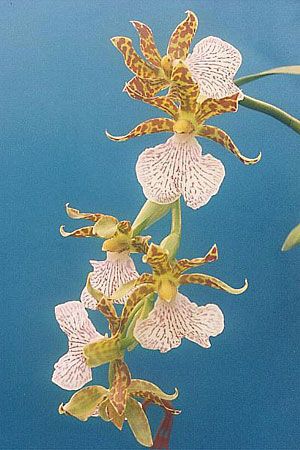
Zygopetalum is a genus comprising 15 species of tropical American orchids belonging to the family Orchidaceae. Several species are popular as ornamentals, and many attractive hybrids have been developed for cultivation.12
Most species in this genus are epiphytic, meaning they grow on other plants rather than in the soil. They are characterized by egg-shaped pseudobulbs—swollen stems—that support two or more long, thin leaves. Their flowers are often noted for being long-lasting and fragrant, particularly in species such as Zygopetalum mackayi and Z. intermedium. These blooms typically feature green petals and sepals marked with purple or brown spots, complemented by a white lip streaked with purple. The flowering spikes can reach heights of up to 60 cm (24 inches).1
What does it mean for a plant to be epiphytic?
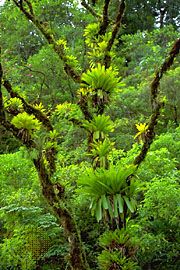
An epiphyte is a plant that grows upon another plant or object solely for physical support. Unlike parasitic plants, which derive water or nutrients from a host, epiphytes do not harm the plants they grow on and have no attachment to the ground or other nutrient sources in the soil.34
Because they live above the ground, often in dense forest canopies, epiphytes have evolved to capture resources from their environment:
- Water: They absorb moisture from rain and water vapor in the air, often using specialized roots or leaves.3
- Nutrients: They typically obtain minerals from organic debris, such as decaying leaves, that collects on the supporting plant.3
- Dispersal: Many rely on wind to spread their dustlike or feathery seeds, though some use fruits to attract animals for dispersal.3
Common examples include many orchids, ferns, mosses, and members of the Bromeliaceae family.35
How do pseudobulbs help orchids survive?
Pseudobulbs are specialized, thickened stem structures found in many orchids, particularly those that are epiphytic. While these structures vary in shape—ranging from those with multiple internodes to those consisting of a single internode—they serve as vital storage organs for the plant.67
By acting as reservoirs, pseudobulbs allow orchids to store water and nutrients. This adaptation is essential for survival in environments where water availability may be inconsistent, such as in the forest canopy where epiphytes do not have access to soil moisture. These bulblike stems enable the plant to endure periods of drought by providing a reserve of hydration and energy, supporting the orchid’s growth and metabolic functions during times when external resources are scarce.68
We could dive deeper into how other plant structures, such as rhizomes, contribute to the survival strategies of different orchid species.
What are some other popular types of orchids?
The Orchidaceae family is incredibly diverse, comprising approximately 26,000 species. Beyond the well-known varieties, many other genera are popular for their unique appearances and horticultural appeal.2
Popular Orchid Genera and Types
- Moth orchid (Phalaenopsis): Highly popular as houseplants, these are prized for their long-lasting, elegant flowers in shades of white, purple, and pink.9
- Cattleya: Often recognized for their large, showy, and fragrant blooms, they are a staple in the commercial flower trade.2
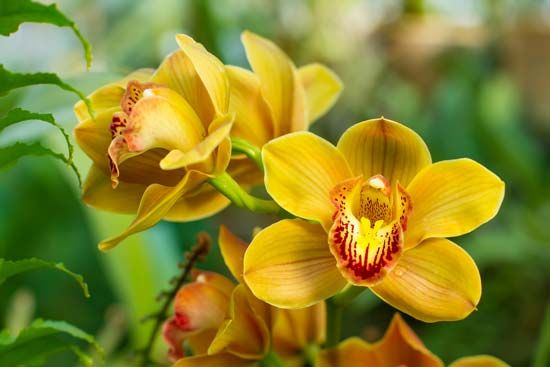
- Cymbidium: Known for their long, arching sprays of flowers, these are frequently used in floral arrangements.2
- Oncidium: Frequently called “dancing ladies” due to their flower shape, these orchids often produce long sprays of yellow or brown blossoms.210
- Dendrobium: A large and varied genus that includes many species popular in cultivation for their diverse flower forms and colors.2
- Lady’s slipper: Distinguished by their unique, pouch-shaped labellum (lip), these are highly sought after by collectors.2
- Vanda: Known for their vibrant, often patterned flowers and their ability to thrive in warm, humid conditions.2
This list represents only a small fraction of the family’s vast diversity, which ranges from bucket orchids to the economically significant vanilla orchid.2
Sources
- Zygopetalum — Encyclopædia Britannica
- list of plants in the family Orchidaceae — Encyclopædia Britannica
- Epiphyte — Encyclopædia Britannica
- Did you know? — Merriam-Webster
- Parasitic plant — Encyclopædia Britannica
- orchid - Growth forms — Encyclopædia Britannica
- Bulbophyllum — Encyclopædia Britannica
- pseudobulb — Merriam-Webster
- Oncidium — Encyclopædia Britannica
- orchid - Ecology — Encyclopædia Britannica
- moth orchid — Encyclopædia Britannica
Published on · 3 min read