8 Buzzworthy Types of Bees
While honeybees are the most well-known, there are over 20,000 species of bees worldwide, most of which are essential pollinators. Here are eight fascinating…
What are 8 Buzzworthy Types of Bees?
While honeybees are the most well-known, there are over 20,000 species of bees worldwide, most of which are essential pollinators. Here are eight fascinating groups of bees:
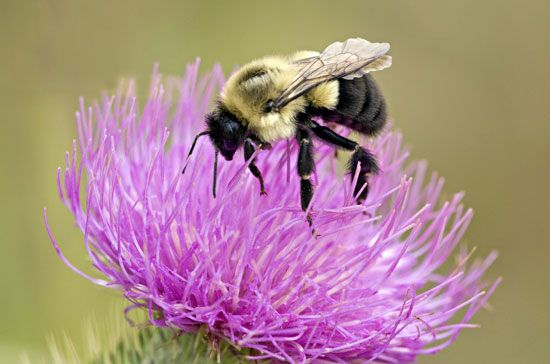
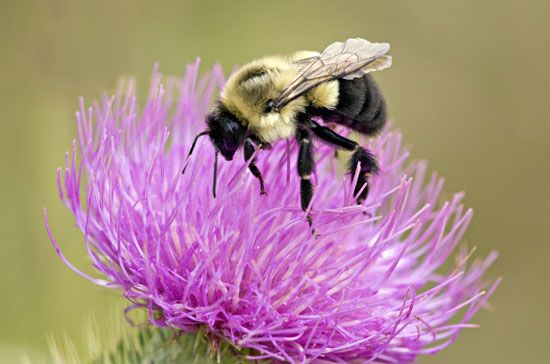
- Bumblebees: Large, robust, and social insects, these efficient pollinators are vital for many crops and wild plants.1
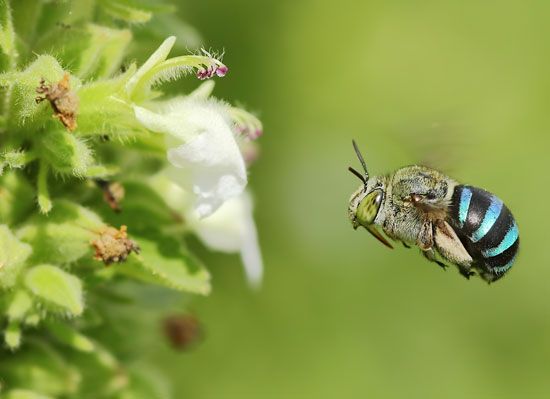
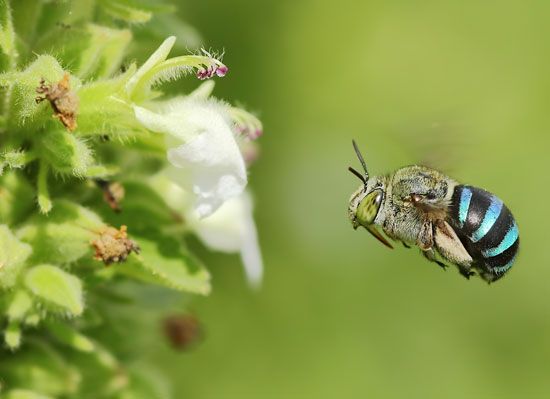
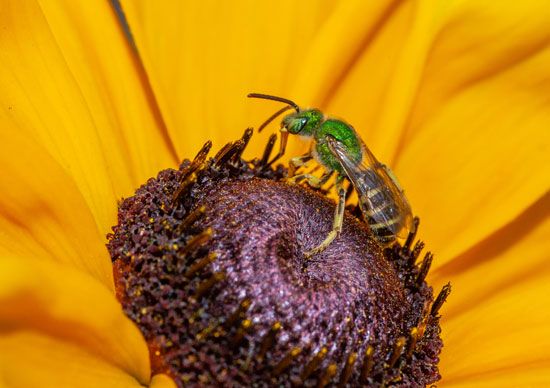
- Sweat bees: A diverse family of small, often metallic-colored bees that are generally non-aggressive and attracted to human perspiration.1
- Plasterer bees: Solitary, ground-nesting bees that line their brood cells with a protective, cellophane-like polyester compound.1
- Carpenter bees: Known for excavating nests in wood, these solitary bees are important pollinators, though they are sometimes considered structural pests.12
- Mining bees: Solitary bees that nest in the ground, often creating elaborate, branching tunnels for their young.1
- Leaf-cutter bees: These bees line their nests with circular leaf pieces and are unique for collecting pollen on their abdomens rather than their legs.1
- Mason bees: Gentle, solitary bees that use mud to seal their nesting chambers; they are highly valued in agriculture for their pollination efficiency.13
- Euglossine bees: Also called orchid bees, these colorful insects are crucial pollinators of tropical orchids and are found throughout the Americas.1
What is the difference between solitary bees and social bees?
The primary difference between solitary and social bees lies in their nesting habits, social structure, and methods of caring for their young.
Solitary Bees
Most bee species are solitary, meaning they do not live in colonies. In these species:5
- Independence: Each female constructs and provisions her own nest, typically a burrow in the ground, in wood, or in the pith of twigs.5
- No Castes: There is no division of labor or social hierarchy; every female is fertile and performs all tasks, including nest building and foraging.5
- Provisioning: Solitary bees provide all the food (pollen and nectar) their larvae will need to complete development at the time the nest cell is sealed.5
- Lifespan: Adults are generally short-lived, often in flight for only a few weeks of the year.5
Social Bees
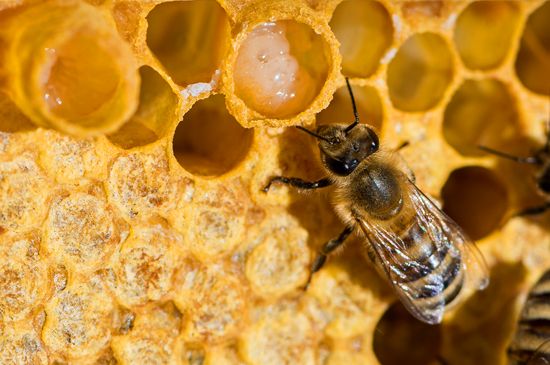
Social bees, such as honeybees, bumblebees, and stingless bees, live in family communities where individuals are dependent on the group for survival.675
- Division of Labor: Colonies feature distinct castes, such as a queen and female workers, who perform specialized roles like nest building, defense, and brood care.78
- Progressive Feeding: Unlike solitary bees, social bees feed their young progressively throughout their development.5
- Communication: Members coordinate activities through complex behaviors and chemical signals known as pheromones.8
How do bees collect and transport pollen back to their nests?
Bees have evolved specialized physical adaptations to collect and transport pollen back to their nests. Female bees, which perform all nest-provisioning duties, use hairs on their forelegs and middle legs to brush pollen from flowers and from their own bodies during flight.910
Once collected, the pollen is transferred to specific pollen-bearing structures:
- Scopa: Many bees possess a scopa, a collection of long hairs located on the hind legs or the underside of the abdomen. In leaf-cutter bees, for example, the scopa is restricted to the abdomen.9
- Pollen Basket: Social bees, such as honeybees and bumblebees, feature a specialized pollen basket (corbicula) on the outer side of their hind tibiae, consisting of long hairs surrounding a smooth area.911
- Internal Transport: Some bees, such as certain plasterer bees, lack external pollen-carrying structures. Instead, they mix pollen with nectar and carry it internally within their crop, the anterior portion of the digestive tract.9
Why are many bee populations currently in decline?
Bee populations worldwide are currently in decline due to a combination of environmental and biological stressors. While the exact causes for many declines remain under investigation, researchers have identified several primary factors contributing to this trend:
- Habitat Loss: The destruction of natural environments and deforestation have significantly reduced the nesting sites and floral resources necessary for bee survival.1213
- Pesticide Exposure: The use of insecticides and herbicides poses a major threat. In particular, neonicotinoids—systemic pesticides that permeate all parts of a plant, including nectar and pollen—can cause paralysis and death in bees. Even at sublethal levels, these chemicals can impair a bee’s ability to navigate, weaken its immune system, and increase susceptibility to disease.1214
- Pests and Diseases: Colonies are frequently devastated by nonnative parasites, such as the varroa mite, which act as vectors for crippling diseases.1514
- Colony Collapse Disorder (CCD): First reported in 2006, this disorder is characterized by the sudden disappearance of adult worker bees from a hive, leaving behind the queen and immature bees. While the cause is unknown, it is suspected to result from a mix of stressors, including pathogens, pesticides, and environmental changes.151612
- Climate Change: Global warming is increasingly cited as a factor that disrupts the delicate balance between bees and the flowers they pollinate.1213
Sources
- 8 Buzzworthy Types of Bees — Encyclopædia Britannica
- mason bee — Encyclopædia Britannica
- carpenter bee — Encyclopædia Britannica
- western honeybee — Encyclopædia Britannica
- How long do queen bees live? — Encyclopædia Britannica
- Hymenoptera - Social forms — Encyclopædia Britannica
- bee — Encyclopædia Britannica
- insect - Insect societies — Encyclopædia Britannica
- Hymenoptera - Special adaptations — Encyclopædia Britannica
- Pollination - Bees — Encyclopædia Britannica
- bee: Top Questions — Encyclopædia Britannica
- western honeybee - Pests and diseases — Encyclopædia Britannica
- colony collapse disorder — Merriam-Webster
- What Would Happen If All the Bees Died? — Encyclopædia Britannica
- Neonicotinoid — Encyclopædia Britannica
- Beekeeping - Honeybees — Encyclopædia Britannica
- stingless bee — Encyclopædia Britannica
Published on · 4 min read