Black Mountain Range
The Black Mountains are a mountain range located in Yancey and Buncombe counties in western North Carolina, U.S. As part of the Appalachian Mountains, this…
What is Black Mountain Range?
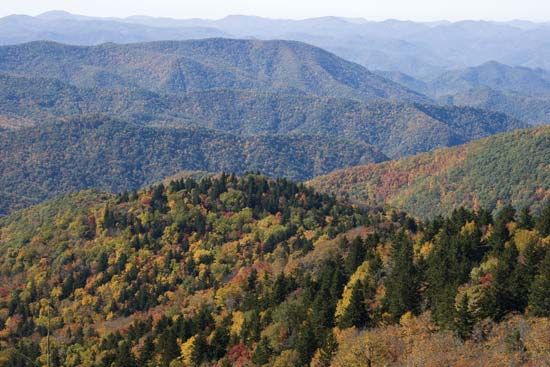
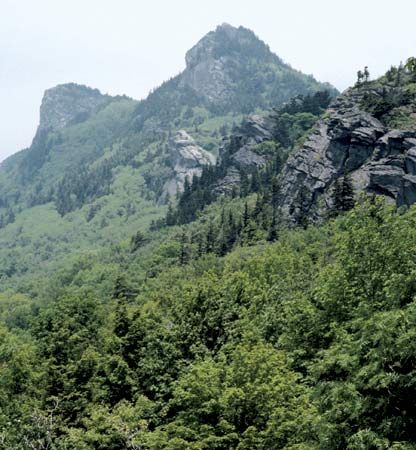
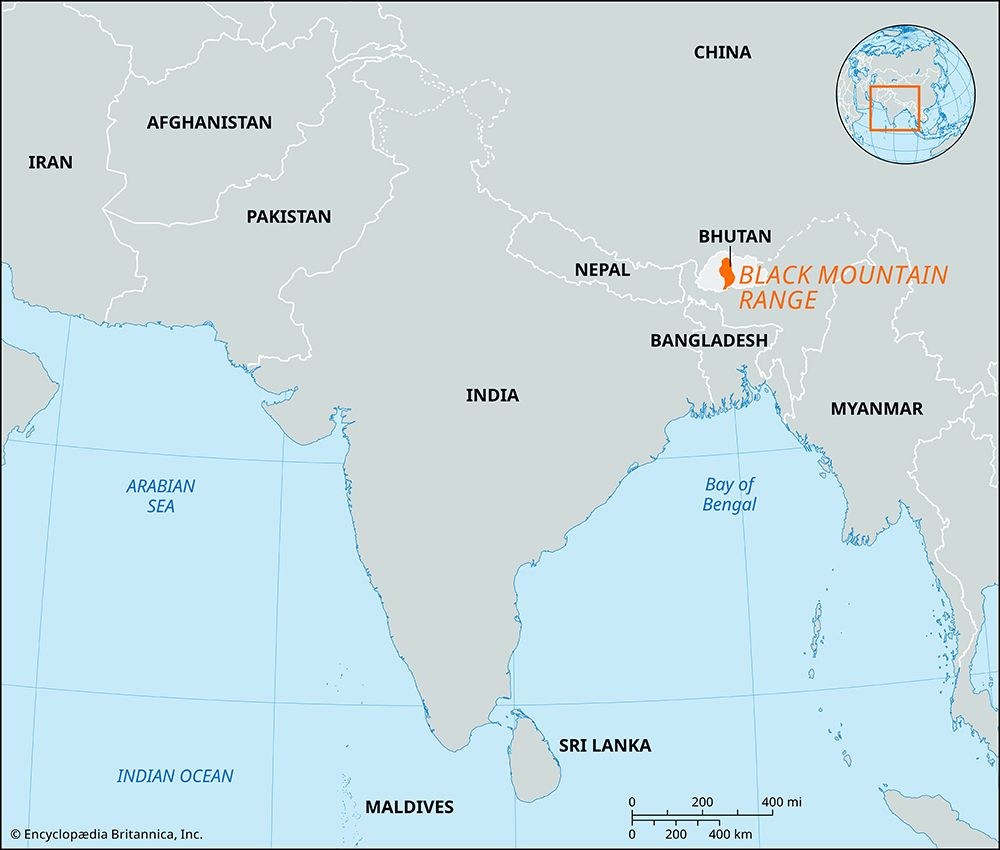
The Black Mountains are a mountain range located in Yancey and Buncombe counties in western North Carolina, U.S. As part of the Appalachian Mountains, this range extends north from the Blue Ridge and is situated within the Pisgah National Forest.12
The range is notable for containing Mount Mitchell, which, at 6,684 feet (2,037 meters), is the highest point in the United States east of the Mississippi River. Because the Black Mountains were not affected by glaciation, their slopes are heavily wooded and covered with soil up to the summits, with the exception of occasional rocky precipices. Today, the area serves as a popular destination for outdoor recreation.13
What are the Appalachian Mountains?
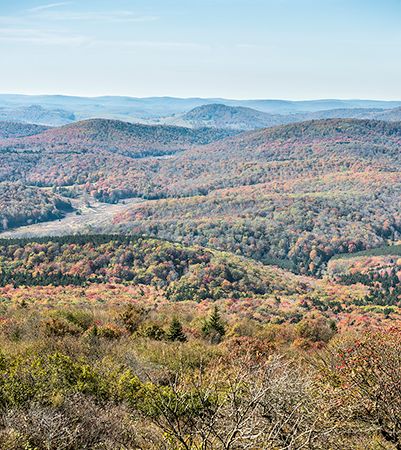
The Appalachian Mountains are a vast highland system in North America, serving as the eastern counterpart to the Rocky Mountains. Stretching nearly 2,000 miles from the Canadian province of Newfoundland and Labrador to central Alabama in the United States, they act as a natural barrier between the eastern Coastal Plain and the Interior Lowlands.4
Geology and Physiography
Among the oldest mountains on Earth, the Appalachians were formed by ancient tectonic upheavals and shaped over millions of years by water and ice. The system is divided into three regions:5
- Northern: Includes ranges like the White Mountains and Green Mountains.6
- Central: Features the Catskill Mountains and Allegheny Mountains.6
- Southern: Includes the Blue Ridge, Great Smoky Mountains, and the Cumberland Mountains.6
The highest point in the entire system is Mount Mitchell (6,684 feet) in North Carolina.6
Ecology and Economy
The region is home to diverse deciduous forests and complex floral provinces. Historically, the mountains provided essential resources like coal, iron, and timber, which fueled industrial growth but also led to environmental challenges such as pollution and deforestation.78
How do mountain ranges form?
Mountain ranges are primarily formed through orogeny, a mountain-building process driven by plate tectonics. These ranges exist because tectonic forces elevate terrain faster than erosion can wear it down.9
The primary mechanisms for mountain formation include:
- Convergent Plate Boundaries: When tectonic plates collide, the immense pressure causes the Earth’s crust to crumple, fold, and fault. This can occur through the subduction of oceanic plates, the accretion of terranes, or the collision of two large continents, such as the process that created the Himalayas.101112
- Volcanism: As plates move, magma can rise through openings in the crust to form volcanic mountains. This is common in subduction zones, such as the Pacific Ring of Fire, where oceanic plates sink beneath continental plates.12
- Block Faulting: When the crust is stretched or pulled apart, large blocks of rock may tilt or shift along faults. This process creates ranges with steep, rugged terrain, such as the Sierra Nevada or rift-related mountains.1312
Additionally, residual mountains are formed when erosion wears away surrounding rock, leaving behind more resistant peaks.1312
What kind of wildlife lives in the Pisgah National Forest?
The Pisgah National Forest, located within the southern Appalachian Mountains of North Carolina, supports a diverse array of wildlife characteristic of the region’s complex deciduous forests.
Mammals
The forest is home to several common North American mammals. Larger species include the black bear and white-tailed deer. Smaller animals frequently found throughout the area include raccoons, foxes, squirrels, rabbits, opossums, and wild boars.77
Birds and Fish
The region supports abundant birdlife, including various songbirds and game birds. Common species in North Carolina’s mountain areas include cardinals, wrens, mockingbirds, chickadees, and numerous types of woodpeckers and warblers. In the mountain streams, anglers and nature enthusiasts can find brook trout and rainbow trout.7
Sources
- Black Mountains — Encyclopædia Britannica
- Mount Mitchell — Encyclopædia Britannica
- Black Mountains — Merriam-Webster
- Appalachian Mountains — Encyclopædia Britannica
- Appalachian Mountains - Geology of the Appalachian Mountains — Encyclopædia Britannica
- Appalachian Mountains - Physiography — Encyclopædia Britannica
- Appalachian Mountains - Plant and animal life — Encyclopædia Britannica
- Appalachian Mountains - Economic growth — Encyclopædia Britannica
- orogeny — Encyclopædia Britannica
- mountain - Tectonic processes that produce high elevations — Encyclopædia Britannica
- plate tectonics - Mountain building — Encyclopædia Britannica
- continental landform - Orogenic geomorphic systems — Encyclopædia Britannica
- mountain - Geomorphic characteristics — Encyclopædia Britannica
- How are mountains formed? — Encyclopædia Britannica
- North Carolina - Plant and animal life — Encyclopædia Britannica
Published on · 3 min read