Hayman Island
Hayman Island is the northernmost of the Cumberland Islands, situated at the northern entrance to the Whitsunday Passage in the Coral Sea, off the coast of…
What is Hayman Island?
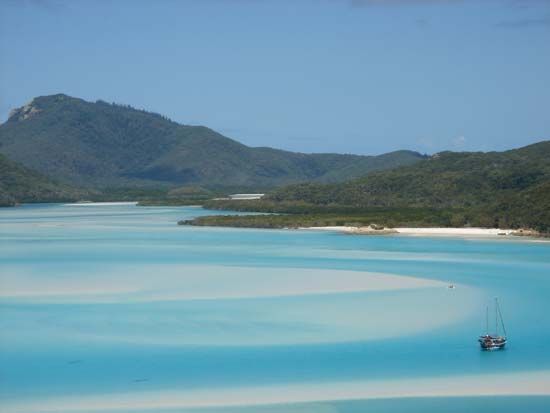
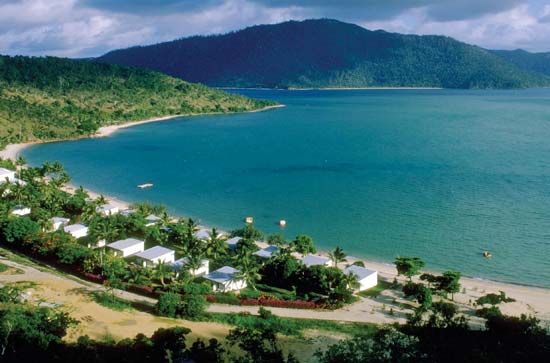
Hayman Island is the northernmost of the Cumberland Islands, situated at the northern entrance to the Whitsunday Passage in the Coral Sea, off the coast of Queensland, Australia.1
This inshore, coral-fringed continental island spans approximately 960 acres (390 hectares). Its geography is characterized by red granite coastal cliffs reaching 200 feet (60 m) in height, rising to forested hills that exceed 840 feet (255 m).1
Recognized as one of the most prominent resorts of the Great Barrier Reef, the island was designated a national park in 1941 and serves as a protected bird sanctuary.1
What makes the Great Barrier Reef a unique ecosystem?
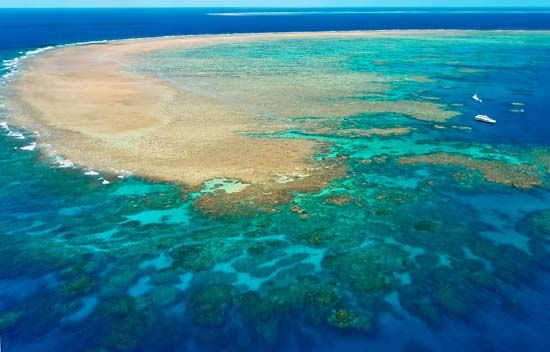
The Great Barrier Reef is a unique and complex ecosystem that stands as the largest reef complex in the world, spanning approximately 135,000 square miles off the coast of Australia. Its distinctiveness arises from several key factors:3
- Biological Foundation: The reef is built over millions of years by the calcareous remains of tiny coral polyps and hydrocorals, bound together by coralline algae and bryozoans.3
- Exceptional Biodiversity: As a vital marine habitat, it supports at least 450 species of hard coral, over 1,500 species of fishes, and a vast array of sea turtles, sharks, mollusks, and birds.3
- Symbiotic Relationships: The ecosystem relies on a critical symbiosis between corals and photosynthetic algae called zooxanthellae. These algae provide food for the coral and accelerate the formation of the calcium carbonate skeleton.34
- Environmental Sensitivity: The reef thrives in warm, clear waters but is highly susceptible to coral bleaching, a process where stressful conditions—often driven by climate change—cause the loss of zooxanthellae, threatening the survival of the entire colony.34
How are continental islands formed differently from coral cays?
Continental islands and coral cays are formed through fundamentally different geological processes.
Continental Islands
Continental islands are composed of continental crust, which is primarily granitic in composition and significantly thicker and less dense than oceanic crust. These islands are typically formed at subduction zones where tectonic plates converge. Through processes such as the accumulation of volcanic arcs or the scraping of material from subducting plates, this crustal material builds up over time to form large, stable landmasses that float higher in the Earth’s mantle.5
Coral Cays
In contrast, a coral cay is a small, low-lying island formed entirely from organic material derived from coral reefs. Their formation occurs through two primary methods:6
- Accretion: Waves and currents transport sediment, coral fragments, and reef detritus onto the surface of a reef platform. This material accumulates, often on the leeward side of the reef, and is eventually stabilized by the precipitation of calcium carbonate, which cements the grains into beach rock.678
- Uplift: Occasionally, crustal movements can raise an entire reef system above sea level, creating a rocky, often karst-like island.6
Unlike the stable, massive continental crust, cays are precarious features that remain vulnerable to erosion and destruction by storms and hurricanes.68
What are some other famous islands in the Whitsunday group?
The Whitsunday group is part of the Cumberland Islands, an archipelago consisting of more than 70 inner continental islands located off the coast of Queensland, Australia.11
Beyond the well-known Whitsunday Island and Hayman Island, other notable islands in this chain include:
- Lindeman Island
- Brampton Island
- Molle Island
- Long Island
- Hook Island
- Dent Island
These islands are characterized by their high, wooded cliffs and are primarily continental in origin, distinguishing them from the nearby coral formations of the Great Barrier Reef. Today, much of this chain serves as a protected reserve area, having transitioned from its history of timber harvesting to a popular destination for tourism and conservation.11112
Sources
- Hayman Island — Encyclopædia Britannica
- list of islands - Australia — Encyclopædia Britannica
- Great Barrier Reef — Encyclopædia Britannica
- Coral Bleaching: A Threat to Our Reefs — Encyclopædia Britannica
- coral island — Encyclopædia Britannica
- coral reef - Winds , currents, temperature, and salinity — Encyclopædia Britannica
- continental crust — Encyclopædia Britannica
- cay — Encyclopædia Britannica
- coral reef - Corals and other reef-building organisms — Encyclopædia Britannica
- island arc — Encyclopædia Britannica
- Whitsunday Island — Encyclopædia Britannica
- Cumberland Islands — Encyclopædia Britannica
Published on · 3 min read