Lady Fern
The lady fern (Athyrium filix-femina) is a large, feathery fern belonging to the family Athyriaceae, widely cultivated for its ornamental value. It thrives…
What is Lady fern?
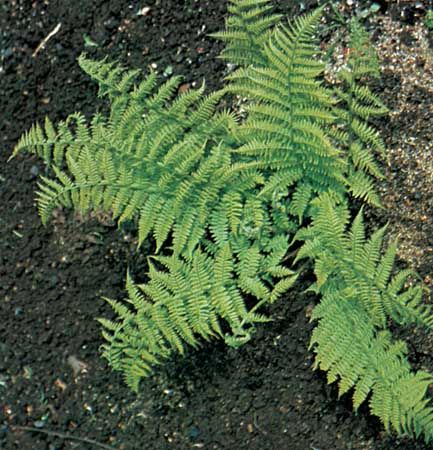
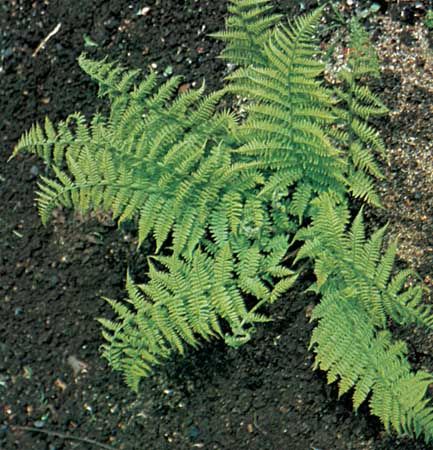
The lady fern (Athyrium filix-femina) is a large, feathery fern belonging to the family Athyriaceae, widely cultivated for its ornamental value. It thrives in moist, semi-shaded environments throughout the world’s temperate zones.1
The plant is characterized by deciduous leaves that grow in circular clusters, typically reaching 75 cm in length. A defining feature of the genus is its sori—curved or horseshoe-shaped clusters that produce spores—which are protected by a fringed membrane known as an indusium. While the taxonomy can vary, it is often categorized into the common lady fern, narrow lady fern, and southern lady fern. Additionally, the rhizomes and young leaves of the plant are considered edible once properly cooked.1
How do ferns reproduce using spores?
Ferns reproduce through a complex life cycle that alternates between two distinct stages: the sporophyte and the gametophyte.4
The Sporophyte Stage
The mature, leafy fern plant is the sporophyte. It produces haploid spores inside specialized structures called sporangia. These sporangia are often grouped into clusters known as sori, which are typically found on the undersides of the fronds. In many species, these clusters are protected by a membrane called an indusium. Once mature, the spores are released and dispersed by wind.456
The Gametophyte Stage
If a spore lands in a suitable, moist environment, it germinates to form a tiny, heart-shaped or ribbonlike sexual plant called a prothallium. This gametophyte produces male and female sex organs, which release sperm and eggs. When fertilization occurs, a zygote is formed, which eventually grows into a new, independent sporophyte plant, completing the cycle.45
While this sexual process is vital for colonization, many ferns also reproduce vegetatively through rhizomes or other offshoots to form large colonies.47
What are the differences between ferns and flowering plants?
While ferns and flowering plants (angiosperms) both possess vascular tissue and a dominant, independent sporophyte generation, they differ significantly in their reproductive strategies and structural complexity.910
Key Differences
- Reproduction: Ferns reproduce via spores, which are dispersed into the environment to grow into small, free-living gametophytes (prothalli). In contrast, flowering plants reproduce via seeds. Their gametophytes are highly reduced, non-free-living, and protected within the sporophyte.910
- Fertilization: Fern sperm are flagellated and require water to swim to the egg. Flowering plants have evolved pollen tubes, which deliver nonflagellated sperm directly to the egg, removing the dependency on external water for fertilization.9
- Dispersal: Ferns rely on spores, which have limited survival capacity. Flowering plants use seeds, which contain an embryo, food-storage tissue, and a protective coat, significantly improving survival and dispersal.9
- Structural Growth: Flowering plants exhibit lateral branching and secondary growth (producing wood via vascular cambium), whereas ferns generally lack these specific developmental patterns.9
What other types of plants thrive in moist, shaded environments?
Beyond ferns, many other plants are well-adapted to thrive in moist, shaded environments.
Mosses
Mosses (division Bryophyta) are perhaps the most iconic plants of these habitats. They are small, nonvascular, spore-bearing plants that commonly carpet woodland and forest floors. They play a vital ecological role by breaking down substrata, aiding in soil erosion control, and helping to regulate the water economy of their environment.13
Fern Allies and Other “Mosses”
It is important to note that many plants with “moss” in their name are not true mosses:
- Fern moss (genus Thuidium): These plants form mats on soil, rocks, and logs and possess fernlike branches.14
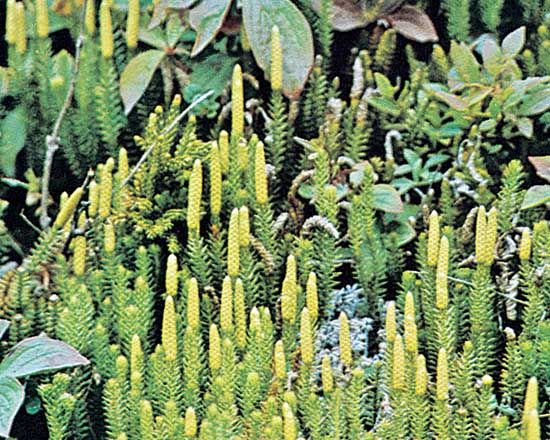
- Club mosses: These are actually fern allies belonging to the family Lycopodiaceae.13
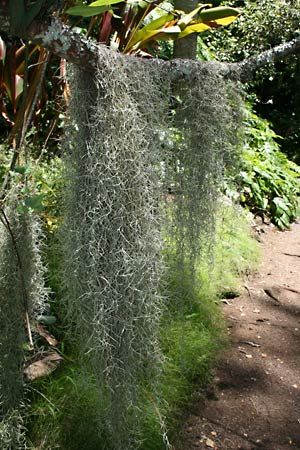
- Spanish moss: Despite its name, this is an epiphyte (air plant) in the pineapple family (Bromeliaceae).13
Adaptations to Moisture
Plants in supermoist (hydric) environments often exhibit specific structural traits to manage their surroundings. Unlike plants in dry habitats, these species typically have thinner epidermal walls, reduced cuticles, and larger air spaces within their mesophyll to facilitate gas exchange.15
Sources
- Lady fern — Encyclopædia Britannica
- lady fern — Merriam-Webster
- female fern — Merriam-Webster
- Fern - Life cycle — Encyclopædia Britannica
- Plant reproductive system - Ferns — Encyclopædia Britannica
- Fern - The sorus — Encyclopædia Britannica
- Fern - Ecology — Encyclopædia Britannica
- water fern — Encyclopædia Britannica
- Plant - Seed plants — Encyclopædia Britannica
- Angiosperm - Paleobotany and evolution — Encyclopædia Britannica
- Reproduction - Life cycles of plants — Encyclopædia Britannica
- cycadophyte - Seed ferns — Encyclopædia Britannica
- houseplant - Types of houseplants — Encyclopædia Britannica
- fern moss — Encyclopædia Britannica
- moss — Encyclopædia Britannica
- Tree - Leaf adaptations — Encyclopædia Britannica
Published on · 3 min read