Lituites
Lituites is a genus of extinct cephalopods, which were primitive animals related to the modern pearly nautilus. These organisms lived during the Ordovician…
What is Lituites?
Lituites is a genus of extinct cephalopods, which were primitive animals related to the modern pearly nautilus. These organisms lived during the Ordovician Period, which occurred approximately 488 million to 444 million years ago.1
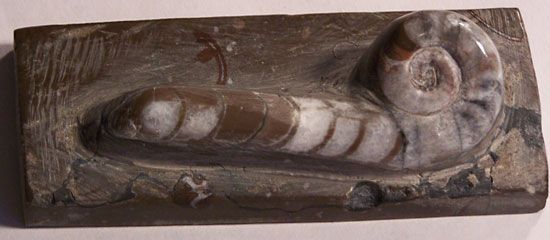
The most distinctive feature of Lituites is its shell, which is composed of serially arranged chambers. The shell exhibits a unique growth pattern: it begins as a tightly coiled structure during the animal’s youth, but as the organism matures, the shell straightens out to form a long, expanding tube. The sutures—the lines where the internal chamber walls meet the outer shell—appear as simple lines. Fossils of these creatures are typically found in marine rock formations.12
How does the shell of Lituites compare to a modern nautilus?
The shell of Lituites differs significantly from that of the modern nautilus. While the modern nautilus possesses a shell that is closely coiled throughout its entire life, the shell of Lituites exhibits a distinct, two-part growth pattern.145
- Growth Pattern: Lituites began its life with a tightly coiled shell, similar to the modern nautilus. However, as the organism matured, the shell stopped coiling and extended into a long, straight, and expanding tube.15
- Structure: Both organisms feature shells composed of serially arranged chambers, which are characteristic of nautiloids. In Lituites, the sutures—the lines where internal partitions meet the outer shell—appear as simple lines.1
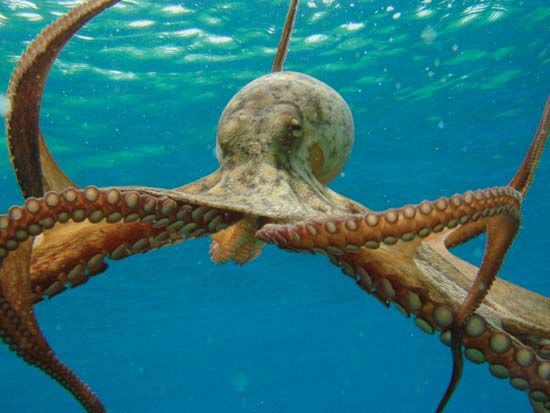
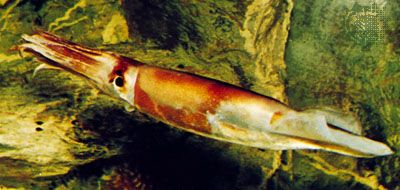
In contrast, modern cephalopods like the octopus and squid have evolved to possess internal or degenerate shells, a major departure from the external, chambered shells found in their ancient ancestors.6
What was the environment like during the Ordovician Period?
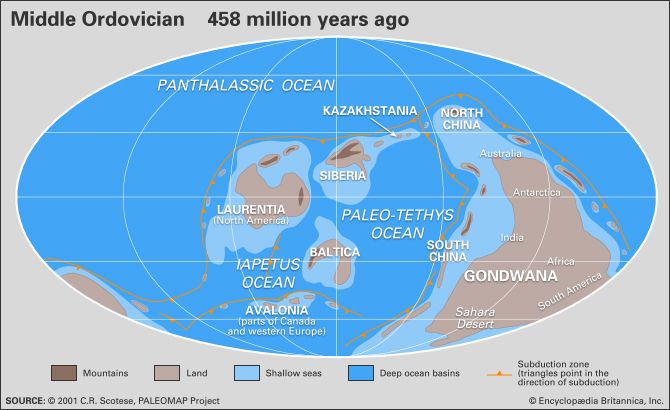
The Ordovician Period (approximately 485.4 to 443.8 million years ago) was a time of profound environmental transformation characterized by significant shifts in plate tectonics, climate, and biological systems.89
Paleogeography and Climate
Rapid seafloor spreading at oceanic ridges led to some of the highest global sea levels in the Phanerozoic Eon. This caused widespread flooding of continents, with vast shallow seas covering much of the interior of North America. Atmospheric carbon dioxide levels were estimated to be several times higher than today, generally fostering warm climates from the Equator to the poles. However, the period concluded with a dramatic environmental shift: rapid expansion of continental ice sheets on Gondwana triggered a sharp drop in sea level and a major mass extinction event.8109
Biological Life
The period is famous for the “Ordovician radiation,” an intense diversification of marine life that saw the emergence of almost every modern phylum of marine invertebrate. Seas were dominated by brachiopods, bryozoans, trilobites, mollusks, echinoderms, and graptolites, alongside the rise of early fish. On land, the first plants and potentially the first terrestrial arthropods appeared.8911
How do scientists use fossils to learn about extinct cephalopods?
Scientists rely heavily on the physical characteristics of shells to study extinct cephalopods, as these hard structures are the most likely parts to be preserved in the fossil record. Because many ancient cephalopods possessed external, chambered shells, paleontologists analyze several key features to classify them and understand their evolutionary history:1
- Shell Morphology: Scientists examine the general shape of the shell, the specific type of coiling (such as the transition from coiled to straight growth seen in Lituites), and any external sculpture or patterns on the shell surface.61
- Suture Lines: The lines where internal partitions, or septa, meet the outer shell are known as sutures. These patterns are critical for identification; for example, the elaborate suture lines found in ammonites allow scientists to easily identify different species.6121
- Index Fossils: Due to their rapid evolution, abundance, and distinct shell features, certain cephalopods like ammonites serve as index fossils. By identifying these fossils in rock layers, scientists can correlate different geological strata and develop precise relative time scales for Earth’s history.12
Sources
- Lituites — Encyclopædia Britannica
- Lituites — Merriam-Webster
- lituite — Merriam-Webster
- Ceratites — Encyclopædia Britannica
- nautiloid — Merriam-Webster
- cephalopod - Evolution and paleontology — Encyclopædia Britannica
- Nautilidae — Merriam-Webster
- A Journey Through Time Since the Precambrian - Ordovician Period: 485.4 million to 443.4 million years ago — Encyclopædia Britannica
- Ordovician Period - Invertebrates — Encyclopædia Britannica
- Ordovician Period - Sea level — Encyclopædia Britannica
- Ordovician Period — Encyclopædia Britannica
- Jurassic Period - Protists and invertebrates — Encyclopædia Britannica
- cephalopod - Distinguishing taxonomic features — Encyclopædia Britannica
- Vertebrate - Evolution and paleontology — Encyclopædia Britannica
Published on · 3 min read