Supplejack
Supplejack refers to various woody climbing plants characterized by their tough, pliant stems. The term is most commonly associated with Berchemia scandens…
What is supplejack?
Supplejack refers to various woody climbing plants characterized by their tough, pliant stems. The term is most commonly associated with Berchemia scandens, also known as the rattan vine, which belongs to the buckthorn family (Rhamnaceae)1.1
Found primarily in the central and southern United States, this vine is known for its ability to climb to the tops of trees. Its physical characteristics include:
- Leaves: Alternate and elliptical, measuring between 3 and 7.5 cm (1.25 to 3 inches) in length.2
- Flowers: Small and greenish-white, appearing in terminal clusters.2
- Fruit: A bluish-black berry approximately 1 cm in diameter.2
The name is derived from the word “supple” and the name “Jack,” a common convention used historically to denote various objects and roles.1
What other plants belong to the buckthorn family?
The Rhamnaceae family, commonly known as the buckthorn family, includes a diverse range of trees and shrubs. Beyond the well-known buckthorn (Rhamnus), the family encompasses several species valued for their timber, medicinal properties, and ecological roles.34
Notable members of the Rhamnaceae family include:
- Jujube trees: Ziziphus jujuba (Chinese jujube), Ziziphus mauritiana (Indian jujube), and Z. spina-christi (Arabian jujube) are significant for their timber and fruit.4
- Timber species: Maesopsis eminii (African umbrella tree) and Pomaderris apetala (Australian hazel) are recognized for their valuable wood.4
- Medicinal plants: Rhamnus purshiana (cascara buckthorn) is the source of cascara sagrada, a well-known cathartic drug.34
- Ornamentals and shrubs: Various species, such as Rhamnus alaternus (Italian buckthorn), Rhamnus californica, and Rhamnus crocea (redberry), are frequently cultivated for their aesthetic value.34
- Ecological contributors: Many members are essential components of chaparral plant associations, which play a critical role in erosion and flood control.4
How do climbing plants like vines adapt to reach sunlight?
Climbing plants, or vines, have evolved specialized mechanisms to reach sunlight by utilizing external structures for support. Because their stems often lack the rigidity to stand upright, they employ various strategies to ascend toward light sources, a process often guided by phototropism—the tendency of a plant to grow toward light.89
These plants adapt through several distinct methods:
- Tendrils: Many vines produce specialized, sensitive structures called tendrils. Through thigmotropism, these tendrils “feel” for solid objects; upon contact, they curl around the support to anchor the plant as it climbs.89
- Twining Stems: Some plants, such as honeysuckle and hops, possess stems that grow in a spiral manner, physically twisting around a host plant or structure to gain height.8
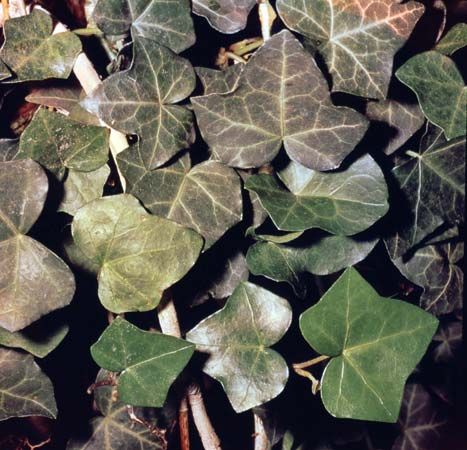
- Adventitious Roots: Known as root climbers, plants like English ivy develop specialized adventitious roots that grip rocks, trees, or other surfaces, allowing them to scale vertical supports.1011
By securing themselves to these supports, vines can elevate their leaves to access the sunlight necessary for photosynthesis, effectively competing for resources in crowded environments.8
What are some other examples of woody climbing plants?
Woody climbing plants, often referred to as lianas when found in tropical forests, are plants that utilize woody stems to climb or twine around other structures to reach sunlight. While some plants are strictly herbaceous, others develop true woody tissues that allow them to persist and grow over many years.138
Beyond general categories like lianas, several specific examples of woody perennial climbers include:
- Ivies: Various species of ivy are well-known for their ability to scale vertical surfaces.1415
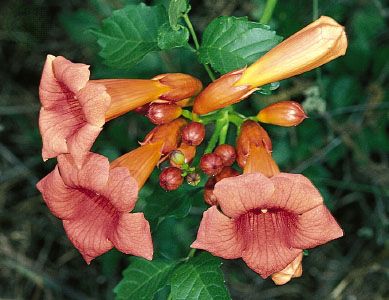
- Trumpet Creeper: Known scientifically as Campsis radicans (or Bignonia), this is a popular woody climber often used in gardens.15
- Clematis: These clematis species are widely cultivated for their ornamental value as woody climbers.15
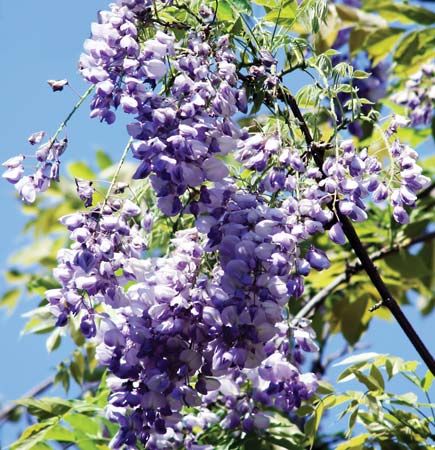
- Wisteria: Specifically Wisteria sinensis, this plant is a classic example of a woody perennial climber.15
- Climbing Roses: Certain varieties of roses have evolved a climbing habit, utilizing woody stems to reach upward.15
- Bittersweet: This plant is another example of a vine that can exhibit woody growth.14
Some plants, such as climbing hydrangea, occupy a middle ground and are sometimes classified as “semiwoody” due to their growth patterns.8
Sources
- supplejack — Encyclopædia Britannica
- supplejack — Merriam-Webster
- buckthorn — Encyclopædia Britannica
- Rhamnaceae — Merriam-Webster
- buckthorn family — Merriam-Webster
- Rosales - Rhamnaceae — Encyclopædia Britannica
- Rhamnales — Merriam-Webster
- vine — Encyclopædia Britannica
- Stem — Encyclopædia Britannica
- Adventitious root — Encyclopædia Britannica
- root climber — Merriam-Webster
- Did you know? — Merriam-Webster
- Liana — Encyclopædia Britannica
- gardening - Shrubs and vines (climbers) — Encyclopædia Britannica
- Herbaceous plant — Encyclopædia Britannica
Published on · 3 min read