Tagula Island
Tagula Island is a volcanic island located in the Louisiade Archipelago of Papua New Guinea in the southwestern Pacific Ocean. Situated approximately 175…
What is Tagula Island?
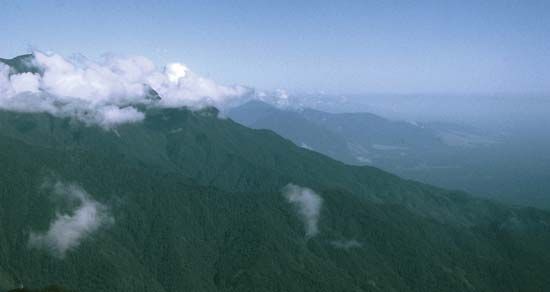
Tagula Island is a volcanic island located in the Louisiade Archipelago of Papua New Guinea in the southwestern Pacific Ocean. Situated approximately 175 miles (280 km) southeast of New Guinea, it is the largest island in the archipelago, spanning 50 by 15 miles (80 by 24 km) with a total area of 310 square miles (800 square km).1
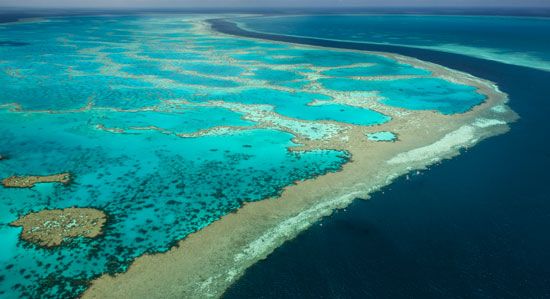
The island is characterized by rugged terrain, reaching an elevation of 2,644 feet (806 metres) at Mount Riu, also known as Mount Rattlesnake. It is encircled by a coral reef and maintains an economy that includes the export of copra.1
What is the Louisiade Archipelago?
The Louisiade Archipelago is a group of nearly 100 islands belonging to Papua New Guinea, located approximately 125 miles (200 km) southeast of the island of New Guinea in the southwestern Pacific Ocean.2
Spanning over 100 miles (160 km), the archipelago covers a total area of 10,000 square miles (26,000 square km), with a land area of about 690 square miles (1,790 square km). The three largest islands—Tagula, Misima, and Rossel—are mountainous and volcanic, often fringed by reefs, while the majority of the smaller islands are coral formations.2
The archipelago was named in 1768 by Louis-Antoine de Bougainville in honor of Louis XV of France. Historically, the region was occupied by Japanese forces in 1942 and is situated near the site of the Battle of the Coral Sea.2
How is copra produced and used?
Copra consists of the dried meat (kernel) of the coconut, which is harvested from the coconut palm.
Production
To produce copra, coconuts are first husked—either by hand or mechanically—and then cracked open to expose the meat. The drying process is essential to reduce moisture content to 4–5 percent, which preserves the product and concentrates its oil content to 63–70 percent. Common methods include:
- Sun drying: Exposing kernels to air and sun, which yields high-quality white copra.
- Kiln drying: A faster method using a fire pit and grid, often used in high-humidity regions.
- Hot-air drying: A process where copra is drawn through a heated tunnel, producing a superior, fine white product.4
Uses
The primary value of copra lies in the extraction of coconut oil, which is obtained through pressing or solvent extraction. The remaining residue, known as coconut-oil cake, is widely used as livestock feed. Copra serves as a vital export commodity for many tropical nations, including Papua New Guinea, the Philippines, and India.45
What kind of wildlife lives on volcanic islands?
Volcanic islands often host unique biological communities that develop through a process known as primary succession. When a new volcanic island forms, it begins as a barren, lifeless landscape. Over time, it is colonized by pioneer species—such as lichens, mosses, and hardy grasses—that arrive via wind or water. As these organisms die and decompose, they create the soil necessary for more complex vegetation, such as shrubs and trees, to take root. Eventually, animals arrive by flying, swimming, or rafting on flotsam, leading to the establishment of a stable ecosystem.89
Because these islands are often geographically remote, they frequently become sites of adaptive radiation. In these isolated environments, colonizing species encounter unoccupied ecological niches and diverge into a wide variety of specialized forms. This has resulted in an astounding number of endemic species—plants and animals found nowhere else on Earth. Notable examples include:
- Galapagos Islands: Famous for Darwin’s finches, which evolved diverse beak shapes to exploit different food sources.1011
- Hawaiian archipelago: Hosts a vast array of endemic honeycreepers, insects, and flowering plants, including hundreds of species of Drosophila flies.1011
- Vanuatu: Features diverse bird and insect life, unique bat species, and the estuarine crocodile.12
Sources
- Tagula Island — Encyclopædia Britannica
- Louisiade Archipelago — Encyclopædia Britannica
- Louisiade Archipelago — Merriam-Webster
- Copra — Encyclopædia Britannica
- Coconut palm — Encyclopædia Britannica
- copra oil — Merriam-Webster
- Seychelles - Agriculture, forestry, and fishing — Encyclopædia Britannica
- adaptive radiation — Encyclopædia Britannica
- evolution - Adaptive radiation — Encyclopædia Britannica
- primary succession — Encyclopædia Britannica
- community ecology - Biogeographic aspects of diversity — Encyclopædia Britannica
- volcano - Submarine volcanoes — Encyclopædia Britannica
- volcano - Long-term environmental effects — Encyclopædia Britannica
- Vanuatu - Land — Encyclopædia Britannica
Published on · 3 min read