6 Awesome Dinosaur Species You Should Know
While there are hundreds of known dinosaur species, here are six fascinating examples that highlight the diversity of the clade Dinosauria:
What are 6 Awesome Dinosaur Species You Should Know?
While there are hundreds of known dinosaur species, here are six fascinating examples that highlight the diversity of the clade Dinosauria:
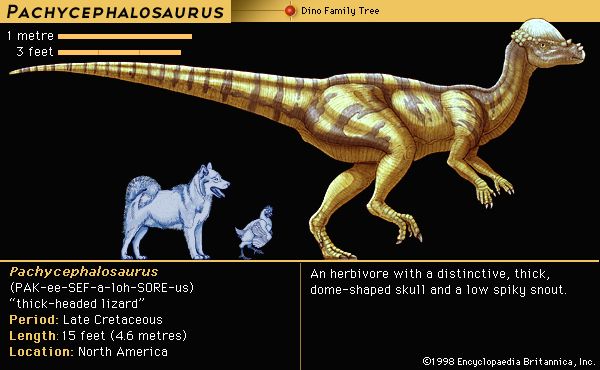
- Pachycephalosaurus: Famous for its “bony hat,” this dinosaur featured a thick, domed skull. Scientists believe these domes were likely used for species recognition or display rather than head-butting.
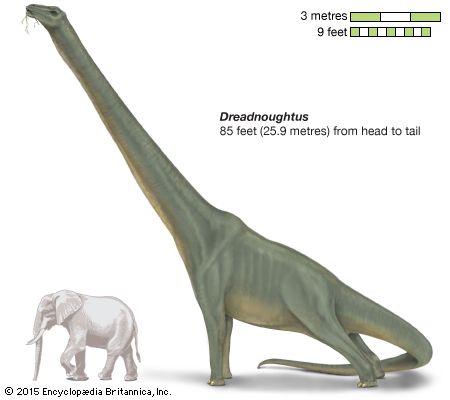
- Dreadnoughtus schrani: A massive sauropod from Argentina, it is considered one of the largest terrestrial animals to ever walk the Earth, potentially weighing as much as a dozen African elephants.
- Velociraptor: Unlike its cinematic portrayal, this predator was only about the size of a turkey. It remained a formidable hunter, however, thanks to its agility and signature sickle-shaped claws.
- Ankylosaurus: This heavily armored herbivore was protected by plates, spikes, and a powerful, club-like tail, making it nearly impossible for predators to attack from its blind spots.
- Compsognathus: A turkey-sized theropod that provides a clear link in the evolutionary transition between dinosaurs and birds, with a whippet-like frame and raptorial proportions.
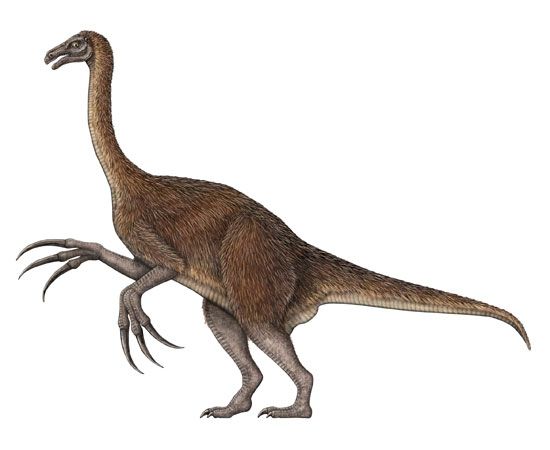
- Therizinosaurus: Known for its nightmarish, long claws, this unusual herbivore possessed a small skull and leaf-shaped teeth.
Would you like to explore more about the evolutionary history of these creatures or their extinction?1
How do scientists distinguish between saurischian and ornithischian dinosaurs?
Scientists distinguish between the two major orders of dinosaurs, Saurischia and Ornithischia, primarily by the configuration of their pelvis. This classification was established in 1887 by biologist H.G. Seeley.78
Pelvic Structure
The primary difference lies in the orientation of the pubis bone:
- Saurischia (“lizard-hipped”): In these dinosaurs, the pubis extends downward and forward, creating a triangular pelvic outline when viewed from the side.78
- Ornithischia (“bird-hipped”): In these dinosaurs, the pubis points downward and backward, lying parallel to the ischium. This configuration is superficially similar to that of modern birds, though it evolved independently.78
Additional Distinctions
Beyond the pelvis, the two groups exhibit marked differences in other anatomical features:
- Skulls and Teeth: Ornithischians are characterized by a unique bone joining the two lower jaws and distinctive leaf-shaped teeth with crenulated edges. They also possess at least one palpebral (“eyelid”) bone and reduced skull openings near the eyes and jaw.79
- Saurischian Traits: Saurischians, which include theropods and sauropodomorphs, are grouped by shared features such as elongated posterior neck vertebrae and a specific hand structure where the second finger is the longest.10
These anatomical dissimilarities are thought to reflect different muscle arrangements in the hips and hind legs, though the functional basis for these differences remains a subject of ongoing study.7
What evidence links modern birds to their dinosaur ancestors?
Modern birds are considered living dinosaurs that evolved from a lineage of theropod dinosaurs over 150 million years ago. Extensive fossil evidence links these groups through shared anatomical and biological characteristics:1112
Skeletal and Anatomical Similarities
Birds and theropods share numerous skeletal features that indicate a direct evolutionary connection:
- Bone Structure: Both groups possess hollow, thin-walled bones and air sacs within their backbones.13
- Wrist and Limbs: Theropods exhibit a unique wrist joint that allows for sideways flexion, a motion essential for flight in modern birds. Additionally, both groups share a wishbone and a breastbone.1213
- Foot Structure: The bird foot is inherited from theropods, characterized by a digitigrade stance where the heel is elevated and three main toes are directed forward.14
Feathers and Integument
The discovery of feathered dinosaur fossils, particularly in China, has provided some of the most compelling evidence for this link.1214
- Evolutionary Precursors: Many non-avian dinosaurs, such as Sinosauropteryx and Caudipteryx, possessed filamentous structures or true feathers. These structures likely evolved for insulation, display, or camouflage long before they were adapted for flight.1112
- Microstructure: Studies of melanosomes in the feathers of Archaeopteryx reveal that their arrangement provided structural support similar to that found in modern bird wings.13
These findings confirm that birds did not emerge as a separate group but are deeply nested within the dinosaurian family tree. Want to discover more about the evolution of flight or the specific Cretaceous birds that survived the mass extinction?12
Why were archosaurs able to become the dominant land animals during the Mesozoic Era?
The rise of archosaurs to dominance during the Mesozoic Era represents a major transition in terrestrial vertebrate history. While synapsids—the ancestors of mammals—were the dominant land animals during the Triassic Period, they were largely replaced by archosaurs by the start of the Jurassic Period.162
The exact reasons for this shift remain a subject of scientific debate, though several factors are considered:
- Adaptive Advantages: It is possible that specific evolutionary adaptations allowed archosaurs to outcompete synapsids. Early archosaurs, such as the genus Archosaurus, exhibited progressive modifications in their limbs and pelvis that likely improved their mobility and efficiency.1617
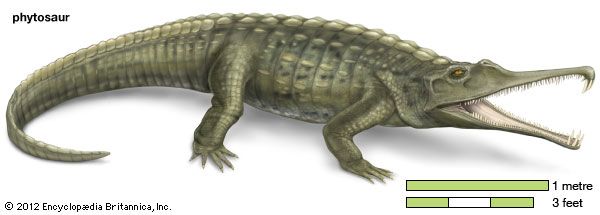
- Locomotion Patterns: Archosaurs developed distinct, efficient patterns of movement. Ornithosuchians (including dinosaurs) evolved an upright, bipedal gait, while pseudosuchians (including crocodiles) developed a flexible ankle joint that allowed for both sprawling and “high walk” postures.18
- Environmental Shifts: The transition may have been facilitated by the mass extinction at the end of the Triassic, which significantly reduced the diversity of competing groups and cleared ecological niches for archosaurs to occupy and diversify.16
Sources
- 6 Awesome Dinosaur Species You Should Know — Encyclopædia Britannica
- Jurassic Period - Vertebrates — Encyclopædia Britannica
- dinosaur - Dinosaur ancestors — Encyclopædia Britannica
- How long did dinosaurs live? — Encyclopædia Britannica
- dinosaur — Encyclopædia Britannica
- theropod — Encyclopædia Britannica
- dinosaur - Classification — Encyclopædia Britannica
- saurischian — Encyclopædia Britannica
- dinosaur - Saurischia — Encyclopædia Britannica
- dinosaur - Ornithischia — Encyclopædia Britannica
- How Do We Know That Dinosaurs May Have Had Feathers? — Encyclopædia Britannica
- Did Dinosaurs Really Have Feathers? — Encyclopædia Britannica
- Archaeopteryx — Encyclopædia Britannica
- dinosaur - Dinosaur descendants — Encyclopædia Britannica
- dinosaur - Theropoda — Encyclopædia Britannica
- archosaur — Encyclopædia Britannica
- Permian Period - Emergence of important reptiles — Encyclopædia Britannica
- Archosaurus — Encyclopædia Britannica
Published on · 4 min read