What Happened to the Dinosaurs?
Approximately 66 million years ago, at the end of the Cretaceous Period, nearly all dinosaurs perished during a global mass extinction event known as the K–T…
What Happened to the Dinosaurs?
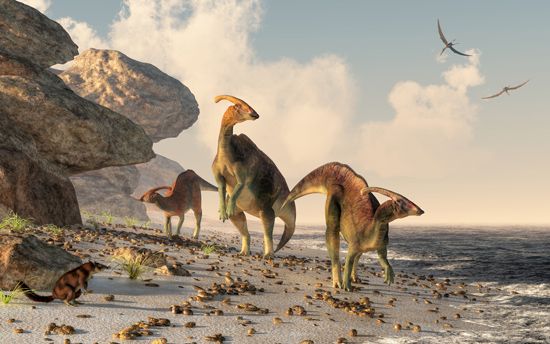
Approximately 66 million years ago, at the end of the Cretaceous Period, nearly all dinosaurs perished during a global mass extinction event known as the K–T extinction.12
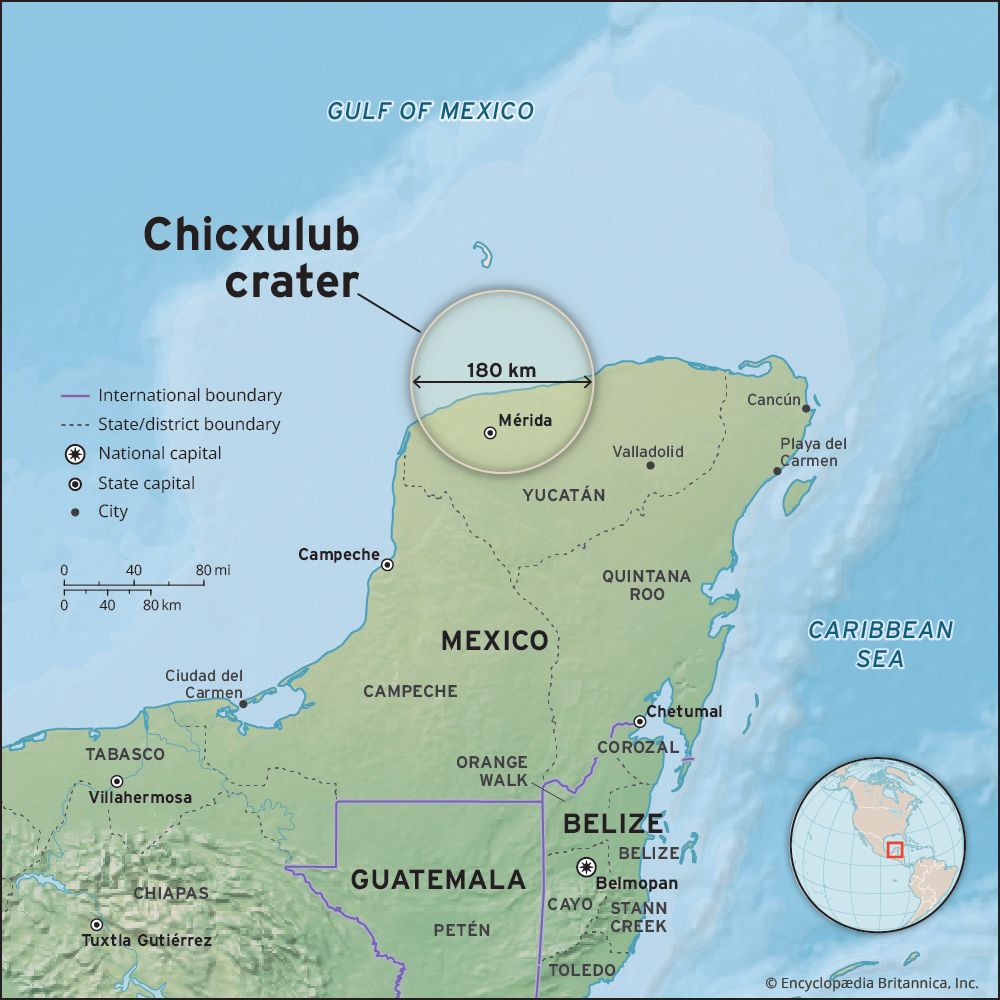
The most prominent explanation is the asteroid theory, which suggests that a massive asteroid—estimated to be 10 to 15 km in diameter—struck Earth near the Yucatán Peninsula in Mexico. This impact created the Chicxulub crater and ejected vast amounts of debris into the atmosphere, blocking sunlight and causing a collapse of the food chain. Evidence for this includes a worldwide layer of iridium and the presence of tektites in the geologic record.1324
However, some scientists argue that terrestrial factors also played a significant role. These include massive volcanic activity known as the Deccan Traps in India, which may have caused global warming through the release of carbon dioxide, as well as tectonic plate movements that altered habitats. It is possible that a combination of these catastrophic and gradual environmental changes led to the extinction.125
What are the Deccan Traps and how did they affect the climate?
The Deccan Traps are a massive geological feature located in west-central India, consisting of over 1,200 meters (4,000 feet) of lava flows. These volcanic eruptions occurred over an area of approximately 500,000 square kilometers (190,000 square miles) and spanned from the Late Cretaceous Period into the Eocene Epoch.7
Regarding their impact on the climate, many scientists believe the Deccan Traps played a significant role in environmental changes during the latest Cretaceous. The massive outpouring of lava was accompanied by the release of large quantities of carbon dioxide into the atmosphere. This influx of greenhouse gases is thought to have triggered a global greenhouse effect, which significantly warmed the planet.14
Some researchers suggest that these climatic shifts contributed to the gradual deterioration of habitats, potentially stressing various animal groups—including dinosaurs—prior to or during the K–T extinction event.14
Are birds considered to be modern-day dinosaurs?
Yes, birds are considered to be modern-day dinosaurs. According to nearly all ornithologists, birds are not merely descendants of ancient dinosaurs; they are, in fact, dinosaurs themselves.8
Birds evolved from a group of small, bipedal theropod dinosaurs more than 150 million years ago. Following the principles of genealogy, organisms are classified within the groups from which they evolved; therefore, just as humans are classified as both primates and mammals, birds are classified as both dinosaurs and birds.9810
Evidence for this relationship includes:
- Anatomical similarities: Birds and certain theropods share unique features, such as a specific wrist joint that allows for sideways flexion, as well as hollow, lightweight bones.108
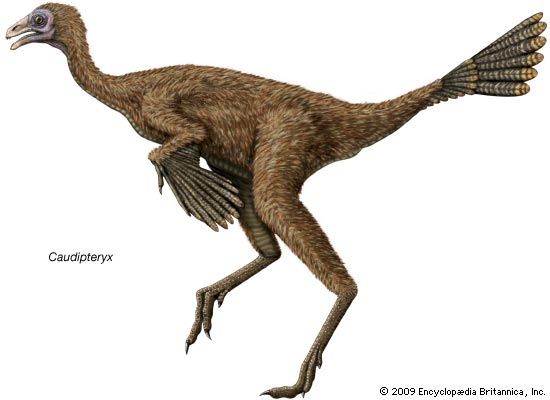
- Feathers: Many non-avian dinosaur fossils, such as Sinosauropteryx and Caudipteryx, show evidence of feathers or filamentous structures, indicating that feathers evolved for purposes like insulation or display long before they were adapted for flight.910
- Fossil record: The genus Archaeopteryx is a well-known example of a feathered dinosaur that bridges the gap between non-avian dinosaurs and modern birds.98
What other mass extinction events have occurred in Earth’s history?
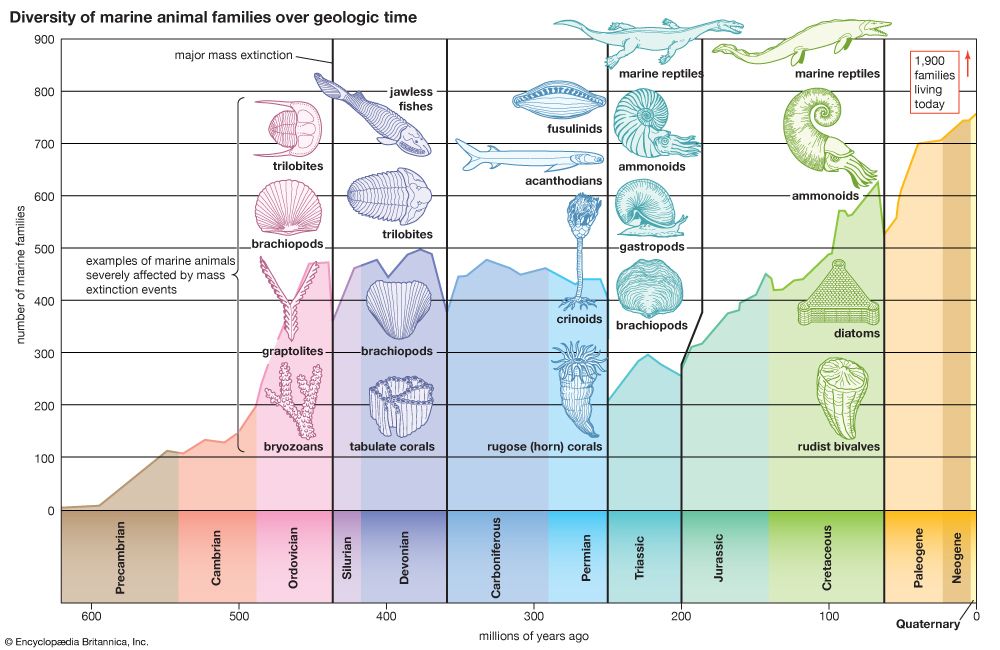
Earth’s history has been marked by five major mass extinction events, which are defined by the rapid loss of a significant portion of the planet’s species across a wide geographic area.6
Ranked by severity, these events include:
- Permian extinction: The most catastrophic event, occurring about 265 to 252 million years ago. It eliminated approximately 95 percent of marine species and 70 percent of land species, including all trilobites.6
- Ordovician-Silurian extinction: Occurring about 444 million years ago, this event caused the loss of roughly 85 percent of marine species, likely driven by rapid cooling and falling sea levels associated with glaciation.136
- Cretaceous-Paleogene (K-Pg) extinction: Taking place about 66 million years ago, this event wiped out about 80 percent of animal species, including the non-avian dinosaurs. It is widely attributed to an asteroid impact, though some link it to volcanic activity.6
- End-Triassic extinction: Occurring about 201 million years ago, this event saw the demise of 76 percent of species. It is often linked to massive volcanism and climate change, which cleared ecological niches for dinosaurs to dominate.146
- Devonian extinctions: A series of extinction pulses between 408 and 359 million years ago that eliminated 70–80 percent of all animal species, heavily impacting marine life like brachiopods and corals.156
Many scientists now warn that human activity is driving a sixth mass extinction through pollution, habitat destruction, and climate change.6
Sources
- Cretaceous Period - Mass extinction — Encyclopædia Britannica
- How Big Was the Asteroid That Contributed to Dinosaur Extinction? — Encyclopædia Britannica
- Alvarez theory — Merriam-Webster
- K–T extinction — Encyclopædia Britannica
- dinosaur - The K–T boundary event — Encyclopædia Britannica
- end-Triassic extinction — Encyclopædia Britannica
- Cretaceous Period - Types of Cretaceous rocks — Encyclopædia Britannica
- How Do We Know That Dinosaurs May Have Had Feathers? — Encyclopædia Britannica
- dinosaur - Dinosaur descendants — Encyclopædia Britannica
- dinosaur - Theropoda — Encyclopædia Britannica
- Origins of Birds — Encyclopædia Britannica
- dinosaur - Tetanurae — Encyclopædia Britannica
- Ordovician Period - Mass extinction at the end of the Ordovician — Encyclopædia Britannica
- Permian Period - Temperature crises — Encyclopædia Britannica
- Devonian Period - Extinction events — Encyclopædia Britannica
- mass extinction event — Encyclopædia Britannica
Published on · 4 min read