Trepospira
Trepospira is an extinct genus of gastropods (snails) known from the fossil record. These organisms lived during the Devonian to Late Carboniferous periods…
What is Trepospira?
Trepospira is an extinct genus of gastropods (snails) known from the fossil record. These organisms lived during the Devonian to Late Carboniferous periods, approximately 286 to 408 million years ago.1
The physical characteristics of the Trepospira shell include a low spire and a short coiling axis relative to the shell’s overall width. While the shell is generally smooth, it is distinctively ornamented with nodules located near the sutures between the whorls.1
What are gastropods?
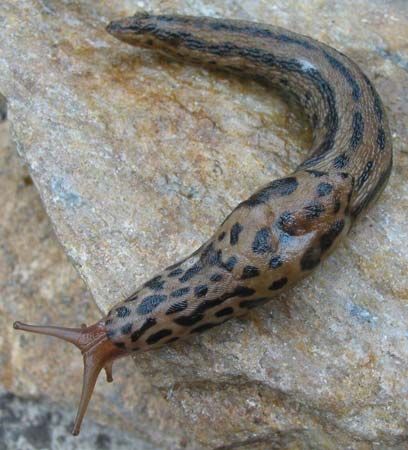
Gastropods are members of the class Gastropoda, which is the largest group within the phylum Mollusca. This diverse class includes more than 65,000 animal species, primarily consisting of snails—which typically possess a protective shell—and slugs, which have evolved to lose or reduce their shells.2
Gastropods exhibit remarkable ecological success, inhabiting nearly every environment, including oceans, freshwater systems, and terrestrial landscapes. Their feeding habits are equally varied; they may be scavengers, herbivores, predators, or even parasites. While some species are used as food or for ornamental purposes, a few serve as intermediate hosts for parasites that cause human diseases.23
Evolutionarily, gastropods have been present since the Cambrian period. Their development has involved significant shifts in anatomy, such as changes in respiratory and sensory apparatuses, and adaptations for life on land, including sophisticated water conservation methods.4
What defines the Devonian and Carboniferous periods?
The Devonian and Carboniferous periods represent two distinct, critical intervals in Earth’s history, characterized by significant biological evolution and tectonic activity.
The Devonian Period (419.2 to ~359 million years ago)
Often called the “Age of Fishes,” the Devonian was marked by the diversification of fish and the emergence of the first four-legged amphibians. Geologically, the period saw the formation of the supercontinent Laurussia (or Euramerica) through the Caledonian orogeny. The climate was generally warm and equitable, with vast shallow seas covering much of the globe. However, the period also experienced major marine extinctions, likely triggered by reduced oxygen levels in the oceans.567
The Carboniferous Period (358.9 to ~298.9 million years ago)
The Carboniferous is divided into the Mississippian and Pennsylvanian subperiods. It is defined by:8
- Biological Expansion: This era saw the peak of amphibian development, the emergence of reptiles, and the rise of giant insects, potentially enabled by higher atmospheric oxygen levels7.8
- Coal Formation: Extensive coal swamps formed during the Pennsylvanian, creating the world’s most significant coal basins.98
- Climate and Geography: While equatorial regions were tropical, the southern supercontinent Gondwana experienced widespread continental glaciations. By the late Carboniferous, Laurussia and Gondwana fused, significantly altering global geography.10118
How do scientists use fossils to study ancient life?
Scientists use the fossil record—the collection of remains, impressions, and traces of ancient organisms preserved in sedimentary rock—as the primary source of information regarding the history of life on Earth.1213
Researchers utilize fossils for several key purposes:
- Understanding Evolution: By observing progressive morphological changes within groups of organisms over time, scientists can document evolutionary history and adaptations to specific environments.121413
- Geochronology: Fossils allow geologists to assign relative ages to rock strata. Index fossils—which are distinctive, abundant, and geographically widespread—are particularly useful for correlating rock layers across different regions and defining boundaries in the geologic time scale.151413
- Paleoecology: Specialists known as paleoecologists analyze fossils to reconstruct ancient environments, such as determining if a site was once a shallow sea, a swamp, or a bog. This information is also vital for fossil fuel exploration, as specific organisms indicate the presence of oil, natural gas, or coal deposits.121413
- Trace Analysis: Beyond physical remains, trace fossils (such as footprints or burrows) provide evidence of an organism’s behavior and activities.1316
Sources
- Trepospira — Encyclopædia Britannica
- gastropod — Encyclopædia Britannica
- gastropod - Evolution and paleontology — Encyclopædia Britannica
- mollusk - Habitats, feeding habits, and associations — Encyclopædia Britannica
- A Journey Through Time Since the Precambrian - Devonian Period: 419.2 million to about 359 million years ago — Encyclopædia Britannica
- Devonian Period - Significant geologic events — Encyclopædia Britannica
- Carboniferous Period - Distinctive features — Encyclopædia Britannica
- Carboniferous Period - Economic significance of Carboniferous deposits — Encyclopædia Britannica
- A Journey Through Time Since the Precambrian - Carboniferous Period: 358.9 million to about 298.9 million years ago — Encyclopædia Britannica
- Devonian Period - Paleoclimate — Encyclopædia Britannica
- Carboniferous Period - Paleoclimate — Encyclopædia Britannica
- index fossil — Encyclopædia Britannica
- fossil record — Encyclopædia Britannica
- geology - Paleontology — Encyclopædia Britannica
- fossil — Encyclopædia Britannica
- evolution - Convergent and parallel evolution — Encyclopædia Britannica
- trace fossil — Merriam-Webster
- Did you know? — Merriam-Webster
Published on · 3 min read