Water Hemlock
Water hemlock refers to any of four species of poisonous plants in the genus Cicuta, which belongs to the parsley family (Apiaceae). These plants are common…
What is water hemlock?
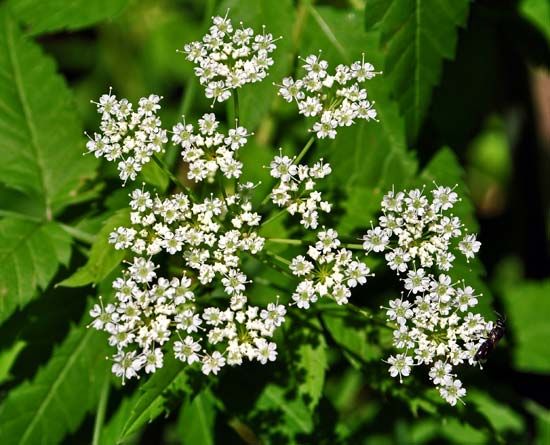
Water hemlock refers to any of four species of poisonous plants in the genus Cicuta, which belongs to the parsley family (Apiaceae). These plants are common throughout the north temperate zone and typically thrive in wet, marshy environments.1
Water hemlock is considered one of the most poisonous plants. It contains a toxic principle called cicutoxin, which acts rapidly on the central nervous system. While the roots are especially toxic, ingestion of any part of the plant can be lethal to humans and cattle. Symptoms of poisoning include abdominal pain, nausea, vomiting, diarrhea, respiratory distress, hypersalivation, and convulsions.21
These plants are often confused with nonpoisonous members of the parsley family, such as wild carrots or parsnips. They are also frequently distinguished from poison hemlock, a related but distinct species, by the venation of their leaves: in water hemlocks, the leaflet veins end at the notches between the teeth, whereas in poison hemlock, they terminate at the tips of the teeth.13
How does cicutoxin affect the human body?
Cicutoxin, the primary toxic constituent found in water hemlock, acts rapidly on the human central nervous system. Upon ingestion, the toxin triggers a severe physiological response that can be lethal.13
The clinical effects of cicutoxin poisoning include:
- Gastrointestinal distress: Symptoms typically manifest as abdominal pain, nausea, vomiting, and diarrhea.3
- Neurological impact: The toxin causes convulsions, which are a hallmark of its effect on the nervous system.13
- Respiratory and autonomic symptoms: Individuals may experience respiratory distress and hypersalivation.3
Because cicutoxin is highly potent, ingestion of any part of the plant—with the roots being particularly toxic—can lead to death. It is essential to exercise extreme caution, as these plants are often mistaken for nonpoisonous species like wild carrots or parsnips.1
What are some other common poisonous plants found in North America?
North America is home to several plants that are highly toxic if ingested or touched. While water hemlock is often cited as the most violently toxic plant on the continent, many others pose significant risks to humans and livestock.35
Common Poisonous Plants in North America
- Poison Hemlock: A biennial herb containing the alkaloid coniine. Ingestion can lead to respiratory collapse and death.34
- Poison Ivy: Known for the oil urushiol, which causes intense skin irritation, blistering, and swelling upon contact.36
- Deadly Nightshade: Contains atropine and scopolamine. Its sweet berries are particularly dangerous to children, as they can cause paralysis and death.35
- Castor Bean: Contains the potent toxin ricin. Ingesting even a small number of seeds can be fatal by inhibiting protein synthesis.35
- White Snakeroot: Contains a toxic alcohol called trematol. It is famously known for causing “milk sickness” in humans who consume dairy or meat from livestock that have grazed on the plant.5
- Mountain Laurel: Contains andromedotoxin, which can cause muscular paralysis, convulsions, and coma if the leaves are eaten.3
- Pokeberry: Contains phytolaccine, which can cause severe vomiting, spasms, and convulsions.3
How can you distinguish water hemlock from edible plants like wild carrots?
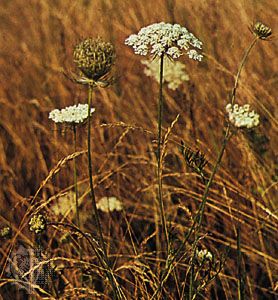
Distinguishing water hemlock from edible plants like wild carrots is extremely difficult because they belong to the same family, Apiaceae, and share similar physical characteristics, such as clusters of white flowers.12
Because of these visual similarities, there is a high risk of fatal misidentification. Experts strongly advise against foraging for wild plants that resemble members of the carrot family unless you have professional botanical expertise. The consequences of error are severe, as water hemlock contains cicutoxin, a potent neurotoxin that acts rapidly on the central nervous system and can be lethal if any part of the plant is ingested.81
To ensure safety, it is ethically responsible to prioritize health by avoiding the consumption of any wild-harvested plants that you cannot identify with absolute certainty. It is much safer to obtain such vegetables from cultivated, reliable sources.8
Sources
- water hemlock — Encyclopædia Britannica
- water hemlock — Merriam-Webster
- poison - Plant poisons (phytotoxins) — Encyclopædia Britannica
- poison hemlock — Encyclopædia Britannica
- poison ivy — Merriam-Webster
- poison hemlock — Merriam-Webster
- 7 of the World’s Deadliest Plants — Encyclopædia Britannica
- minari: Top Questions — Encyclopædia Britannica
- Carrot — Encyclopædia Britannica
Published on · 3 min read