Can Limes Burn Your Skin?
Yes, limes can cause skin burns. When lime juice comes into contact with your skin and is subsequently exposed to sunlight, it can trigger a reaction known…
Can limes burn your skin?
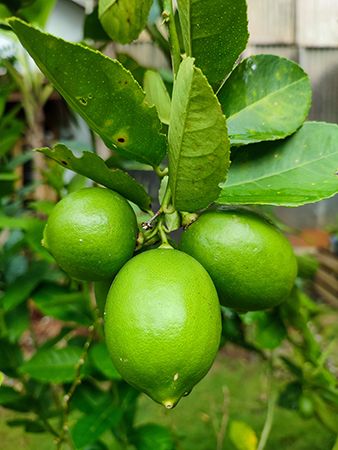
Yes, limes can cause skin burns. When lime juice comes into contact with your skin and is subsequently exposed to sunlight, it can trigger a reaction known as phytophotodermatitis.1
This occurs because limes contain furocoumarins, chemicals that interfere with the skin’s ability to manage ultraviolet (UV) light. When these chemicals are activated by UV radiation, they can cause redness, swelling, and painful, itchy blisters that resemble severe sunburn. In some cases, the damage may lead to second-degree burns or lingering dark patches of skin known as post-inflammatory hyperpigmentation. Because the reaction is triggered by contact, the resulting marks often appear in streaks or drip-shaped patterns.1
To prevent this, simply wash your skin thoroughly after handling lime juice before heading outdoors. While limes are a common culprit—sometimes referred to by dermatologists as “margarita burns”—other plants, such as celery, parsley, and giant hogweed, also contain these light-sensitive compounds.1
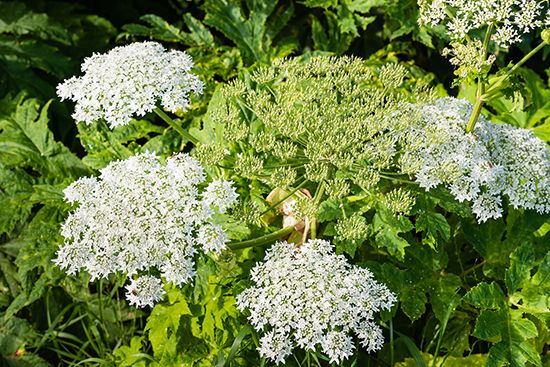
What is giant hogweed and why is it dangerous?
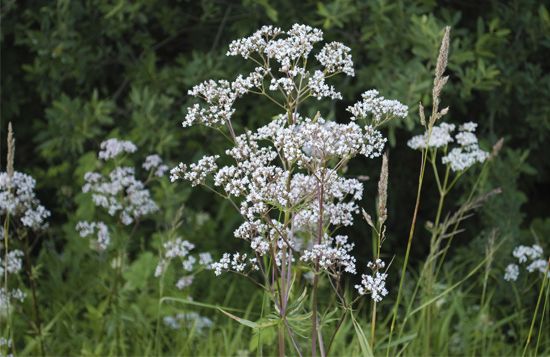
Giant hogweed (Heracleum mantegazzianum) is a tall, invasive herbaceous plant in the parsley family that can reach heights of up to 4 to 6 meters (13 to 20 feet). Native to the Caucasus, it has become an invasive species in parts of North America and Europe.23
The plant is considered highly toxic because its sap contains potent concentrations of furocoumarins. These chemicals are light-sensitive; when they come into contact with skin and are subsequently exposed to ultraviolet (UV) light, they trigger a condition known as phytophotodermatitis. This reaction can cause:24
- Severe blistering: Skin can erupt in painful, itchy blisters that may resemble second-degree burns.24
- Scarring: The reaction can lead to long-term skin discoloration or scarring.4
- Vision damage: If the sap enters the eyes, it can cause temporary or even permanent blindness.24
Because giant hogweed resembles other plants like water hemlock or Queen Anne’s lace, it is generally advised to avoid any tall, carrot-like plants with large, white, umbrella-shaped flower clusters.231
How do plants use chemicals to defend themselves?
Plants utilize a sophisticated array of chemical strategies to defend themselves against herbivory and environmental stress. These defenses often involve the production of secondary metabolites—complex compounds stored within plant tissues that can deter or sicken potential predators.56
Chemical Defense Mechanisms
- Toxins and Poisons: Many plants produce substances like alkaloids, terpenes, and cardenolides (cardiac glycosides). These can cause illness, vomiting, or even death in vertebrates, teaching herbivores to avoid them in the future.56
- Idioblasts: These specialized cells act as “landmines” that detonate when breached. For example, the dieffenbachia fires barbed crystals and releases enzymes that can cause temporary paralysis in predators.7
- Chemical Signaling: Plants can release volatile organic compounds when under attack. These act as a warning system to nearby plants, prompting them to increase their own chemical defenses or release compounds that attract the predators of the attacking insects.7
- Entrapping Substances: Some plants produce sticky latex to physically trap or deter insects.5
Plants often prioritize chemical defenses in young, nutrient-rich tissues, which are more vulnerable to consumption than mature, structurally defended parts.5
What are some other common plants that cause skin reactions?
Beyond giant hogweed, several other plants can cause painful or irritating skin reactions upon contact. These reactions are often triggered by chemical defenses designed to deter herbivores.48
Common Plants That Cause Skin Irritation
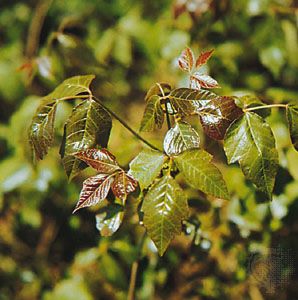
- Poison Ivy, Poison Oak, and Poison Sumac: These plants contain an oily resin called urushiol. Contact with this substance triggers contact dermatitis, resulting in severe itching, inflammation, and blistering that can last for weeks.491011
- Manchineel: Native to tropical regions, this tree contains a milky sap with a chemical called phorbol. Touching the tree or even standing under it during rain—where droplets collect the toxin—can cause severe skin blistering.48
- Gympie Gympie: One of the most dangerous plants in the world, this Australian stinging tree has leaves covered in fine hairs that inject toxins. The resulting pain is described as excruciating and can persist for months.48
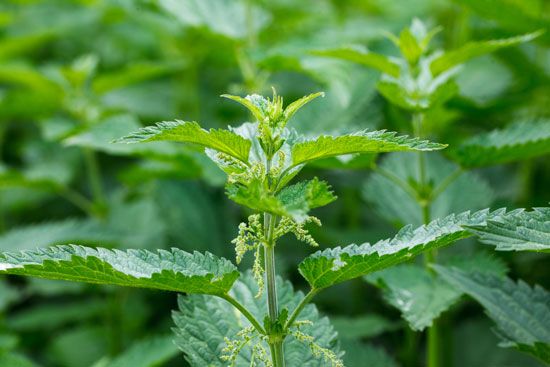
- Stinging Nettle: This plant features hairs tipped with formic acid. Touching it causes an immediate burning, tingling rash, though symptoms typically subside within 24 hours.4
- Pain Bush: Also known as African poison ivy, this shrub exudes a sap containing heptadecyl catechols, which causes a swollen, blistered rash.4
- Tread-softly: This herb is covered in stinging hairs that break off in the skin, causing intense stinging and itching.4
Sources
- Can limes burn your skin? — Encyclopædia Britannica
- hogweed — Encyclopædia Britannica
- giant hogweed — Merriam-Webster
- 7 Dangerous Plants You Should Never Touch — Encyclopædia Britannica
- Eating the rainforest — Encyclopædia Britannica
- Botanical Barbarity: 9 Plant Defense Mechanisms — Encyclopædia Britannica
- mimicry - The chemical basis for repulsion — Encyclopædia Britannica
- poison ivy — Merriam-Webster
- immune system disorder - Contact hypersensitivity and dermatitis — Encyclopædia Britannica
- poison - Plant poisons (phytotoxins) — Encyclopædia Britannica
- poison sumac — Encyclopædia Britannica
- poison oak — Encyclopædia Britannica
Published on · 4 min read