Wild Cucumber
The term "wild cucumber" most commonly refers to Echinocystis lobata, a climbing vine in the gourd family native to eastern North America. This plant is…
What is wild cucumber?
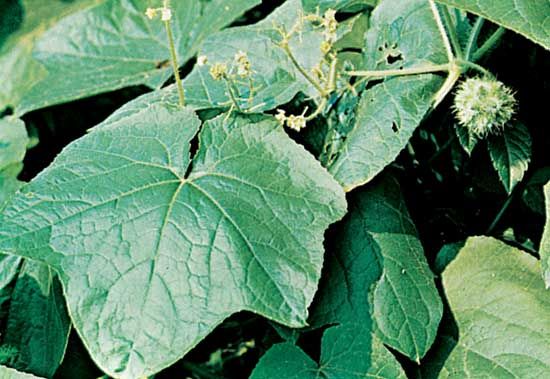
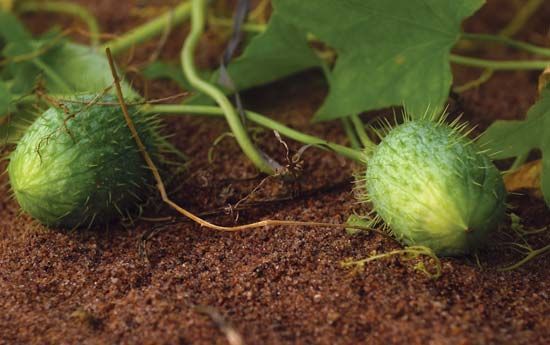
The term “wild cucumber” most commonly refers to Echinocystis lobata, a climbing vine in the gourd family native to eastern North America. This plant is characterized by leaves with three to seven sharp lobes, forked tendrils, and six-petaled white flowers. It produces a fleshy, oval fruit covered in prickles that contains four seeds. Due to its rapid growth, it is frequently cultivated to cover fences and arbors.12
It is important to note that the name “wild cucumber” is sometimes applied to other related vines, such as the squirting cucumber or the bur cucumber (Sicyos genus). While these plants share membership in the Cucurbitaceae family, the bur cucumber typically features five-petaled flowers and fruits containing only a single seed. Some species within the Sicyos genus, such as Sicyos angulatus, are considered noxious agricultural weeds.23
What other plants belong to the gourd family?
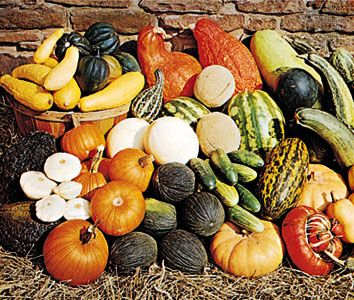
The Cucurbitaceae family, commonly known as the gourd family, comprises approximately 975 species across 98 genera of flowering plants. These plants are typically fast-growing, prostrate, or climbing vines that thrive in tropical and temperate climates.456
Major plants within this family include:
- Common Food Crops: Cucumber, watermelon, muskmelon, chayote, and gherkin.5
- Squashes and Pumpkins: Various members of the genus Cucurbita, including zucchini, pumpkin, winter squash, and calabazilla.5
- Gourds and Ornamentals: Bottle gourd, wax gourd, snake gourd, loofah, and the yellow-flowered gourd.56
- Other Varieties: Bur cucumber, bryony, colocynth, and musk cucumber.5
These plants are characterized by their unisexual flowers and large, fleshy fruits known as pepos. While many are cultivated for food, some are valued for their utility as containers, utensils, or musical instruments once dried.456
How do climbing vines use tendrils to grow?
Climbing vines utilize tendrils—specialized, slender organs derived from leaves, leaflets, or stem branches—to anchor themselves and support their growth. These structures are highly sensitive to touch, a response known as thigmotropism.78
When a tendril brushes against an object, it detects the contact and begins to curve toward the stimulus. If the shape of the object allows, the tendril wraps around it, clinging firmly as long as the contact persists. This process is facilitated by the following mechanisms:7
- Sensitivity: Tendrils are prehensile and respond to light stroking by curving toward the side of the contact within minutes.7
- Structural Reinforcement: Once attached, the plant develops strong mechanical tissue called sclerenchyma within the tendril, providing the necessary strength to support the vine’s weight.7
- Adhesion: Some species produce terminal enlargements that flatten against firm surfaces and secrete an adhesive, effectively cementing the plant to its substrate.7
Through these adaptations, vines can efficiently climb toward light and stable positions.78
Why are some wild plants considered noxious weeds?
A weed is defined as any plant growing where it is not wanted, making the term relative to time, place, and human activity. Plants are often categorized as noxious or problematic because they interfere with human interests, agriculture, or ecological stability in several ways:10
- Resource Competition: Weeds compete with desired crops for essential resources, including water, light, and mineral nutrients, which can significantly reduce agricultural yields.1011
- Health and Safety Hazards: Some plants pose direct risks to humans or animals. For example, poison oak is a health hazard in campgrounds, while tall weeds along roadsides can obscure driver visibility.10
- Agricultural Damage: Weeds can be unpalatable or poisonous to livestock, cause physical injury to animals, or lower the value of animal products like wool.10
- Disease and Pest Vectors: Many weeds serve as hosts for plant disease organisms and insect pests, facilitating the spread of pathogens to crops.10
- Invasive Potential: Some nonnative plants become invasive species, disrupting ecosystems by outcompeting native species for space and resources, often leading to a loss of biodiversity.1012
Sources
- wild cucumber — Encyclopædia Britannica
- wild cucumber — Merriam-Webster
- bur cucumber — Encyclopædia Britannica
- Cucurbitaceae — Encyclopædia Britannica
- list of plants in the family Cucurbitaceae — Encyclopædia Britannica
- gourd — Encyclopædia Britannica
- Tendril — Encyclopædia Britannica
- Did you know? — Merriam-Webster
- tendril — Merriam-Webster
- weed — Encyclopædia Britannica
- Cereal farming - Weeds — Encyclopædia Britannica
- invasive species — Encyclopædia Britannica
- Agricultural technology - Chemicals — Encyclopædia Britannica
Published on · 3 min read