15 of the Best Birdsongs (According to Britannica)
Determining which birds possess the "best" songs is inherently subjective, as aesthetic appreciation varies among listeners. While Britannica does not…
What are 15 of the Best Birdsongs (According to Britannica)?
Determining which birds possess the “best” songs is inherently subjective, as aesthetic appreciation varies among listeners. While Britannica does not provide a definitive ranked list of 15 specific birds, it highlights several species renowned for their vocal complexity, beauty, and mimicry.1
Prominent examples of celebrated songsters include:
- Nightingale: Often cited as the most famous songster in European literature, known for its strong, varied song and crescendo effects.12
- Mockingbird: A North American performer recognized for its rich, melodious, and long-continued song.1
- Lyrebirds: Australian birds noted for their superlative variety, intensity, and dramatic mimicry of other birds and mechanical sounds.13
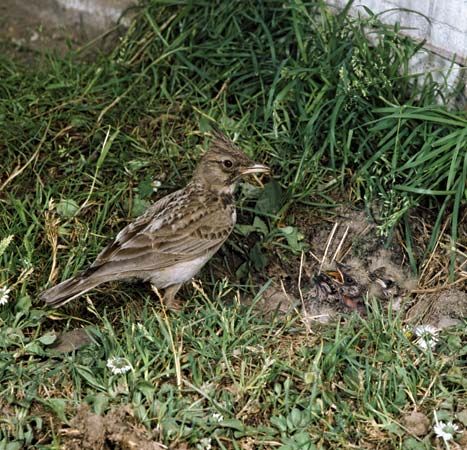
- Skylark: A long-time favorite of poets for its musical flight song.1
- Bellbirds: Known for their incredibly loud, far-carrying “gong” vocalizations.3
- Thrushes, Wrens, and Mimic Thrushes: Families frequently noted for their complex and beautiful songs.3
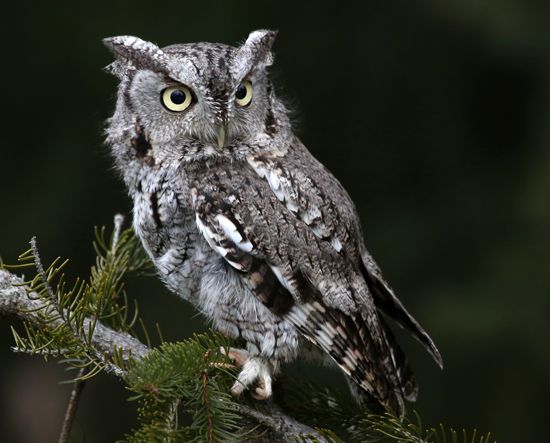
Other birds, such as the bobwhite quail and screech owl, are also recognized for their distinct, pleasing utterances.1
How does the syrinx allow birds to produce such complex sounds?
The syrinx is the specialized vocal organ of birds, located at the base of the trachea where it divides into the bronchi. Unlike the larynx in other vertebrates, which guards the air passage, the syrinx is uniquely adapted for complex sound production.56
In songbirds, the syrinx consists of paired cartilages and membranes that are controlled by up to six pairs of minute muscles. Sound is generated when air from the lungs passes through the trachea, causing these specialized bronchial or tracheal membranes to vibrate. These vibrations initiate and modulate the sound.57
A key factor in the complexity of birdsong is the ability of many species to control the right and left halves of the syrinx independently. This allows them to effectively sing with two “voices” at once, enabling the rapid, varied, and intricate vocalizations characteristic of many songbirds.57
Why do some birds mimic the songs of other species or mechanical sounds?
Some birds mimic the songs of other species or mechanical sounds as a result of their advanced vocal learning abilities, a trait shared by songbirds, parrots, and hummingbirds. While many birds possess innate, species-typical songs, others—such as the marsh warbler—develop idiosyncratic songs by incorporating sounds they encounter during a sensitive learning period.25
The reasons for this mimicry vary by species and context:
- Social Bonding and Interaction: Highly social birds, such as parrots, use vocal mimicry to interact with their flock, which, in captivity, includes their human companions. This behavior helps establish and maintain social bonds.2
- Species Isolation: In some cases, such as with parasitic weaverbirds, males mimic the vocal patterns of their host species. This ensures that they attract only females that were reared by the same foster species, effectively preventing hybridization between closely related whydah species.8
- Exploiting Sensory Biases: Mimicry can also evolve as a strategy to exploit the sensory biases of other animals. For example, some male lizards mimic the movement of insect prey to capture the attention of females.9
While these behaviors are often termed “mimicry,” they are frequently distinct from formal mimicry systems, serving as complex adaptations for communication, mating, and social cohesion.89
What is the difference between a bird’s song and a bird’s call?
The primary difference between a bird’s song and a call lies in their complexity, purpose, and timing.
Birdsong
- Purpose: Songs are typically used during the breeding season to attract mates and establish or defend territories.25
- Characteristics: Songs are generally longer, more complex, and often more musical than calls. They are primarily produced by males, though some species engage in duetting.23
- Learning: Many songs are learned behaviors; for example, a chaffinch must hear adult males to master its species-specific song.2
Bird Calls
- Purpose: Calls serve a variety of functional, immediate needs, such as keeping flocks together, alerting others to danger (alarm notes), or stimulating parents to feed their young (begging calls).5
- Characteristics: Calls are typically shorter, simpler vocalizations. They are used throughout the year and are produced by both sexes.235
- Context: Unlike the territorial focus of songs, calls are associated with daily survival, aggression, and social coordination.5
While both are produced using the syrinx, songs are specialized for communication within a species, whereas calls function as essential tools for immediate social and environmental interaction.2145
Sources
- Songbird — Encyclopædia Britannica
- Birdsong — Encyclopædia Britannica
- Passeriform - Sound production — Encyclopædia Britannica
- Nightingale — Encyclopædia Britannica
- Syrinx — Encyclopædia Britannica
- 12 Lovely and Unusual Words for the Natural World | Syrinx — Merriam-Webster
- larynx — Encyclopædia Britannica
- mimicry - Parasitic weaverbirds — Encyclopædia Britannica
- Caprimulgiform - Vocalizations — Encyclopædia Britannica
- Animal communication - Evolution of signals — Encyclopædia Britannica
- Why do parrots talk? — Encyclopædia Britannica
- Animal learning - Song learning — Encyclopædia Britannica
- mimicry - The importance of mimicry to evolutionary theory — Encyclopædia Britannica
- Bird - Sound — Encyclopædia Britannica
Published on · 3 min read