Amundsen Gulf
The Amundsen Gulf is a southeastern extension of the Beaufort Sea within the Arctic Ocean. Stretching approximately 250 miles (400 km), this body of water is…
What is Amundsen Gulf?
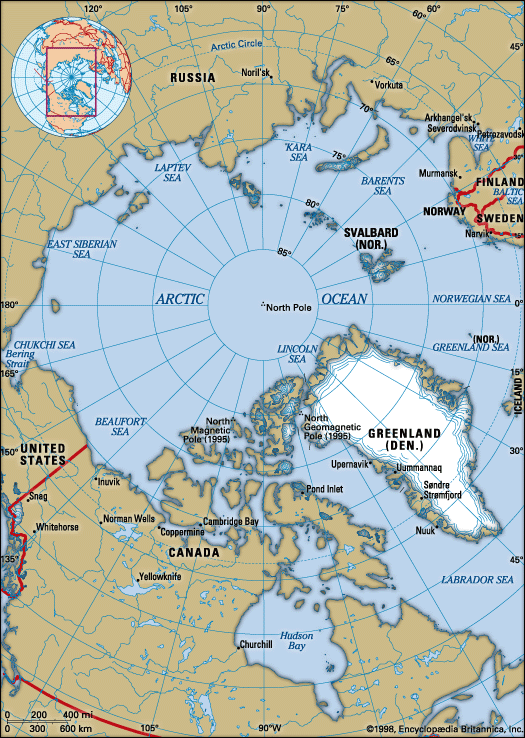
The Amundsen Gulf is a southeastern extension of the Beaufort Sea within the Arctic Ocean. Stretching approximately 250 miles (400 km), this body of water is situated in northern Canada, where it separates Banks Island to the north from the Canadian mainland to the south, with Victoria Island bordering it to the east.12
The gulf is named in honor of the Norwegian explorer Roald Amundsen, who was the first person to successfully navigate the Northwest Passage by ship. Historically, the area was first entered from the west in 1850 by British explorer Robert McClure, whose expedition achieved the first transit of the Northwest Passage using a combination of ship and sledge.1
Who was Roald Amundsen and what were his major achievements?
Roald Amundsen (1872–1928) was a Norwegian explorer and a preeminent figure in the history of polar exploration. His career was defined by several historic “firsts” that pushed the boundaries of human endurance and navigation.34
Major Achievements
- Northwest Passage: Between 1903 and 1906, Amundsen led the first successful ship voyage through the Northwest Passage. Sailing the 47-ton sloop Gjøa, he navigated the northern Canadian coast, completing the transit in 1905.34
- South Pole: In a meticulously planned expedition, Amundsen became the first person to reach the South Pole on December 14, 1911. By utilizing sled dogs and establishing supply depots, he successfully navigated the route from the Bay of Whales and returned safely, while his rival Robert Falcon Scott perished on the return journey.34
- Arctic Aviation: Amundsen was a pioneer in polar aerial exploration. In 1926, he crossed the North Pole in a dirigible alongside Lincoln Ellsworth and Umberto Nobile, traveling from Svalbard to Alaska.34
Amundsen ultimately lost his life in 1928 while attempting a rescue mission for Nobile in the Arctic.3
What is the Northwest Passage and why was it historically important?
The Northwest Passage is a historical sea route that connects the Atlantic Ocean to the Pacific Ocean through the Arctic Archipelago of northern Canada.5
Historical Importance
For centuries, the passage was the focus of intense exploration by Western nations seeking a shorter commercial route to East Asia. Following the disruption of traditional overland trade routes by the Ottoman Empire in the 15th century, European powers—including England, France, and the Netherlands—invested heavily in finding a northern path around the American landmass.56
The quest was notoriously hazardous, characterized by extreme cold, treacherous icebergs, and the constant threat of being trapped by the polar ice cap. Many famous explorers, such as Henry Hudson and Sir John Franklin, met with disaster or death in their attempts to navigate these waters. The passage was not successfully traversed by ship until Roald Amundsen completed his three-year voyage in 1906.56
Contemporary Significance
Today, the Northwest Passage remains a subject of economic and geopolitical interest. If fully opened to regular traffic, it would significantly reduce shipping distances between major global ports, such as London and Tokyo. However, its use is complicated by high insurance costs, the need for ice-strengthened vessels, and ongoing debates regarding sovereignty between Canada and other nations. Furthermore, global warming has led to record declines in summer sea ice, increasing accessibility for research, tourism, and commercial shipping.57
What kind of wildlife lives in the Arctic Ocean region?
The Arctic region supports a diverse array of wildlife, characterized by specialized adaptations to extreme cold and seasonal ice cover. The ecosystem is broadly divided into marine and terrestrial environments, which are deeply interconnected through the food web.
Marine Fauna
Marine mammals dominate the Arctic macrofauna. Notable species include:
- Whales: The beluga, narwhal, and bowhead whale are permanent Arctic residents, while others like the killer whale are frequent visitors.8
- Seals: The ringed seal and bearded seal are typical Arctic species, joined by migratory harp seals and hooded seals.89
- Fish: While fish are less abundant than in subarctic waters, the arctic char and small gadids like the polar cod and arctic cod are vital components of the ecosystem.810
Terrestrial and Freshwater Animals
Land-based wildlife often exhibits circumpolar distribution. Key species include:
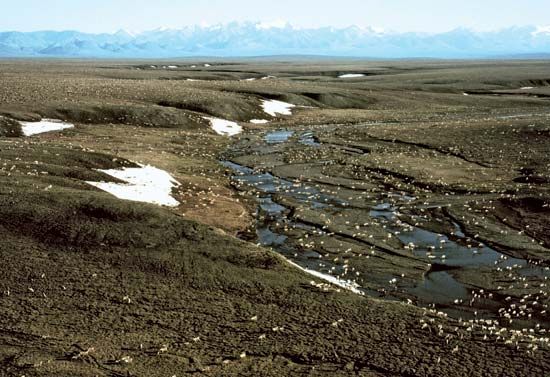
- Mammals: The polar bear is an iconic apex predator that functions as both a marine and terrestrial animal. Other land mammals include the caribou, arctic wolf, arctic fox, arctic hare, and musk ox.8109
- Birds: Many seabirds and land birds, such as the snowy owl, ptarmigan, and arctic tern, migrate to the Arctic during the short, productive summer to breed.810
The Sea Ice Ecosystem
A unique ecosystem exists within the sea ice itself, where algae (mainly diatoms) grow in the ice. This primary production supports a complex food web, ranging from small invertebrates like copepods and amphipods to the fish, birds, and seals that rely on them.811
We could dive deeper into how climate change is specifically affecting the survival of these Arctic species.
Sources
- Amundsen Gulf — Encyclopædia Britannica
- Amundsen Gulf — Merriam-Webster
- Roald Amundsen — Encyclopædia Britannica
- Roald Amundsen: Top Questions — Encyclopædia Britannica
- Northwest Passage — Encyclopædia Britannica
- European exploration - The northern passages — Encyclopædia Britannica
- Arctic - Water transport — Encyclopædia Britannica
- Arctic - Marine fauna — Encyclopædia Britannica
- Arctic - Animals of the land and fresh water — Encyclopædia Britannica
- Baffin Bay — Encyclopædia Britannica
- sea ice - The emerging impacts of recent changes to sea ice — Encyclopædia Britannica
- Global warming: Top Questions — Encyclopædia Britannica
- polar bear: Top Questions — Encyclopædia Britannica
- sea ice - Interactions with the oceans , atmosphere , and climate — Encyclopædia Britannica
Published on · 4 min read