Fireweed
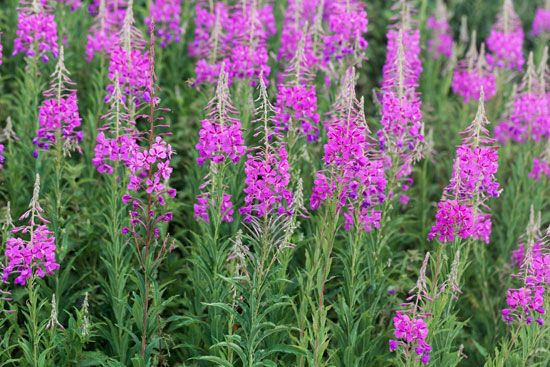
Fireweed (Chamaenerion angustifolium, also known as Epilobium angustifolium) is an attractive perennial wildflower known for its spikes of magenta or whitish…
What is fireweed?
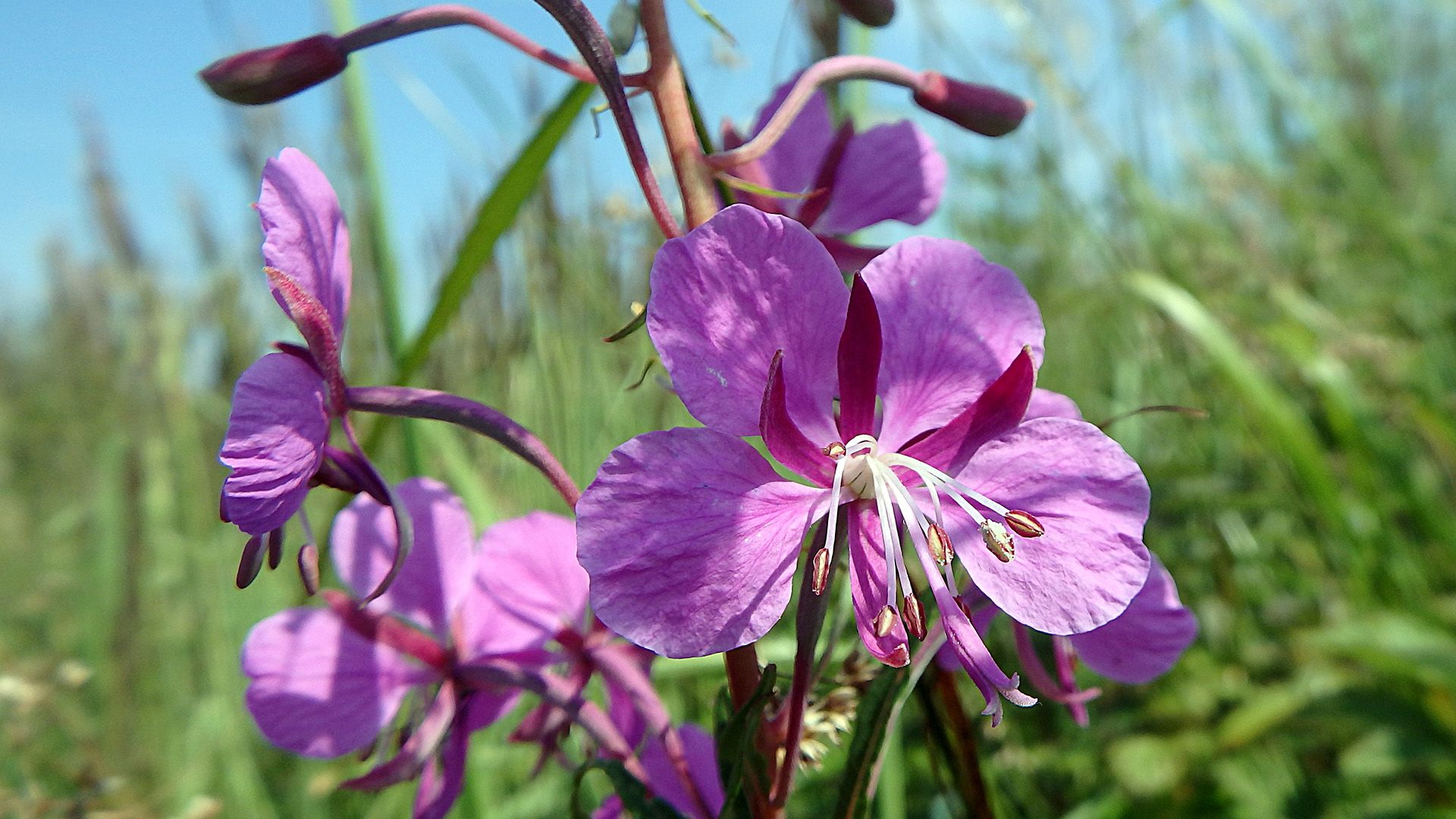
Fireweed (Chamaenerion angustifolium, also known as Epilobium angustifolium) is an attractive perennial wildflower known for its spikes of magenta or whitish flowers that can reach up to 1.5 meters (5 feet) in height.12
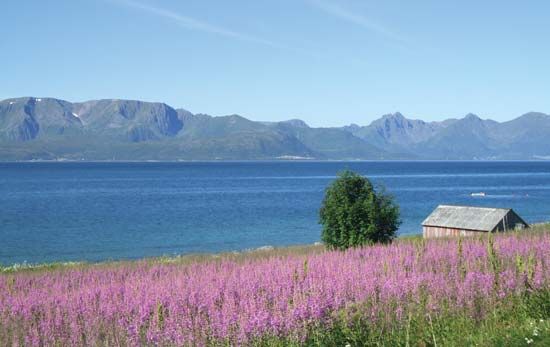
It is famously one of the first plants to colonize areas following a wildfire or mechanical clearing. This rapid growth is possible because its seeds can remain dormant in the soil seed bank for many years, germinating only when conditions—such as the warmth provided by a fire—are ideal. While it is sometimes used in wild gardens, it requires careful management to prevent it from spreading. Additionally, the plant’s young, willowlike shoots and leaves are edible when cooked.1
The term “fireweed” can also refer to other plants that thrive in burned districts, such as the weedy annual Erechtites hieraciifolius found in eastern North America.2
How do seeds survive in the soil for so many years?
Seeds can remain viable in the soil seed bank for years, and sometimes even millennia, through a state of dormancy. This survival strategy is facilitated by several biological and physical adaptations:
- Metabolic Suppression: As a seed matures, it undergoes dehydration, and its metabolic activity—including respiration and cell division—declines significantly. This low-energy state protects the embryo from degradation over long periods.3
- Protective Seed Coats: The testa, or seed coat, acts as a physical barrier. It guards the embryo against mechanical damage and biological decay while regulating the intake of water and gases. In some species, such as certain legumes, the coat is extremely hard and impermeable, preventing moisture reuptake until specific conditions are met.43
- Environmental Triggers: Seeds often remain dormant until they receive specific environmental cues that signal favorable conditions for growth. These include temperature fluctuations, exposure to light, or chemical signals like karrikin found in smoke, which can trigger germination after a wildfire.456
- Afterripening: Some seeds require a period of afterripening, where internal physiological changes must occur before the seed can germinate, even if external conditions are ideal.4
What role do wildfires play in forest ecosystems?
Wildfires play a complex and vital role in maintaining the health and functionality of many forest ecosystems. While often perceived as destructive, fire is a natural process that many native species are specifically adapted to, often depending on it to persist and reproduce.89
Key ecological roles of wildfire include:
- Ecosystem Maintenance: Fire helps reduce competition between plants, decreases the prevalence of diseases and pests, and clears accumulated vegetation.689
- Nutrient Cycling: Wildfires recycle nutrients back into the environment, often fertilizing the soil with ash, which creates a nutrient-rich bed for new growth.89
- Promoting Regeneration: Many fire-adapted species rely on heat or chemical signals from smoke and charred matter to trigger germination. For example, some plants have serotinous cones that only open to release seeds after fire melts their protective resin.10
- Fuel Management: When allowed to occur with historical frequency, fire prevents the buildup of unnatural fuel loads, which helps keep fire intensity at manageable levels.68
Conversely, the suppression of natural fires can lead to the accumulation of excessive fuel, resulting in more intense, destructive conflagrations that can alter forest structure and threaten endangered species.689
What other plants are considered pioneer species?
Pioneer species are the first organisms to colonize barren or disturbed environments, initiating the process of ecological succession. While microorganisms, lichens, and fungi are often the very first to arrive, several types of plants also serve as key pioneers:
- Mosses: These non-vascular plants are early colonizers that help break down rock surfaces through the production of acids, contributing to the initial formation of soil.11
- Grasses: Often described as “weedy species,” grasses are fast-growing and reproduce quickly. They are well-adapted to colonizing areas with thin or poor soil, such as sand dunes or volcanic landscapes.1112
- Ferns: Once a basic layer of soil has been established by lichens and mosses, ferns are among the plants that can take root in the crevices of a developing environment.11
These plants share common traits, such as the ability to thrive in high-light conditions, rapid growth rates, and the production of large numbers of wind-dispersed seeds or spores.11
Sources
- fireweed — Encyclopædia Britannica
- fireweed — Merriam-Webster
- Seed - Afterripening, stratification, and temperature effects — Encyclopædia Britannica
- Soil seed bank — Encyclopædia Britannica
- Seed - Dormancy and life span of seeds — Encyclopædia Britannica
- Playing with Wildfire: 5 Amazing Adaptations of Pyrophytic Plants — Encyclopædia Britannica
- Plant development - Dormancy of the embryo — Encyclopædia Britannica
- Wildfire: Top Questions — Encyclopædia Britannica
- Wildfire — Encyclopædia Britannica
- Forest fire — Encyclopædia Britannica
- pioneer species — Encyclopædia Britannica
- primary succession — Encyclopædia Britannica
Published on · 3 min read