Red-tailed Hawk
The red-tailed hawk (Buteo jamaicensis) is a prominent North American bird of prey belonging to the family Accipitridae. Named for the distinct reddish-brown…
What is a red-tailed hawk?
The red-tailed hawk (Buteo jamaicensis) is a prominent North American bird of prey belonging to the family Accipitridae. Named for the distinct reddish-brown coloration on the dorsal side of its wide, rounded tail, this raptor is widely distributed across North America.12
As an apex predator, the red-tailed hawk is a “sit-and-wait” hunter that uses its exceptional eyesight to scan for mammals like mice, rabbits, and squirrels, as well as reptiles and other birds. These hawks are generally monogamous and build nests in high locations, including trees, cliff ledges, and even man-made structures like billboards.1
While some populations are migratory, others remain in their habitats year-round. The International Union for Conservation of Nature classifies the species as being of least concern due to its adaptability and vast range, though they face risks from human-related hazards such as vehicle collisions and pesticides. Notably, their high-pitched, raspy call is frequently used in films to represent the sound of various raptors.1
What does a red-tailed hawk look like?
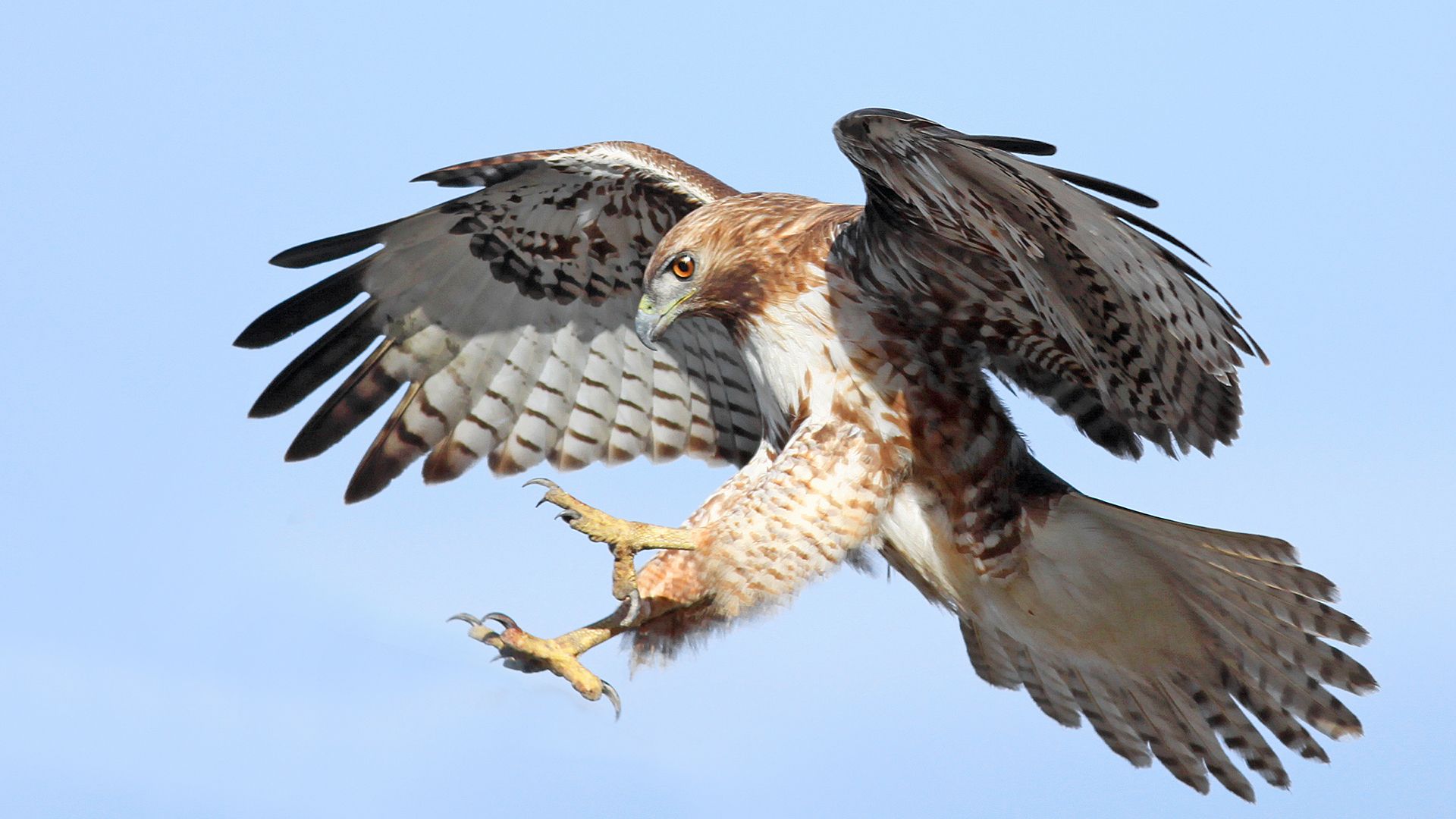
The red-tailed hawk (Buteo jamaicensis) is a large, broad-winged bird of prey characterized by its distinct appearance.12
Physical Characteristics
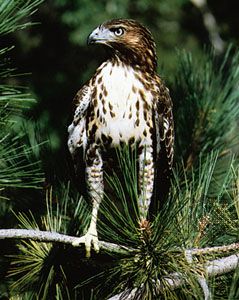
- Coloration: Adults typically feature dark brown upperparts, though some individuals may exhibit gray shades. Their underparts are generally cream-colored, often marked with a band of vertical dark brown streaks across the abdomen.1
- Tail: As their name suggests, adults are best known for the reddish-brown coloration on the dorsal side of their wide, rounded tail. In contrast, juveniles can be distinguished by their tails, which are marked with bands of pale brown.1
- Size: These birds are substantial in size, with adults typically measuring between 45.7 and 63.5 cm (18 to 25 inches) in length. They possess an impressive wingspan that can reach more than 1.2 meters (4 feet).1
- Sexual Dimorphism: Fully grown females are generally larger than males.1
Where do red-tailed hawks live?
The red-tailed hawk (Buteo jamaicensis) possesses a vast geographic range that spans nearly all of North America. Their distribution shifts seasonally: during the summer, they are found across the continent south of the Arctic Circle, while in the winter, their range generally extends from the border between the United States and Canada southward.2
These birds are partial migrants; while some populations remain in the same habitat year-round, others move to milder climates during the winter. Migrating individuals often follow geographical features like the Appalachian Mountains to utilize updrafts for energy conservation. Due to global warming, some populations are increasingly overwintering in their summer habitats, and their winter breeding grounds have been observed expanding poleward.2
When selecting specific nesting sites, they are highly adaptable, choosing high locations such as tall trees, cliff ledges, large cacti, or even man-made structures like billboards and electric power pylons.2
What do red-tailed hawks eat?
As an apex predator, the red-tailed hawk maintains a diverse diet consisting of a wide variety of small animals.2
Their primary food sources include:
- Mammals: Common prey includes mice, rats, rabbits, squirrels, and bats.2
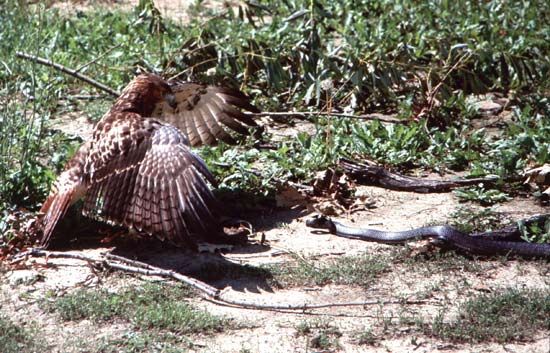
- Reptiles and Birds: They regularly consume lizards and snakes, particularly in warmer climates, as well as other birds., as well as other birds.2
- Other Sources: Their diet also includes fish, amphibians, insects, and carrion.2
These hawks are sit-and-wait predators that use their exceptional eyesight to scan the ground from high perches. They also hover above potential feeding grounds before diving to capture prey. While smaller prey is typically carried to a perch to be eaten, larger prey is consumed on the ground.2
Sources
- red-tailed hawk — Merriam-Webster
- Red-tailed hawk — Encyclopædia Britannica
- Hawk — Encyclopædia Britannica
Published on · 3 min read