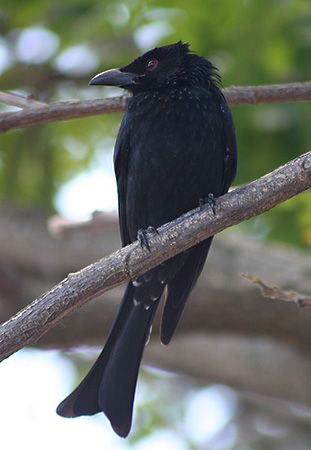
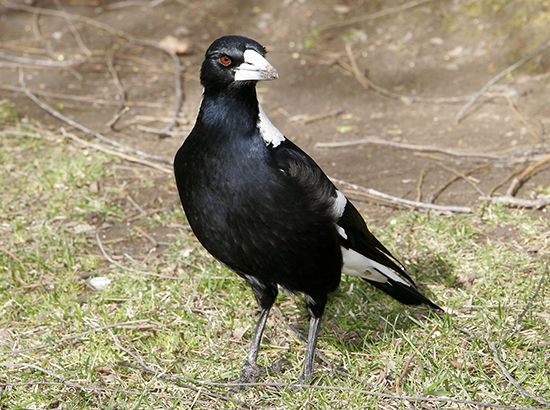
Shrike
Shrikes, belonging to the family Laniidae, are medium-sized predatory birds characterized by several distinct physical features:
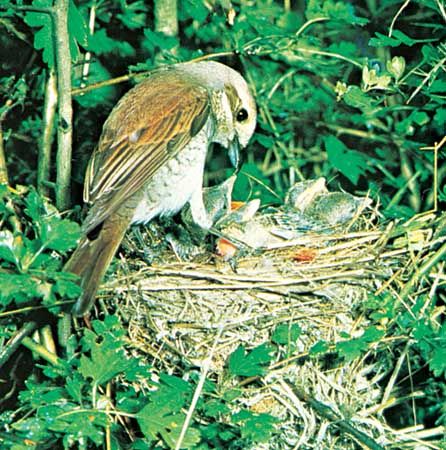
What are the distinctive physical characteristics of shrikes?
Shrikes, belonging to the family Laniidae, are medium-sized predatory birds characterized by several distinct physical features:
- Bills: They possess a specialized, hooked bill that allows them to kill prey such as large insects, lizards, mice, and small birds.12
- Plumage: True shrikes are generally solitary birds with gray or brownish coloration, often accented by black or white markings. For example, the great gray shrike is noted for its distinctive black mask.1
- Size: These birds are typically medium-sized; the great gray shrike, for instance, measures approximately 24 cm (9.5 inches) in length.1
Related groups exhibit different characteristics:
- Bush-shrikes: These birds are smaller (16 to 20 cm) and feature brighter plumage, less-raptorial bills, and long, soft feathers on the rump.1
- Bell-shrikes: These are plain-colored birds, often about 20 cm long, frequently featuring a white slash on their wings.1
Shrikes are well-known for their predatory behavior of impaling prey on thorns, which has earned them the nickname “butcherbird”.1
What are some common species of shrikes and where are they found?
Shrikes are a diverse group of predatory birds found across various regions, primarily categorized into true shrikes and several related groups.
True Shrikes (Family Laniidae)
True shrikes, belonging to the genus Lanius, are found globally, though they are represented by only two species in the New World:
- Great gray shrike: The most widespread species, known as the northern shrike in North America, this black-masked bird is found across the Northern Hemisphere.15
- Loggerhead shrike: A smaller species similar to the great gray shrike, it is the only other shrike native to North America.1
Related Groups
Other birds often referred to as shrikes are primarily found in Africa:
- Bush-shrikes: Comprising nearly 50 species in the family Malaconotidae, these birds inhabit African bushes. Examples include the many-coloured bush-shrike and the gorgeous (four-coloured) bush-shrike.1
- Bell-shrikes: Members of the African genus Laniarius, these include the sooty boubou, the tropical boubou, and the black-headed (Abyssinian) gonolek.1
- Helmet-shrikes: These African songbirds, also known as woodshrikes, travel in social parties and are characterized by a crest on the forehead.16
What is the origin of the name ‘shrike’ and what does it mean?
The name “shrike” is believed to have originated from the Middle English word shrike, which is derived from the Old English scrīc, meaning “thrush.” This etymology is also closely related to the Middle English verb shriken, meaning “to shriek,” likely referencing the bird’s harsh, piercing calls.4
While the name itself is linguistic in origin, the bird is also famously known by the common name “butcherbird.” This moniker describes the shrike’s distinctive predatory behavior of impaling its prey—such as insects, lizards, mice, and small birds—on thorns or barbed wire, effectively using them as a meat hook to secure its food.1
How do shrikes differ from other predatory birds like hawks or eagles?
Shrikes differ significantly from predatory birds like hawks and eagles in their biological classification and physical adaptations. While hawks and eagles are classified as raptors (order Falconiformes), shrikes are songbirds belonging to the order Passeriformes.84
Key differences include:
- Physical Adaptations: Raptors are defined by their sharp, curved talons used to seize and carry prey. In contrast, shrikes lack these specialized grasping claws. Although shrikes possess a hooked bill similar to raptors, they compensate for their lack of talons by impaling their prey—such as insects, lizards, and small birds—on thorns or barbed wire to secure it while they feed.894
- Classification: Raptors are often apex predators and are categorized into groups like Falconiformes (diurnal) and Strigiformes (nocturnal owls). Shrikes are members of the family Laniidae and are primarily medium-sized songbirds.84
- Behavior: While raptors are built to hunt and carry prey, shrikes are known for their unique “butcherbird” behavior, using environmental features as “meat hooks” to process their food.4
Sources
- Shrike — Encyclopædia Britannica
- Charadriiform - Annotated classification — Encyclopædia Britannica
- Shrike-vireo — Encyclopædia Britannica
- shrike — Merriam-Webster
- great gray shrike — Merriam-Webster
- Helmet-shrike — Encyclopædia Britannica
- shrike thrush — Merriam-Webster
- Bird of prey — Encyclopædia Britannica
- Cracticidae — Encyclopædia Britannica
Published on · 3 min read