Taymyr Peninsula
The Taymyr Peninsula is the northernmost extension of the Eurasian landmass, located in north-central Siberia, Russia. Covering approximately 150,000 square…
What is Taymyr Peninsula?
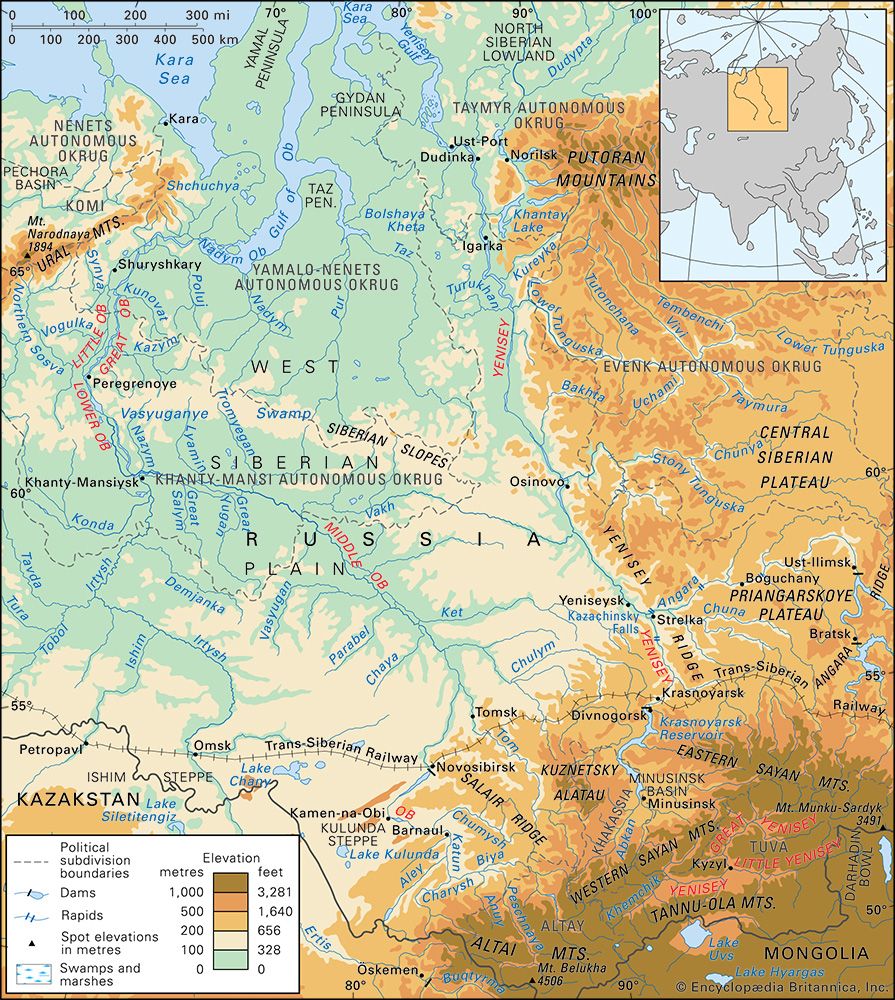
The Taymyr Peninsula is the northernmost extension of the Eurasian landmass, located in north-central Siberia, Russia. Covering approximately 150,000 square miles, it is situated between the Yenisey and Khatanga rivers, bordered by the Kara Sea to the west and the Laptev Sea to the east.123
The region is characterized by a severe Arctic climate and is dominated by tundra landscapes. Its central portion features the Byrranga Mountains, which reach elevations between 1,650 and 3,800 feet, while the northernmost point of the peninsula is Cape Chelyuskin.21
Historically, the area was part of the Taymyr autonomous okrug, which was incorporated into the Krasnoyarsk kray in 2007. Due to its extreme environment and remoteness, the peninsula is sparsely populated by groups including the Dolgans, Nenets, and Nganasans, who primarily engage in reindeer herding, hunting, and fishing.2
What is the climate like in the Siberian tundra?
The climate of the Siberian tundra is classified as a polar continental climate, characterized by long, intensely cold winters and short, cool summers. This region experiences extreme seasonal variations, with mean winter temperatures in the central Siberian Arctic often reaching approximately −35 °F (−37 °C), and extreme lows occasionally dropping between −65 and −50 °F (−54 and −46 °C).4
Key features of this climate include:
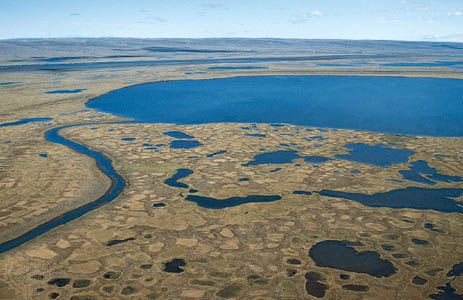
- Permafrost: Due to mean annual temperatures at or below 0 °C (32 °F), the ground is often underlain by permafrost, which can extend to depths of over 1,400 meters in unglaciated areas of Siberia.56
- Precipitation: The climate is relatively dry, with low annual snowfall and precipitation totals often less than 35 cm (about 14 inches).7
- Summer Conditions: Summers are brief and mild, with mean temperatures for the warmest month remaining below 10 °C (50 °F). While days are long due to high latitude, they are frequently cloudy, and frost or snow can occur during any month of the year.47
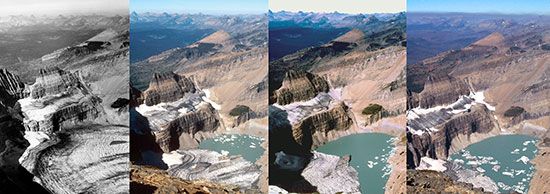
- Environmental Sensitivity: The region is highly sensitive to climate change, with surface air temperatures in the Arctic rising significantly faster than the global average, leading to concerns about permafrost thawing and the release of stored greenhouse gases.3
Who are the indigenous peoples of the Taymyr region?
The Taymyr Peninsula is home to several Indigenous groups who have traditionally adapted to the region’s harsh Arctic environment through reindeer herding, hunting, and fishing. The primary Indigenous peoples of the region include:
- Dolgans: A Turkic-speaking people who constitute a significant portion of the Indigenous population in the Taymyr region. Their culture emerged in the 18th century from a nucleus of Evenk clans that adopted a dialect of the Sakha language.1415
- Nganasans: Often considered original inhabitants of the peninsula, they are a Uralic-speaking people historically noted for their reliance on hunting wild reindeer, alongside domestic reindeer husbandry.161718
- Nenets: The largest Indigenous group in northwestern Siberia, the Tundra Nenets inhabit regions across the Taymyr Peninsula. They are renowned for their extensive reindeer pastoralism.1619
- Enets: Closely related to the Nganasans and Nenets, the Enets traditionally occupied the basins of the lower Yenisey River and consider themselves original inhabitants of the peninsula.1617
These groups have faced significant cultural and environmental changes due to 20th-century Soviet policies, which introduced forced settlement, industrialization, and the collectivization of their traditional economies.171819
What animals are adapted to live in the Arctic environment?
Animals in the Arctic have evolved specialized physical and behavioral adaptations to survive extreme cold, limited food, and seasonal light variations. Because hibernation is not viable due to the lack of frost-free refuges, non-migratory, warm-blooded animals must remain active throughout the winter.2122
Mammalian Adaptations
- Insulation and Size: Large herbivores like reindeer and musk oxen utilize their large body size to conserve heat. Musk oxen possess exceptionally thick coats, while polar bears rely on a dense undercoat, a thick layer of fat, and hollow, transparent hairs that reflect light and trap air for insulation.2324
- Camouflage: Many species, including Arctic foxes, Arctic hares, and ptarmigans, undergo seasonal color shifts, sporting white coats in winter to blend into the snow.23
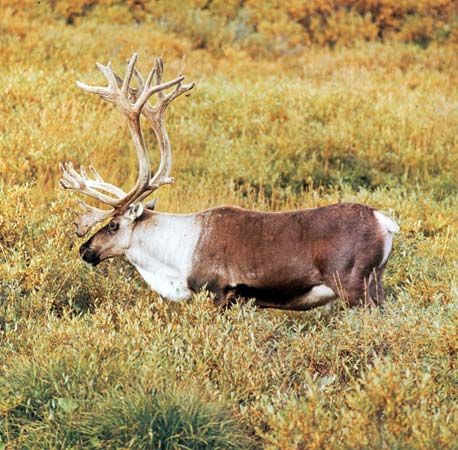
- Foraging: Reindeer use sharp hooves and antlers to clear snow to reach lichens and plants. Lemmings remain active under the snow, using the insulating layer to protect their nests and access food.2325
Marine and Avian Life
- Marine Mammals: Species such as the beluga, narwhal, and various seals are well-adapted to the frigid waters.26
- Migration: Most birds are migratory, arriving in summer to exploit the high productivity of the long daylight hours. Exceptions include the snowy owl and ptarmigan, which remain in the region year-round.2122
Sources
- Taymyr Peninsula — Encyclopædia Britannica
- Taymyr Peninsula — Merriam-Webster
- Taymyr — Encyclopædia Britannica
- Arctic - Climate of the Arctic — Encyclopædia Britannica
- Taiga - Climate — Encyclopædia Britannica
- Tundra climate — Encyclopædia Britannica
- Tundra - Effects of human activities and climate change — Encyclopædia Britannica
- permafrost — Encyclopædia Britannica
- Altai Mountains - Climate — Encyclopædia Britannica
- Tundra - Soils — Encyclopædia Britannica
- Polar ecosystem - Development and structure of populations and communities — Encyclopædia Britannica
- Polar ecosystem - Biological productivity — Encyclopædia Britannica
- North Siberian Lowland — Encyclopædia Britannica
- Arctic - Peoples of Fennoscandia and northwestern Siberia — Encyclopædia Britannica
- Dolgan — Encyclopædia Britannica
- Arctic - History of settlement — Encyclopædia Britannica
- Enets — Encyclopædia Britannica
- Nganasan — Encyclopædia Britannica
- Nenets — Encyclopædia Britannica
- Nganasani — Merriam-Webster
- Arctic - Marine fauna — Encyclopædia Britannica
- Arctic - Animals of the land and fresh water — Encyclopædia Britannica
- Tundra - Arctic mammals — Encyclopædia Britannica
- Inuit: Top Questions — Encyclopædia Britannica
- polar bear: Top Questions — Encyclopædia Britannica
- Asia - The tundra — Encyclopædia Britannica
- Why are polar bears white? — Encyclopædia Britannica
Published on · 3 min read