Woolly Mammoth
The woolly mammoth (Mammuthus primigenius) was a massive, herbivorous elephant species that thrived during the Pleistocene ice ages. Standing 3 to 3.7 meters…
What is woolly mammoth?
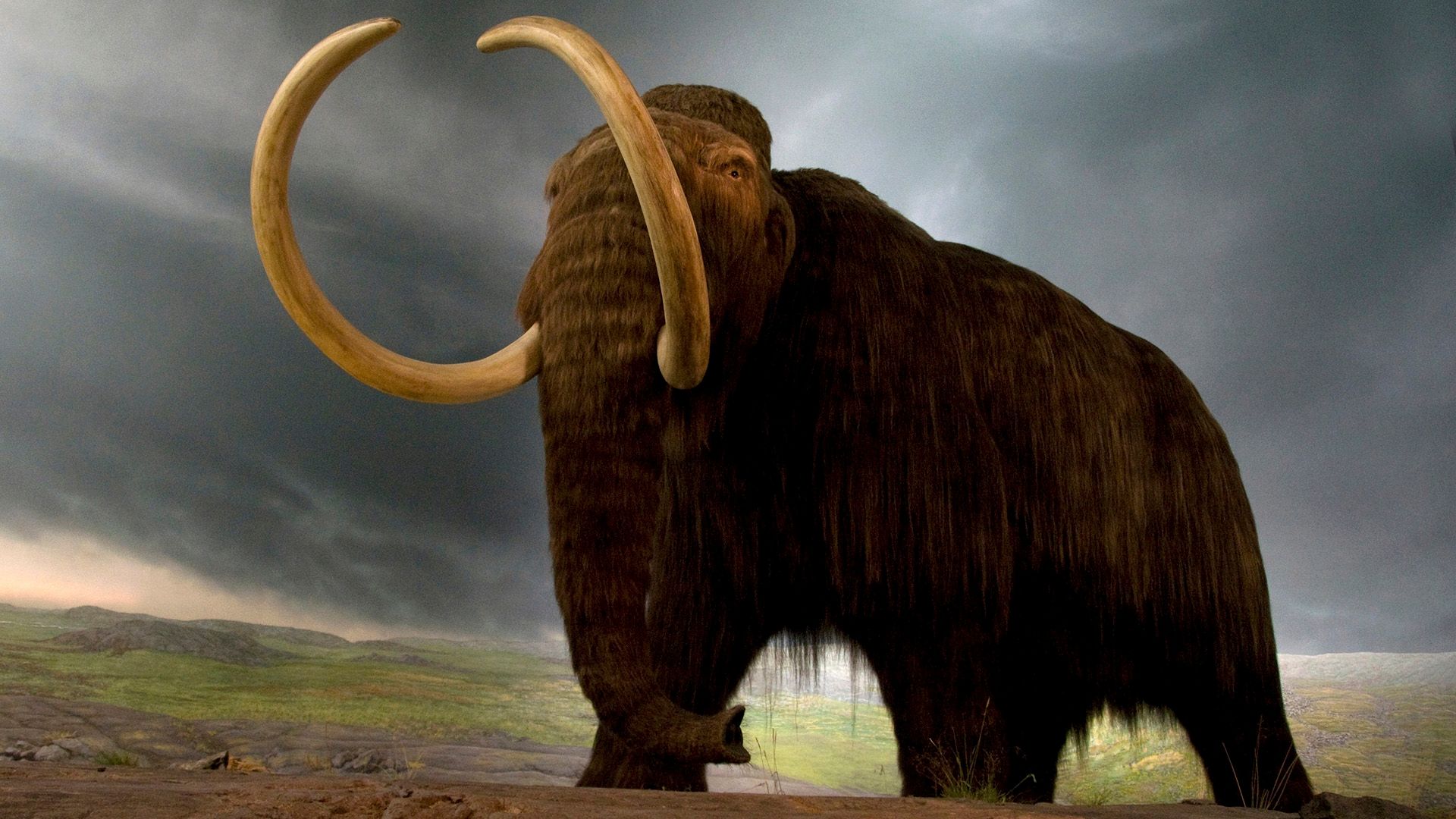
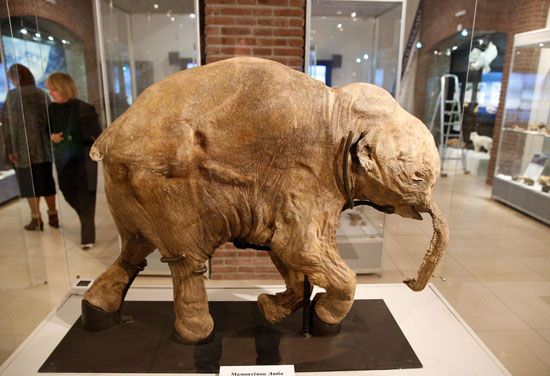
The woolly mammoth (Mammuthus primigenius) was a massive, herbivorous elephant species that thrived during the Pleistocene ice ages. Standing 3 to 3.7 meters tall and weighing up to 7,300 kg, it was physically adapted to frigid environments with a thick layer of insulating fat, small ears to minimize heat loss, and a dense coat of fur consisting of a yellowish-brown undercoat and long, coarse dark hair.12
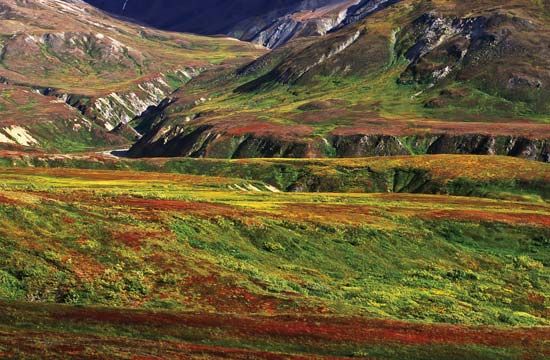
These animals possessed high, domelike skulls and large, downward-curving tusks used for foraging and defense. They primarily inhabited the steppe tundra across Eurasia and North America.132
Woolly mammoths largely went extinct around 10,000 years ago due to a warming climate and human hunting, though small, isolated populations persisted on islands like Wrangel Island until approximately 4,300 years ago. Because many carcasses were preserved in permafrost, they are the best-known of all mammoth species, providing scientists with significant genetic material for research into de-extinction.432
How are woolly mammoths related to modern elephants?
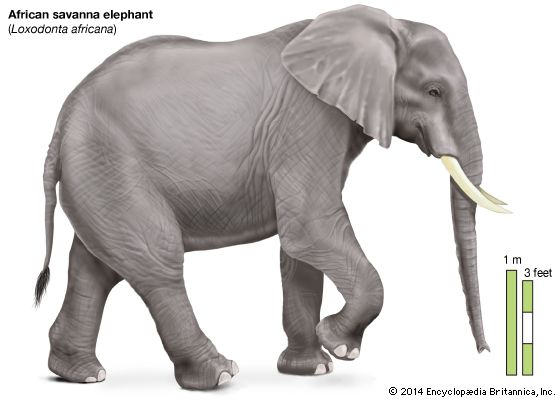
Woolly mammoths are most closely related to modern Asian elephants. Both belong to the same family, Elephantidae, and they share a common ancestor that lived approximately six million years ago.36
While Asian elephants and mammoths are closely related, African elephants are more distantly related to both groups. Molecular and morphological studies indicate that the lineage leading to African elephants diverged from the Asian elephant-mammoth line between 4.2 million and 9 million years ago.6
Because of this close evolutionary connection, scientists currently use the Asian elephant as a model for research into potential de-extinction. Biotechnology efforts, such as those by Colossal Biosciences, involve modifying the DNA of Asian elephant embryos to incorporate physical characteristics of the woolly mammoth, such as a shaggy coat, though some experts note that the resulting animals would remain primarily modified Asian elephants.7
What other animals lived during the Pleistocene ice ages?
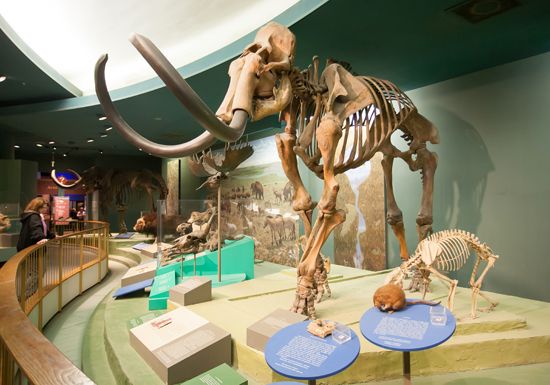
The Pleistocene Epoch, often called the “Great Ice Age,” was characterized by a trend of gigantism among terrestrial mammals. While many species were similar to those living today, the era featured a diverse array of now-extinct megafauna that adapted to shifting climates and vast grasslands.89
Notable Pleistocene Animals
- Large Herbivores: In addition to woolly mammoths and mastodons, the landscape supported giant sloths, giant beavers, woolly rhinoceroses, bison, horses, camels, llamas, and stag-moose.810
- Predators: The era was home to formidable carnivores, including sabre-toothed cats, dire wolves, American lions, American cheetahs, and the giant short-faced bear and cave bear.8
- Modern Relatives: Some species, such as the musk ox, antelopes, and various insects and mollusks, have modern counterparts that remain largely unchanged from their Pleistocene ancestors.8
The extinction of many of these large mammals at the end of the epoch remains a subject of intense scientific debate, with theories focusing on the impact of human hunting—the “overkill hypothesis”—and the stress caused by rapid climatic and vegetation changes.810
Can scientists bring back the woolly mammoth through cloning?
Scientists are not currently using traditional cloning to bring back the woolly mammoth, as the process of creating a genetically identical copy requires intact living cells that are not available from ancient remains. Instead, researchers are pursuing de-extinction through advanced genetic engineering.611123
Companies like Colossal Biosciences are attempting to create a mammoth-like animal by using CRISPR technology to modify the DNA of an Asian elephant embryo. The goal is to introduce specific mammoth traits, such as a shaggy coat or cold-adapted physiology, into the elephant genome. This modified embryo would then be carried to term by a surrogate Asian elephant.6113
Critics emphasize that this approach would not result in a true woolly mammoth, but rather a “proxy” species—essentially a slightly modified Asian elephant. Furthermore, the field faces significant ethical questions regarding the potential to alter natural history, the welfare of the resulting animals, and the allocation of resources for conservation.6311
Sources
- How big was the woolly mammoth? — Encyclopædia Britannica
- woolly mammoth — Merriam-Webster
- woolly mammoth: Top Questions — Encyclopædia Britannica
- 6 Animals We Ate Into Extinction — Encyclopædia Britannica
- mammoth — Encyclopædia Britannica
- woolly mammoth — Encyclopædia Britannica
- proboscidean — Encyclopædia Britannica
- Quaternary - Fauna and flora — Encyclopædia Britannica
- Pleistocene Epoch - Megafaunal extinctions — Encyclopædia Britannica
- Pleistocene Epoch — Encyclopædia Britannica
- de-extinction — Encyclopædia Britannica
- woolly rhinoceros — Encyclopædia Britannica
- cloning — Encyclopædia Britannica
Published on · 3 min read