Barrier Reef
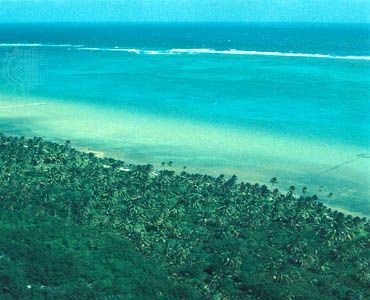
A barrier reef is a type of coral reef that runs roughly parallel to a coastline, separated from the shore by a lagoon or a deep channel. These reefs are…
What is barrier reef?
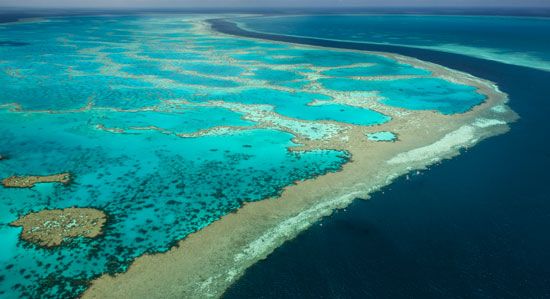
A barrier reef is a type of coral reef that runs roughly parallel to a coastline, separated from the shore by a lagoon or a deep channel. These reefs are often pierced by channels that provide access to the lagoon and the landmass beyond.12
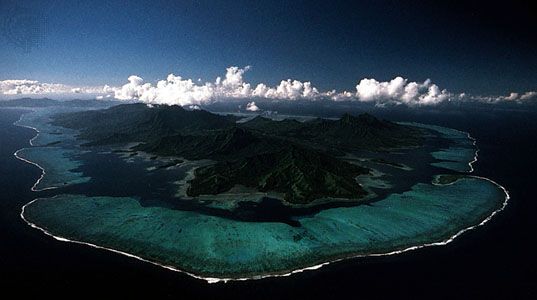
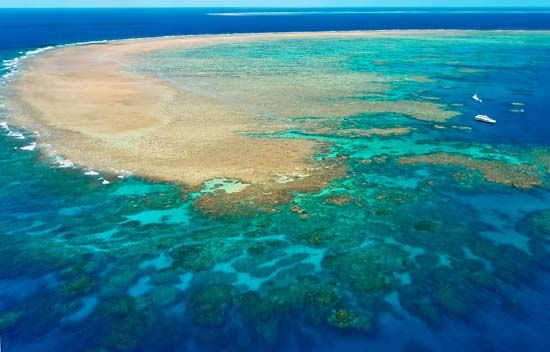
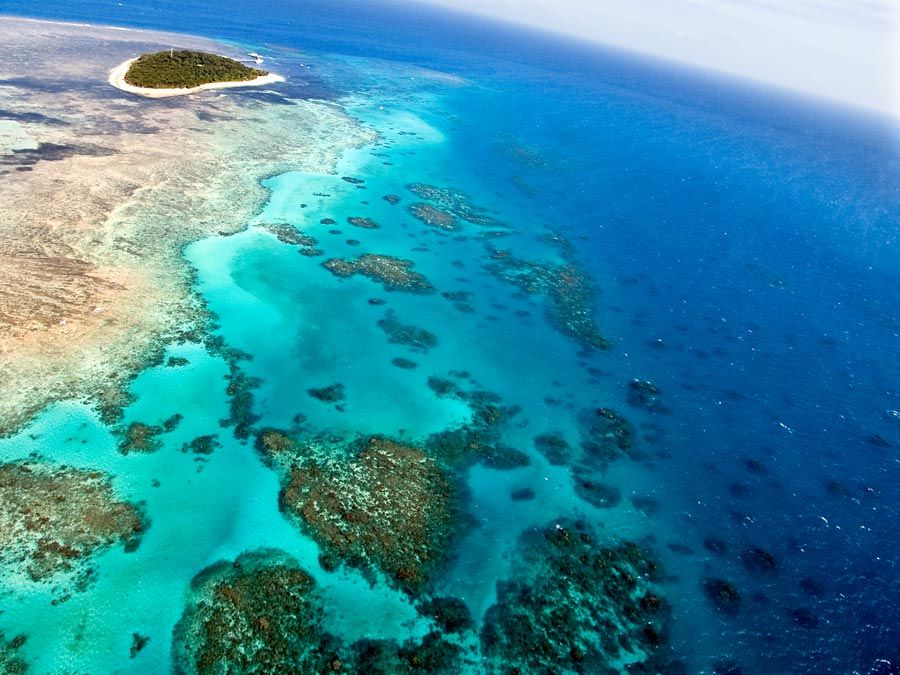
While some barrier reefs are circular and surround an island, others—such as Australia’s Great Barrier Reef—are complex, linear structures composed of chains of reef patches. According to the theory of reef development, these structures often form as landmasses subside or sea levels rise, allowing the reef to grow upward and outward.23
Because these reefs serve as the foundation for diverse ecosystems, they are highly sensitive to environmental stressors like rising ocean temperatures and pollution, which can lead to coral bleaching and habitat loss. Protecting these environments is essential for maintaining marine biodiversity.45
How do fringing reefs differ from atolls?
Fringing reefs and atolls represent different stages in the development of coral reef systems, primarily distinguished by their relationship to landmasses and their physical structure.73
- Fringing Reefs: These reefs consist of flat areas that directly skirt or “fringe” a non-reef landmass, such as a volcanic island or a mainland coast. They are attached directly to the shore without an intervening lagoon or deep channel.48
- Atolls: These are circular or closed-loop reef structures that enclose a central lagoon but lack a central landmass. They are essentially the final stage of reef development, occurring after the original volcanic island has subsided below sea level, leaving only the reef rim at the surface.748
According to the subsidence theory popularized by Charles Darwin, reefs often begin as fringing reefs around a volcanic island. As the island subsides or sea levels rise, the reef grows upward and outward, eventually becoming a barrier reef separated from the land by a lagoon. Once the volcanic peak disappears entirely, the remaining structure is classified as an atoll.73
What creatures live in the Great Barrier Reef?
The Great Barrier Reef is one of the most biodiverse ecosystems on Earth, supporting a vast array of marine life. The reef framework itself is built by tiny coral polyps and hydrocorals, with at least 450 species of hard coral identified in the region.9
The reef is home to a wide variety of creatures, including:
- Invertebrates: Anemones, sponges, worms, gastropods, lobsters, crayfish, prawns, and crabs.9
- Fishes: More than 1,500 species inhabit the reef, such as wrasses, damselfish, triggerfish, angelfish, rays, and sharks, including tiger sharks and whale sharks.9
- Other Vertebrates: The area hosts six of the seven known species of sea turtles, nearly two dozen species of birds, and more than a dozen sea snakes.9
While many species contribute to the reef’s health, some, like the crown-of-thorns starfish, can be destructive when their populations grow, as they consume living coral.9
How does a lagoon form behind a barrier reef?
The formation of a lagoon behind a barrier reef is primarily driven by the vertical growth of the reef in relation to the landmass it surrounds. According to the subsidence theory proposed by Charles Darwin, reefs often begin as fringing reefs attached to a volcanic island or coastline.4
As the landmass gradually subsides or sea level rises—a process significantly influenced by the melting of ice sheets since the Pleistocene Epoch—the reef continues to grow upward and outward toward the light and nutrients at the seaward edge. This upward growth creates a physical separation between the reef rim and the shore, resulting in the formation of a protected, relatively calm body of water known as a lagoon. Over time, if the original landmass becomes completely submerged, the reef may continue to grow as an atoll, with the lagoon remaining in the central area where the island once stood.4
Sources
- barrier reef — Encyclopædia Britannica
- Great Barrier Reef — Merriam-Webster
- coral reef - Types of coral reefs — Encyclopædia Britannica
- coral reef - Origin and development of reefs — Encyclopædia Britannica
- Coral bleaching — Encyclopædia Britannica
- mangrove: Top Questions — Encyclopædia Britannica
- atoll — Encyclopædia Britannica
- coral island — Encyclopædia Britannica
- Great Barrier Reef — Encyclopædia Britannica
- Queensland - Plant and animal life — Encyclopædia Britannica
- lagoon - Barrier bars and sediment sources — Encyclopædia Britannica
- lagoon - Waves , tides, and surf — Encyclopædia Britannica
- coral reef - Sedimentation — Encyclopædia Britannica
Published on · 3 min read