Where Do Falcons Typically Live?
Falcons are birds of prey found on every continent except Antarctica, inhabiting diverse environments ranging from deserts and tropical forests to coastal…
Where Do Falcons Typically Live?
Falcons are birds of prey found on every continent except Antarctica, inhabiting diverse environments ranging from deserts and tropical forests to coastal shores.12
Their specific habitats vary by species:
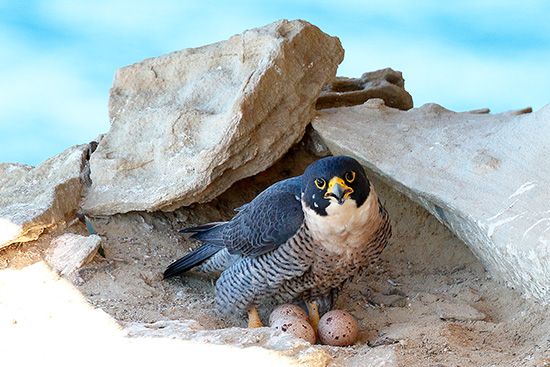
- Peregrine falcons: Typically inhabit rocky open country near water, nesting on high cliff ledges, though they have successfully adapted to urban environments by nesting on skyscrapers and bridges.13
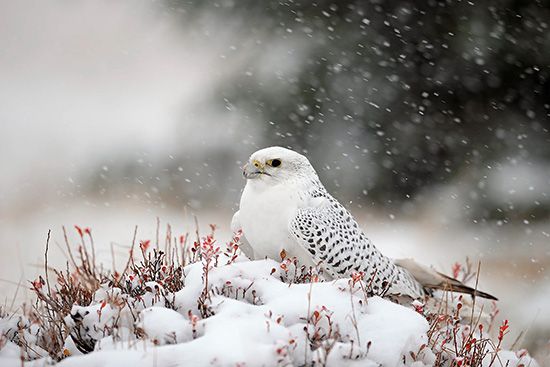
- Gyrfalcons: Primarily live in the Arctic, utilizing cliff faces or abandoned tree nests.1
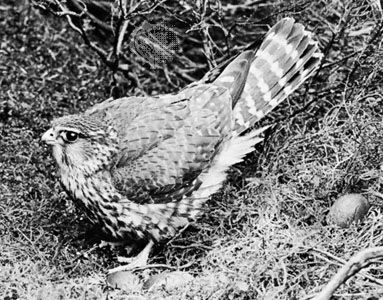
- Merlins: Found in high latitudes across the Northern Hemisphere, they inhabit open country, marshlands, and conifer or birch woods.1
- Aplomado falcons: Reside in grasslands ranging from the United States to Argentina.1
- Forest and desert species: Some, like the forest falcon, live in jungles, while others, such as the prairie falcon, inhabit canyon and scrub country.1
Generally, falcons are most common in warm, open country, though many have adapted to forest life.2
What are the main differences between hawks and falcons?
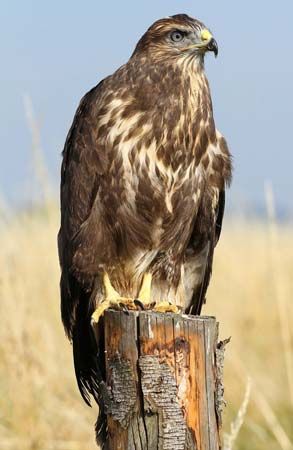
While both hawks and falcons are birds of prey, they belong to distinct taxonomic families—Accipitridae and Falconidae, respectively—and have evolved different physical and behavioral traits to master their environments.5
Physical Differences
- Build and Wings: Hawks are generally larger with broad wings and tails, which provide the maneuverability needed to hunt in wooded areas. Falcons possess streamlined bodies and long, pointed wings, allowing for incredible speed and precision in open spaces.5
- Nesting: Hawks typically build nests in trees, though some use cliffs or the ground. Falcons prefer nesting in tree holes or on cliff ledges.5
- Eggs: Hawk eggs are usually off-white with brown spots, while falcon eggs range from dull white to tan with reddish-brown speckles.5
Hunting and Falconry
In the sport of falconry, these birds serve different roles based on their natural adaptations:
- Falcons (Longwings): Prized for their speed, they are typically used to hunt other birds in flight over open terrain.56
- Hawks (Shortwings/Broadwings): True hawks, such as goshawks, are better suited for hunting ground game in enclosed or wooded environments.56
How does the sport of falconry work?
Falconry is the ancient sport of partnering with trained birds of prey—including falcons, hawks, eagles, and buzzards—to hunt wild quarry.78
The Training Process
The core of falconry is conditioning the bird to hunt in partnership with a human. The process involves:
- Manning: The initial stage of taming, where the bird becomes accustomed to the falconer and the environment, often by being carried on a gloved fist.6
- Weight Control: Falconers determine the bird’s ideal “flying weight”—the weight at which it would naturally hunt—to ensure it remains motivated to work for food.6
- Conditioning: The bird is trained to respond to calls or signals, such as whistles, and to chase a lure that simulates its natural prey.6
- Entering: The final stage where the bird is introduced to wild game. Once it makes its first kill, the training is considered complete.6
Hunting Styles
Techniques vary based on the bird’s natural hunting style:
- Longwings (Falcons): Often hunt by “waiting on,” where they climb high and “stoop” (dive) at prey, or by direct pursuit from the fist.6
- Shortwings and Broadwings: Typically fly in rapid bursts from the fist or a tree to capture ground game.6
Falconers use specialized equipment, or “furniture,” such as leather gloves, jesses (leg straps), and hoods to manage the birds.9
What makes the peregrine falcon the fastest animal in the world?
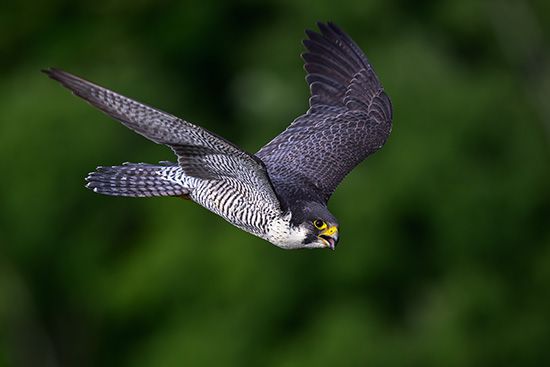
The peregrine falcon is recognized as the fastest animal in the world due to its specialized physiological adaptations for high-speed hunting. While many birds are capable of flight, the peregrine falcon’s ability to reach speeds exceeding 320 km (200 miles) per hour is achieved through a specific hunting maneuver known as a “stoop” or dive.11212
Several key factors contribute to this remarkable velocity:
- Body Morphology: Peregrine falcons possess heavy, bullet-shaped bodies that minimize drag, allowing them to slice through the air efficiently during a descent.12
- Wing Structure: Their long, pointed wings are designed for high-speed performance rather than the soaring or maneuvering required by other birds of prey.12
- High Wing Loading: By having a high ratio of body weight to wing area, these falcons are physically adapted to maintain stability and control while accelerating rapidly under the influence of gravity.12
By flying high and then diving at their prey, they utilize gravity to attain these tremendous speeds, striking their target midair with clenched talons to kill by impact.1311
Sources
- Where Do Falcons Typically Live? — Encyclopædia Britannica
- Peregrine falcon — Encyclopædia Britannica
- Falconiform - Migration — Encyclopædia Britannica
- Falconiform - General features — Encyclopædia Britannica
- What are the differences between hawks and falcons? — Encyclopædia Britannica
- falconry - Types of birds used in falconry — Encyclopædia Britannica
- falconry — Encyclopædia Britannica
- falconry - Hunting and training techniques — Encyclopædia Britannica
- falconry - History — Encyclopædia Britannica
- falconry - Terms and equipment — Encyclopædia Britannica
- How Much Does a Falcon Eat Each Day? — Encyclopædia Britannica
- The Fastest Animals on Earth — Encyclopædia Britannica
- Falconiform - Flapping, soaring , and diving — Encyclopædia Britannica
Published on · 4 min read