Marsh Fly
A marsh fly is any member of the insect family Sciomyzidae, which belongs to the order Diptera. These medium-sized insects are found worldwide, typically…
What is marsh fly?
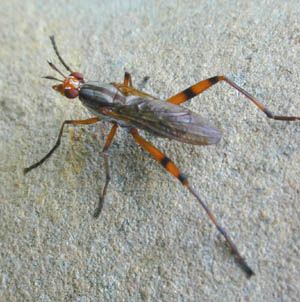
A marsh fly is any member of the insect family Sciomyzidae, which belongs to the order Diptera. These medium-sized insects are found worldwide, typically inhabiting marshy environments.1
There are approximately 600 known species, and they are notable for their parasitic larvae, which prey on snails, slugs, and other mollusks. Adult marsh flies vary in appearance but often feature yellowish or brown bodies with dappled wings. The life cycle typically involves the adult laying eggs directly on the host animal; once the larva matures, it may pupate within the shell of the snail it has consumed.1
How do marsh fly larvae hunt snails?
The larvae of the marsh fly (family Sciomyzidae) are specialized predators that hunt snails, slugs, and other mollusks. Their hunting process is primarily characterized by a direct association with their host: adult flies typically lay their eggs directly onto the body of the target animal. Once the eggs hatch, the larvae begin to feed on the host animal upon which they were deposited.1
While the provided search results confirm that these larvae are parasitic and prey upon mollusks, they do not detail specific mechanical hunting behaviors beyond this direct placement of eggs. After the larva has consumed the host, it may complete its development by pupating inside the shell of the snail.1
What role do marsh flies play in their ecosystem?
Marsh flies (family Sciomyzidae) play a significant role in their ecosystems as specialized natural predators of mollusks, including snails and slugs. By preying on these organisms, they act as a biological control agent, helping to regulate mollusk populations within their marshy habitats.1
Because each of the approximately 600 species is often associated with specific types of hosts, these flies contribute to the complex food webs found in wetland environments. Their life cycle, which involves larvae feeding directly on their hosts and often pupating within the shells of the consumed snails, demonstrates a highly evolved ecological relationship that links the fly population directly to the health and density of local mollusk communities.1
While marsh flies are integral to these environments, other insects in similar habitats, such as shore flies or those with specialized adaptations like rat-tailed maggots, utilize different strategies to survive the unique conditions of salt marshes, such as fluctuating salinity and oxygen levels.4
What are some other types of parasitic insects?
Parasitic insects exhibit a wide range of survival strategies, categorized primarily by how they interact with their hosts. Beyond the marsh flies previously discussed, many other insects have evolved to exploit other organisms for nutrition and development.
Parasitoids
Unlike typical parasites that may coexist with a host, parasitoids are insects whose larvae feed on or within a host, ultimately killing it.56
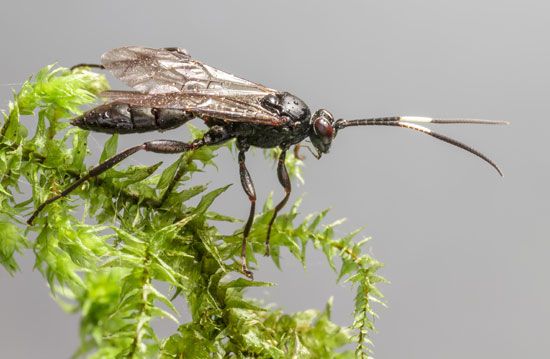
- Wasps: The majority of parasitoids are wasps. For example, Ichneumon wasps deposit eggs in or on a host, where the larvae consume the host’s body fats and fluids.7
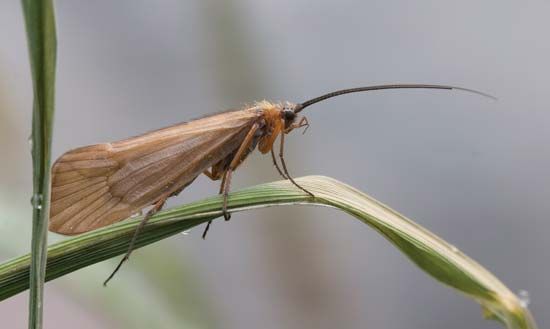
- Other Groups: While wasps are the most common, this strategy has also evolved in some flies, beetles, moths, lacewings, and even one species of caddisfly even one species of caddisfly.56
Ectoparasites
Ectoparasites live on the surface of their host’s body.
- Lice: These insects spend their entire life cycle on a host, often cementing their eggs to hair or feathers.58
- Fleas: These are well-known ectoparasites that feed on the blood of mammals and birds.5
Specialized Parasitic Relationships
- Social Parasitism: Some ants practice social parasitism, where they depend on the labor of a host ant species within a mixed-species colony.5
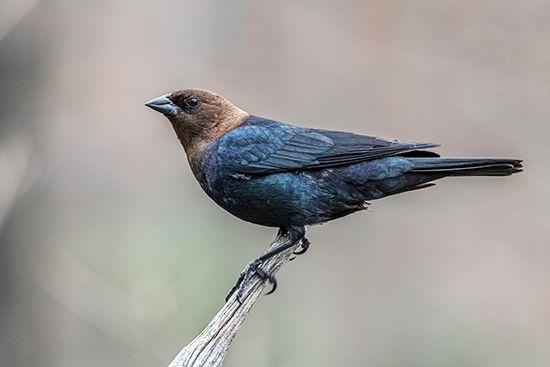
- Brood Parasitism: While more commonly associated with birds like cuckoos and cowbirds, some bees exhibit a similar behavior by laying eggs in the nests of other bee species, where the larvae destroy the host’s offspring to consume the provided food.57
Sources
- marsh fly — Encyclopædia Britannica
- Diptera - Larvae — Encyclopædia Britannica
- malacostracan - Food and feeding — Encyclopædia Britannica
- Salt marsh — Encyclopædia Britannica
- parasitism — Encyclopædia Britannica
- Hymenoptera - Solitary forms — Encyclopædia Britannica
- parasitoid — Encyclopædia Britannica
- Biological control — Encyclopædia Britannica
- louse - Life cycle — Encyclopædia Britannica
- Diptera - General features — Encyclopædia Britannica
- community ecology - Types of parasites — Encyclopædia Britannica
- community ecology - Alternation among hosts — Encyclopædia Britannica
Published on · 3 min read