What Do Ants Eat?
With approximately 10,000 species of ants worldwide, their diets are remarkably diverse, ranging from opportunistic scavenging to specialized farming. Most…
What do ants eat?
With approximately 10,000 species of ants worldwide, their diets are remarkably diverse, ranging from opportunistic scavenging to specialized farming. Most ants are generalist omnivores, consuming a variety of plant and animal substances as they encounter them.12
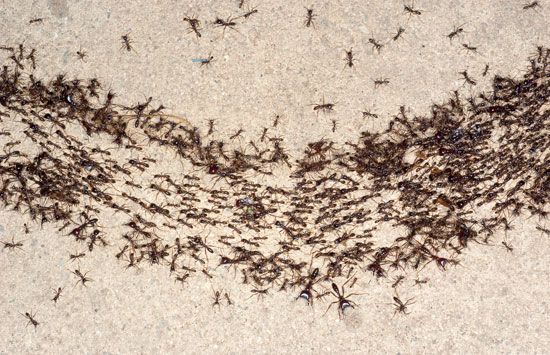
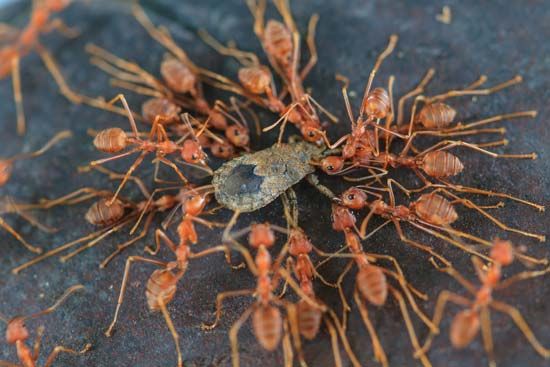
- Animal-based foods: Many species are hunters or scavengers. Bullet ants and driver ants actively hunt insects, spiders, and small animals like frogs. Others, such as Sahara desert ants, scavenge for carcasses in harsh environments.12
- Plant-based foods: Ants frequently consume nectar, resins, and saps. Harvester ants collect and store seeds and fruits.12
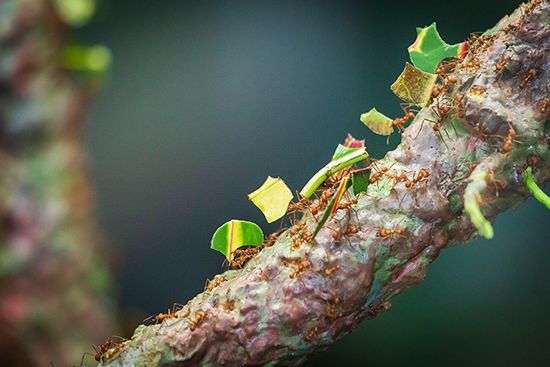
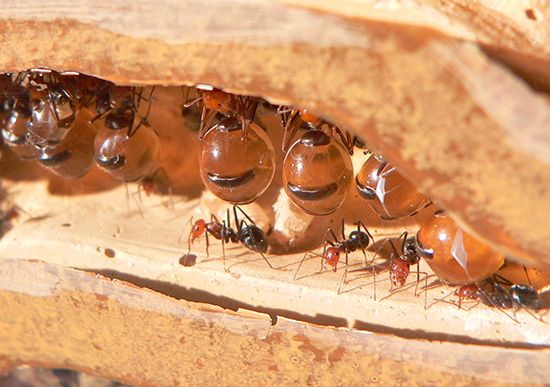
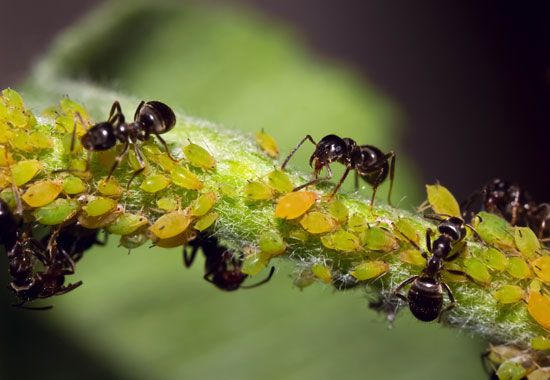
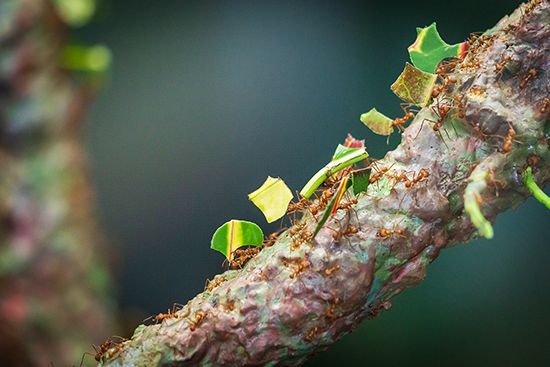
- Specialized relationships: Some ants “herd” aphids to collect honeydew, a sugary secretion, which honey ants store in their abdomens. Leafcutter ants are unique farmers that harvest leaves specifically to cultivate a fungus as their primary food sourcefungus](https://www.britannica.com/science/fungus) as their primary food source.12
How do leafcutter ants cultivate their own fungus?
Leafcutter ants maintain a sophisticated agricultural system within their underground nests, where they cultivate specific fungi as their primary food source. This process involves several meticulous steps:
- Substrate Preparation: Ants forage for fresh leaves, which they transport to specialized subterranean chambers. They chew these leaves into a pulp, creating a nutrient-rich substrate that serves as the foundation for the fungal garden.45
- Cultivation and Maintenance: The ants actively manage the garden by removing contaminants and weeding out competing fungal species. They also produce enzymes and amino acids that promote the growth of their crop.45
- Pathogen Control: To protect their harvest, the ants secrete antimicrobial substances that inhibit the growth of harmful pathogens.45
- Harvesting: The fungus converts the plant material into food for the colony, producing specialized protein-containing structures called gongylidia. The ants consume these structures, as well as the fungal strands themselves.45
This relationship is a form of obligate mutualism; the fungus relies entirely on the ants for survival and propagation, while the ants depend on the fungus for nutrition.5
What is the relationship between herder ants and aphids?
The relationship between herder ants and aphids is a classic example of mutualism, where both species derive significant benefits from their association.61
- Honeydew Exchange: Aphids feed on plant sap, which is rich in water and sugar but low in other nutrients. To obtain enough sustenance, they ingest large quantities of sap and excrete the excess as a sugary, nutrient-rich substance called honeydew6. Ants, which prize this sweet liquid as a food source, obtain it by gently stroking or “milking” the aphids with their antennae.27
- Protection and Care: In exchange for this food, the ants act as guardians. They protect the aphids from weather and natural predators, such as ladybird beetles and lacewings.28
- Active Management: Some ant species go further by actively managing their “herds.” For instance, the cornfield ant collects aphid eggs in autumn, stores them in the nest through the winter, and carries the young to host plants in the spring. Similarly, ants may transfer aphids from wilted plants to healthy ones to ensure a continuous supply of honeydew.728
This dependency is so profound that some aphid species are nearly helpless in finding host plants without the assistance of their ant partners.78
How do ants communicate with each other to find food?
Ants primarily communicate the location of food sources to their colony members through the use of scent marks.9
When a worker ant discovers a food source, it creates a chemical trail by depositing pheromones along the path as it returns to the nest10. These chemical signals serve as a guide for other colony members, allowing them to follow the route to the food. The trail remains effective as long as the food source is available and the pheromone path is reinforced by other returning workers.910
While many ant species rely on these chemical trails, some, such as the Sahara desert ant, utilize different methods. Because the extreme heat of their environment causes volatile pheromones to evaporate too quickly for reliable navigation, these ants instead use polarized light as a compass and measure the distance traveled by counting their steps, a process known as proprioception.3
Sources
- What do ants eat? — Encyclopædia Britannica
- ant - Food — Encyclopædia Britannica
- Sahara desert ant — Encyclopædia Britannica
- leafcutter ant — Encyclopædia Britannica
- ant - Notable ant behaviors — Encyclopædia Britannica
- homopteran - Honeydew — Encyclopædia Britannica
- aphid — Encyclopædia Britannica
- homopteran - Associations with other insects — Encyclopædia Britannica
- termite - Communication — Encyclopædia Britannica
- Chemoreception - Pheromones — Encyclopædia Britannica
- Hymenoptera - Social forms — Encyclopædia Britannica
Published on · 3 min read