Yablonovy Range
The Yablonovy Range is a mountain system located in the Transbaikalia region of far eastern Russia, spanning across the Chita oblast and Buryatiya.
What is Yablonovy Range?
The Yablonovy Range is a mountain system located in the Transbaikalia region of far eastern Russia, spanning across the Chita oblast and Buryatiya.1
Extending approximately 500 miles (800 km) in a northeast–southwest direction, the range reaches a maximum elevation of 5,512 feet (1,680 m) at Mount Kusotuy. The mountains are composed primarily of granite and gneiss and have been significantly uplifted and fractured. While the highest peaks remain bare, the majority of the range is covered by dense forests of larch, spruce, and pine. The Trans-Siberian Railroad traverses the range through a low pass known as Yablonovaya.1
What is the Trans-Siberian Railroad?
The Trans-Siberian Railroad is the world’s longest single rail system, spanning 5,771 miles (9,288 km) between Moscow and Vladivostok. This monumental project, initiated in 1891 under the vision of Sergei Witte, was designed to extend Russian influence into East Asia, facilitate the extraction of Siberian resources, and capture global trade routes.3
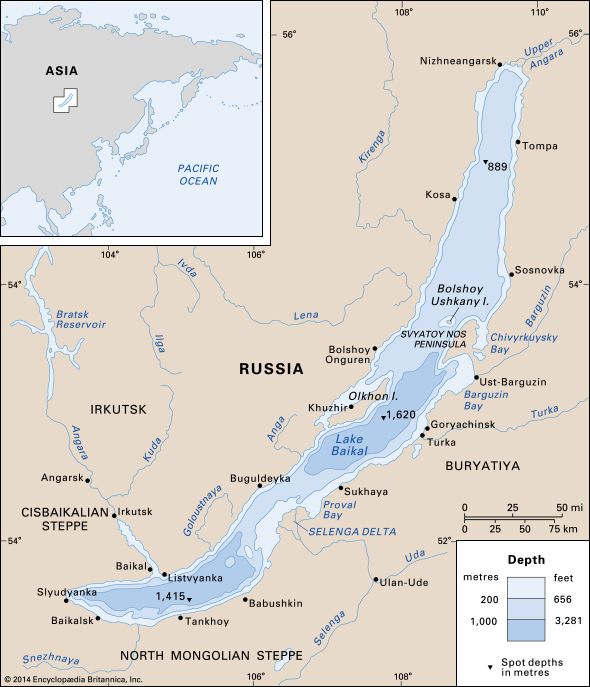
The main route crosses the Ural Mountains, passes through major cities like Novosibirsk and Irkutsk, and follows the southern shore of Lake Baikal. Completed in its entirety within Russian territory by 1916, the railroad has served as a critical artery for military, economic, and humanitarian transport throughout the 20th century, including during World War II and the Russian Civil War.3
Today, it remains the backbone of the Russian railway network. While it continues to facilitate travel for millions, the system faces modern challenges, including rising maintenance costs due to climate change and thawing permafrost.3
What are the main geographical features of Siberia?
Siberia is a vast region characterized by four major geographic zones, each defined by distinct relief and drainage patterns.5
Major Geographic Regions
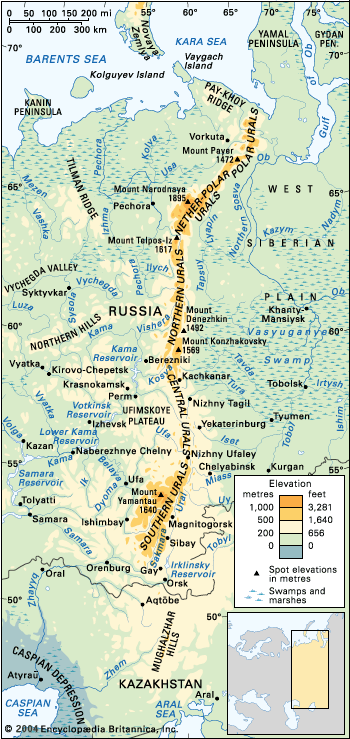
- West Siberian Plain: One of the world’s largest flatlands, this region is composed of horizontal Cenozoic sediments and is drained by the Ob and Irtysh rivers. It is largely featureless, poorly drained, and covered by taiga (boreal forest).45
- Central Siberia: Located east of the Yenisey River, this area is dominated by the Central Siberian Plateau, consisting of stratified plains, mesas, and uplifted blocks.65
- Northeastern Siberia: This region features a complex series of mountain ranges, including the Verkhoyansk and Chersky ranges, as well as upland massifs and the Lena River basin.65
- Baikal Area: Centered on Lake Baikal, this region is defined by massive block faulting, deep structural hollows, and surrounding mountains.75
Climate and Vegetation
Siberia is notorious for its severe, long winters and harsh climate, which becomes increasingly extreme toward the east. The region is dominated by the taiga biome, while the northern reaches transition into tundra. Much of the area is underlain by permafrost, which presents significant challenges for infrastructure and agriculture.589
How does the climate of Transbaikalia affect local wildlife?
The climate of Transbaikalia, a region characterized by a severely continental environment, significantly influences local wildlife by imposing extreme seasonal stresses that necessitate specialized survival strategies.15
Environmental Challenges
The region experiences long, bitterly cold winters and short, cool summers. This extreme temperature range forces animals to adapt through various physiological and behavioral mechanisms to endure periods of food scarcity and harsh weather.161718
Wildlife Adaptations
- Dormancy and Hibernation: To survive the freezing winter months, many mammals exhibit reduced metabolic activity. While some species undergo true hibernation to conserve energy, others, such as brown bears, enter a state of winter dormancy.1918
- Migration: Many ungulates, including musk deer and roe deer, perform elevational migrations, moving between mountain slopes and valleys to find more suitable foraging grounds as seasonal conditions shift.1918
- Habitat Selection: Species often rely on specific microhabitats—such as the dense taiga forests or sheltered mountain terrain—to provide protection from wind and extreme cold.201918
The diverse landscape of Transbaikalia, which includes steppe grasslands, taiga, and alpine zones, supports a variety of fauna, including lynx, wolverine, and various bird species like the great bustard, all of which have evolved to thrive within these rigorous climatic constraints.1519
Sources
- Yablonovy Range — Encyclopædia Britannica
- Yenisey River - Climate — Encyclopædia Britannica
- Trans-Siberian Railroad — Encyclopædia Britannica
- Russia - Rivers — Encyclopædia Britannica
- Lake Baikal — Encyclopædia Britannica
- Asia - North Asia — Encyclopædia Britannica
- West Siberian Plain — Encyclopædia Britannica
- Taiga - Climate — Encyclopædia Britannica
- Taiga — Encyclopædia Britannica
- permafrost - Agriculture — Encyclopædia Britannica
- permafrost - Highways and railroads — Encyclopædia Britannica
- Russia - The mountains of the south and east — Encyclopædia Britannica
- Verkhoyansk Mountains — Encyclopædia Britannica
- Siberia — Encyclopædia Britannica
- Altai Mountains - Climate — Encyclopædia Britannica
- Barguzinsky Nature Reserve — Encyclopædia Britannica
- Asia - North and Central Asia — Encyclopædia Britannica
- Yenisey River: Top Questions — Encyclopædia Britannica
- Baikalsky Nature Reserve — Encyclopædia Britannica
- mammal - Response to environmental cycles — Encyclopædia Britannica
- Transcaucasia - Climate — Encyclopædia Britannica
- Caucasus - Climate — Encyclopædia Britannica
Published on · 3 min read