Goldentop
Goldentop (Lamarckia aurea) is an annual grass belonging to the Poaceae family. Native to the Mediterranean region, this plant is characterized by its showy…
What is Goldentop?
Goldentop (Lamarckia aurea) is an annual grass belonging to the Poaceae family. Native to the Mediterranean region, this plant is characterized by its showy, one-sided, golden-yellow flower clusters.12
The plant typically grows to a height of about 40 cm (16 inches) and features flat leaves with a membranous ligule. Its flowers are densely arranged in erect panicles that can reach up to 8 cm (3 inches) in length. While goldentop is often cultivated in gardens for its ornamental appearance, it is also considered a weedy species in various disturbed or cultivated environments across Australia, the Americas, and Europe.2
What are the defining characteristics of the Poaceae grass family?
The Poaceae family, commonly known as the grass family, is one of the largest and most ecologically significant groups of flowering plants, comprising over 11,700 species. As monocotyledons, they share several distinct morphological characteristics.345
Vegetative Structure
- Stems: Often called culms, stems are typically round in cross-section and may be hollow or filled with spongy pith. They grow through cell division and enlargement at the base.5
- Leaves: Grass leaves are arranged in two vertical ranks and consist of a sheath that encircles the stem and a long, narrow blade with parallel veins. A small structure called a ligule is usually present at the junction of the sheath and blade.5
- Roots: Grasses possess a fibrous root system rather than a single taproot.65
Reproductive Features
- Inflorescence: The primary unit is the spikelet, which consists of small, overlapping scales (glumes, lemma, and palea) protecting the florets.5
- Flowers: Grass flowers are highly simplified and adapted for wind-pollination. They lack showy petals, instead using tiny, translucent structures called lodicules to force the floret open for pollen exchange.5
- Fruit: The fruit, known as a caryopsis or grain, is unique because the fruit wall is fused to the seed coat.5
How do invasive plant species like goldentop spread to new regions?
Invasive plant species, such as goldentop, spread to new regions through both natural migration and human-mediated activities. While some plants rely on natural dispersal mechanisms—such as wind, water, or animal transport—human activity is the most common driver for the introduction of nonnative species into new habitats.27
Human-led dispersal often occurs inadvertently through global commerce and trade. For example, seeds can be transported as contaminants in fodder or cling to materials like wool during international shipping. Additionally, plants are sometimes introduced deliberately for ornamental purposes in gardens, only to escape and become weedy or invasive in disturbed environments.7892
Once introduced, these species may thrive if they possess a competitive advantage over indigenous plants, especially in ecosystems lacking natural predators. Furthermore, climate change and rising atmospheric carbon dioxide levels can provide new opportunities for these plants to colonize habitats that were previously unsuitable.210
What is the difference between an annual and a perennial plant?
The primary difference between annual and perennial plants lies in the duration of their life cycles.
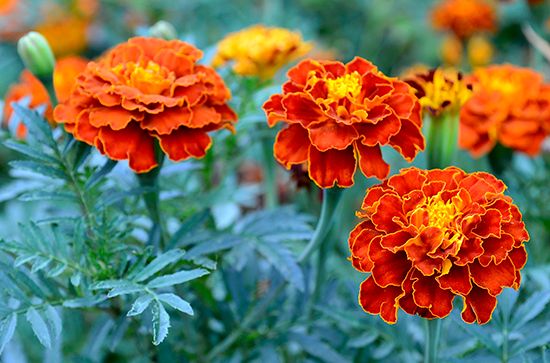
- Annuals: These plants complete their entire life cycle—from germination to seed production and death—within a single growing season. The only part of an annual that survives from one season to the next is the dormant seed. This category includes many common vegetables, cereal grains, and garden flowers like marigolds.1213
- Perennials: These plants persist for several years, regrowing and reblooming season after season. While woody perennials like trees and shrubs remain visible year-round, herbaceous perennials often die back to the ground in autumn, surviving the winter through specialized underground structures like bulbs, rhizomes, or tubers.121415
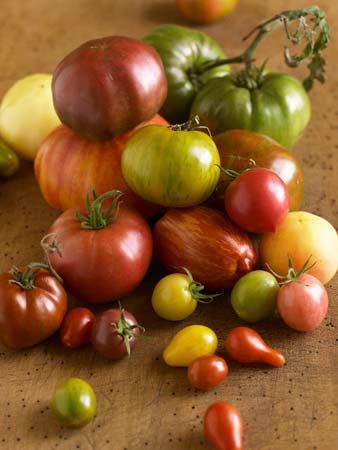
It is worth noting that some plants, such as tomatoes, are perennials in their native tropical climates but are frequently grown as annuals in temperate zones because they cannot survive the cold.1315
Sources
- goldentop — Merriam-Webster
- goldentop — Encyclopædia Britannica
- Poaceae — Encyclopædia Britannica
- list of plants in the family Poaceae — Encyclopædia Britannica
- grass — Encyclopædia Britannica
- Poaceae - Characteristic morphological features — Encyclopædia Britannica
- Plant - Dispersal and colonization — Encyclopædia Britannica
- invasive species - Solutions — Encyclopædia Britannica
- Seed - Dispersal by water — Encyclopædia Britannica
- invasive species — Encyclopædia Britannica
- Seed - Dispersal by animals — Encyclopædia Britannica
- Is That Plant 'Perennial' or 'Annual'? — Merriam-Webster
- Perennial — Encyclopædia Britannica
- Annual — Encyclopædia Britannica
- life span - Perennials — Encyclopædia Britannica
Published on · 3 min read