The Steppe
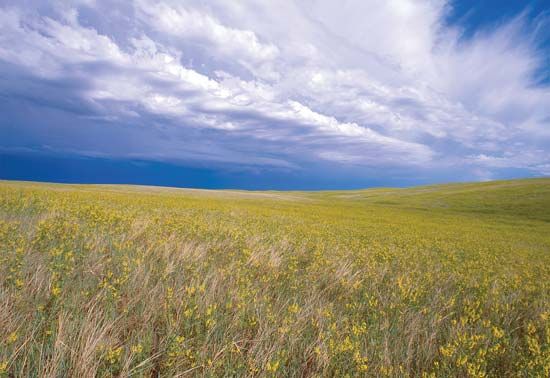
The Eurasian Steppe is a vast, semiarid grassland characterized by a lack of trees and a climate defined by hot summers and cold winters.
What types of flora and fauna are commonly found in the Eurasian Steppe?
The Eurasian Steppe is a vast, semiarid grassland characterized by a lack of trees and a climate defined by hot summers and cold winters.1
Flora
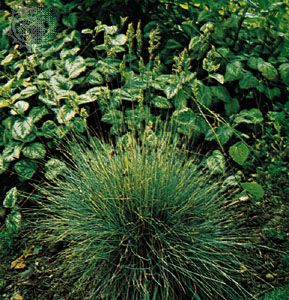
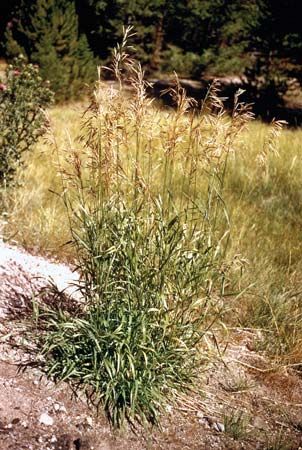
The vegetation is dominated by annual and perennial true grasses that typically grow no taller than half a meter. Common species include:1
- Turf grasses: Such as fescue, needlegrass, bromegrass, bluegrass, and Agropyron1.2
- Other plants: Small flowering shrubs, low forbs, mosses, and lichens are also present.12
Fauna
The open landscape has favored the evolution of herbivores adept at running and small burrowing animals.12
- Mammals: Notable species include the horse, saiga antelope, Bactrian camel, gazelle, and bobak marmot. Predators include the Caspian Sea wolf and the corsac fox.1
- Birds: Common species include bustards, larks, gray partridge, and birds of prey such as eagles, falcons, and hawks.32
What are the main geographical features and climate characteristics of the Eurasian Steppe?
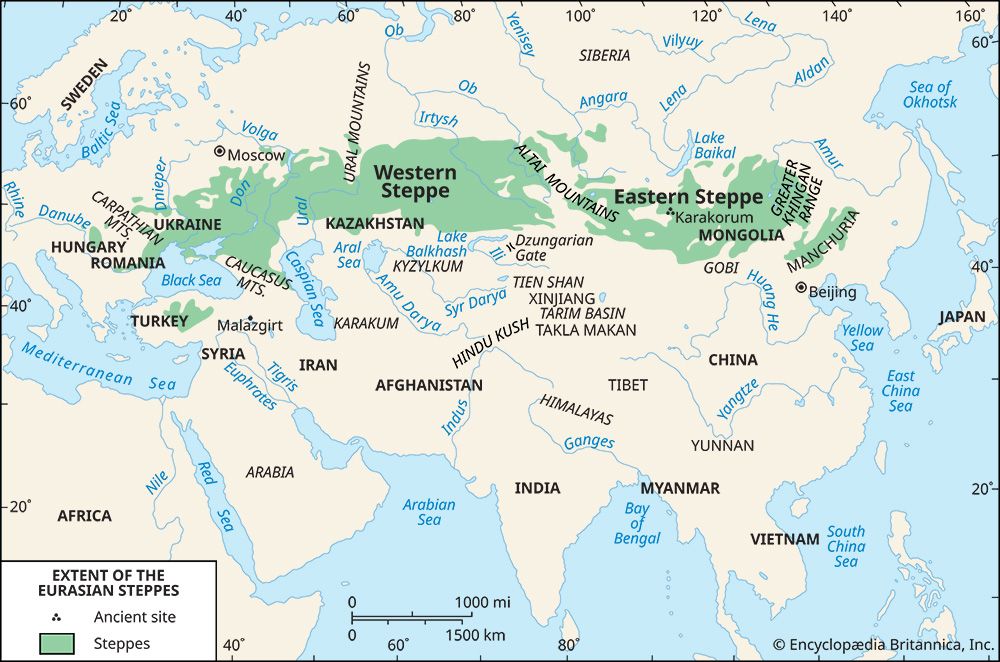
The Eurasian Steppe is a vast, 5,000-mile-long belt of grassland stretching from Hungary to Manchuria.14
Geographical Features
The region is divided into two primary segments by mountain ranges, though these barriers historically did not prevent movement:14
- Western Steppe: Extending from the Danube River to the Altai Mountains, this area is characterized by vast, flat plains and slow-moving rivers that historically facilitated trade and travel.1
- Eastern Steppe: Stretching from the Altai Mountains to the Greater Khingan Range, this segment is higher, colder, and more rugged than its western counterpart.1
The steppe is bounded by the taiga forests to the north and transitions into deserts to the south, where mountain ranges often create isolated “islands” of greenery and oases.5
Climate Characteristics
The Eurasian Steppe experiences a semiarid, continental climate with hot summers and cold winters. Key features include:16
- Temperature Extremes: The region faces sharp seasonal contrasts, with the Eastern Steppe experiencing some of the greatest temperature fluctuations on Earth.1
- Precipitation: Rainfall is limited, typically ranging from 10 to 12 inches (25–30 cm) annually. Precipitation generally decreases moving eastward, making the western regions more suitable for natural pastureland.61
How has the Steppe influenced the development of nomadic cultures throughout history?
The environment of the Eurasian Steppe fundamentally shaped the development of nomadic cultures by necessitating a highly mobile, pastoral way of life. Because the land could support only limited populations, nomads organized into small kinship groups, moving frequently to find fresh pasture for their herds. This lifestyle favored portable goods over permanent structures, leaving a minimal archaeological footprint.8
Military and Political Influence
The steppe environment fostered the development of formidable military capabilities, most notably through the “cavalry revolution” of the 9th and 8th centuries BCE. By prioritizing horses, nomads gained unparalleled mobility and striking power, allowing them to assemble large, fast-moving forces that could exploit weaknesses in the defenses of settled agricultural societies. This mobility made them a recurring political force, as they frequently raided or conquered neighboring “oases” of civilization, such as China, the Middle East, and parts of Europe.910
Cultural Exchange and Migration
Geography acted as both a conduit and a barrier for cultural diffusion. Migrations through corridors like the Dzungarian Gate unified the steppe, allowing for the widespread sharing of languages, art, and religious ideas. Furthermore, the proximity of nomads to settled populations led to a “mixed economy” in border regions, where trade in grain and animal products created an intimate, albeit often tense, relationship between pastoralists and agriculturalists.11810
How did the domestication of horses impact life on the Steppe?
The domestication of horses was a transformative development for life on the Eurasian Steppe, fundamentally altering the economy, social structure, and military capabilities of its inhabitants.
Economic and Social Shifts
By approximately 4000 BCE, steppe dwellers began keeping herds of horses alongside cattle, sheep, and goats. This shift necessitated a migratory, pastoral lifestyle, as large herds required constant movement to find fresh pasture in semiarid regions. A significant breakthrough occurred when humans learned to rely on animal milk and milk products, allowing them to exploit a new ecological niche. This transition eventually created a clear divide between sedentary agriculturalists and nomadic pastoralists who moved from pasture to pasture throughout the year.9
Military Revolution
The most profound impact of the horse was on warfare. While early chariots revolutionized military tactics in civilized states, they were too expensive and cumbersome for most northern nomads. However, the “cavalry revolution” of the 9th and 8th centuries BCE changed everything. By learning to fight effectively on horseback, nomads unleashed unprecedented speed and agility. This mobility allowed them to concentrate forces at will and strike sedentary societies with devastating efficiency. On the steppe, nomads could easily sustain these cavalry forces by substituting horseflesh and mare’s milk for other food sources, enabling them to maintain a lifestyle centered in the saddle9.
Cultural Integration
The adoption of horse nomadism unified the steppe, creating a shared history across the region. As horsemen migrated through corridors like the Dzungarian Gate, they facilitated the widespread exchange of languages, religious ideas, and artistic styles, effectively weaving the disparate parts of the steppe into a single, interconnected cultural whole.12
Sources
- Steppe — Encyclopædia Britannica
- Europe - Wild animals — Encyclopædia Britannica
- Russia - Wooded steppe and steppe — Encyclopædia Britannica
- the Steppe - Physical features — Encyclopædia Britannica
- Tien Shan - Climate — Encyclopædia Britannica
- the Steppe — Encyclopædia Britannica
- the Steppe - Geography of adjacent regions — Encyclopædia Britannica
- the Steppe - The great dispersal — Encyclopædia Britannica
- the Steppe - Horsepowered warfare — Encyclopædia Britannica
- the Steppe - Early patterns of migration — Encyclopædia Britannica
- the Steppe - Inhabitants of adjacent regions — Encyclopædia Britannica
- horse - Origin of horse domestication — Encyclopædia Britannica
- the Steppe - Critical developments — Encyclopædia Britannica
- South American nomad - Composite bands — Encyclopædia Britannica
Published on · 4 min read