Wild Radish
The wild radish (Raphanus raphanistrum) is a widespread annual plant belonging to the mustard family (Brassicaceae). Native to Eurasia, it has naturalized…
What is wild radish?
The wild radish (Raphanus raphanistrum) is a widespread annual plant belonging to the mustard family (Brassicaceae). Native to Eurasia, it has naturalized globally and is frequently considered a noxious agricultural weed.1
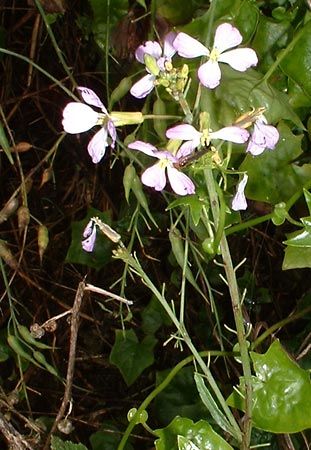
Physically, the plant features a stout taproot, a basal rosette of divided leaves, and bristly flowering stalks that reach about 60 cm (2 feet) in height. Its four-petaled flowers appear in various colors, including white, yellow, lilac, or violet, and display visible veins. The plant produces fruits known as jointed siliques, which contain several seeds.1
Some authorities believe the wild radish is the ancestor of the common domestic radish (Raphanus sativus), and the two species are known to hybridize readily.1
How does wild radish differ from the common garden radish?
While the wild radish (Raphanus raphanistrum) is considered a potential ancestor of the common garden radish (Raphanus sativus), they differ significantly in their cultivation and physical characteristics.1
Feature
Wild Radish
Common Garden Radish
Primary Use
Considered a noxious agricultural weed.
Cultivated globally as a food crop.
Root
Stout taproot, generally not consumed.
Succulent, edible taproot (varied shapes/colors).
Stalks
Very bristly.
Typically smooth.
Fruit
Jointed siliques containing 4–10 seeds.
Silicle (seed pod).
Harvest
Not typically harvested.
Harvested before flowering for the root.
The garden radish is specifically bred for its edible, crunchy root, which is rich in vitamin C and ranges in flavor from sweet to peppery. In contrast, the wild radish is a widespread, invasive plant that readily hybridizes with its domestic relative. While both share the four-petaled flower structure typical of the mustard family, the wild variety is primarily managed as a pest rather than a vegetable.21
Why is wild radish considered a noxious weed in agriculture?
The wild radish (Raphanus raphanistrum) is classified as a noxious agricultural weed primarily due to its aggressive nature as a widespread annual plant that competes with crops for resources.1
Its status as a weed is compounded by its ability to readily hybridize with the domestic radish (Raphanus sativus). This cross-breeding can compromise the genetic integrity of cultivated radish crops, making it a significant concern for farmers and agricultural management. Furthermore, its rapid naturalization across diverse environments allows it to establish itself easily in agricultural fields, where its robust growth and seed production make it difficult to eradicate.1
What are some other common plants in the mustard family?
The mustard family (Brassicaceae), also known as the crucifer family, is a large group of flowering plants characterized by their four-petaled, cross-shaped flowers. Many members are economically important, valued for their pungent, sulfur-containing compounds known as glucosinolates.456
Common Food Crops
Beyond the common radish, the family includes a wide variety of vegetables and condiments:
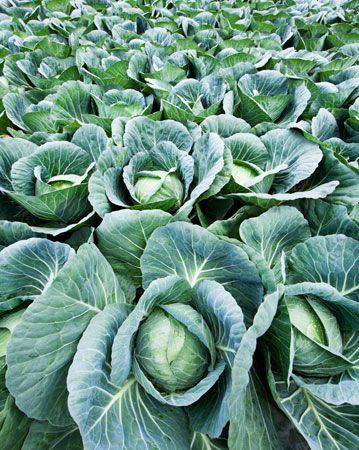
- Brassica vegetables: broccoli, cabbage, Brussels sprouts, cauliflower, kale, kohlrabi, turnip, and rutabaga.476
- Leafy greens: arugula, bok choy, collard, and watercress.4
- Condiments and others: horseradish, wasabi, brown mustard, and white mustard.46
Ornamental Plants
Several species are cultivated for their showy flowers, including:
Sources
- wild radish — Encyclopædia Britannica
- Radish — Encyclopædia Britannica
- wild radish — Merriam-Webster
- list of economically important members of the family Brassicaceae — Encyclopædia Britannica
- brassica — Encyclopædia Britannica
- Brassicales - Brassicaceae , Capparaceae, and Cleomaceae — Encyclopædia Britannica
- Brassicaceae — Encyclopædia Britannica
Published on · 2 min read