Capricorn and Bunker Groups
The Capricorn and Bunker groups are a collection of island clusters located at the southern end of the Great Barrier Reef off the coast of Queensland…
What is Capricorn and Bunker groups?
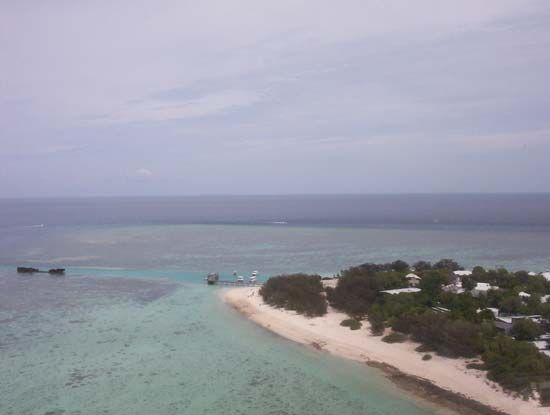
The Capricorn and Bunker groups are a collection of island clusters located at the southern end of the Great Barrier Reef off the coast of Queensland, Australia.1
Situated on the Tropic of Capricorn between Keppel Bay and the Capricorn Channel, these islands are true coral cays formed from sandy detritus resting on coral platforms. The islands are characterized by their screw-pine vegetation and are sparsely populated, with major islands such as Heron, One Tree, Wreck, and North West serving primarily as locations for prawn fishing and tourist resorts.1
It is important to note that these geographical features are distinct from the astrological sign or constellation of the same name, which refers to the 10th sign of the zodiac.2
What is a coral cay and how does it form?
A coral cay is a small, low-lying island, typically composed of sand and organic debris, that forms on the platform of a coral reef. These islands generally rise only a few meters above high-tide level and are common in tropical regions.34
Formation Process
Cays are primarily created through the process of accretion, where sediment and debris accumulate on a reef platform. The formation typically follows these steps:4
- Sediment Transport: Waves and tidal currents lift sediment and coral fragments from the reef surface and transport them toward the leeward (protected) side of the reef, where water velocity decreases, causing the material to settle.5
- Accumulation: Over time, these deposits build up to form shoals. Storms can accelerate this process by driving larger coral fragments onto the reef top, creating shingle banks.54
- Stabilization: The loose material is stabilized through the formation of beach rock, which occurs when calcium carbonate dissolves and then reprecipitates, cementing the grains together.34
- Vegetation: Once the land is stable, it is colonized by plants, which further anchor the soil and contribute organic matter to the island’s development.34
While these islands can be shaped by wind into dunes, they remain vulnerable to erosion and destruction by severe storms.35
What kind of marine life lives in the Great Barrier Reef?
The Great Barrier Reef supports an incredibly diverse array of marine life, functioning as a complex ecosystem built by living organisms over millions of years.
Invertebrates and Plants
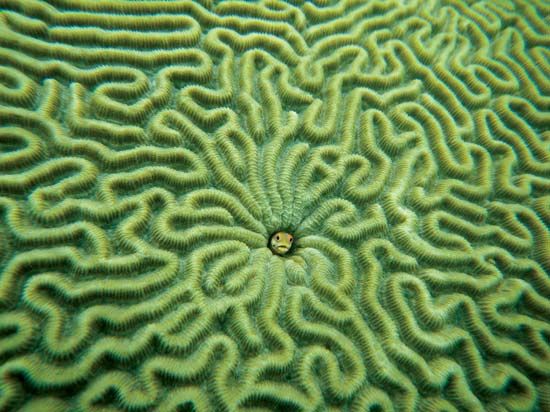
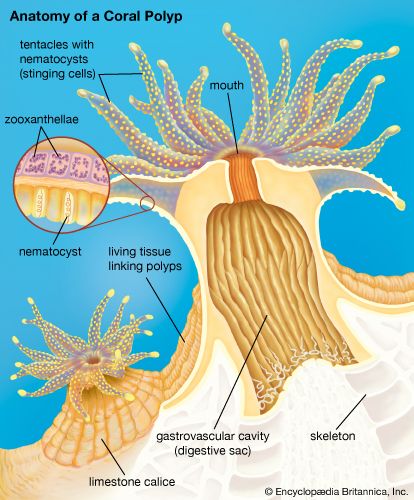
The structural foundation of the reef is formed by at least 450 species of hard coral, which are maintained by coral polyps and hydrocorals. Other common invertebrates include:
- Anemones and sponges
- Worms and gastropods
- Crustaceans such as lobsters, crayfish, prawns, and crabs
Vertebrates
The reef is home to more than 1,500 species of fishes, including common varieties like wrasses, damselfish, triggerfish, and angelfish. Larger marine life includes:
- Rays and sharks, such as the tiger shark and the whale shark
- Six of the seven known species of sea turtles
- Nearly two dozen species of sea snakes
- Various birds that inhabit the cays
While the crown-of-thorns starfish is a notable inhabitant, it is also recognized as a destructive force that consumes living coral.
Why is the Tropic of Capricorn significant?
The Tropic of Capricorn is a line of latitude located approximately 23°27′ south of the Equator. Its significance lies in its role as the southernmost point where the Sun’s rays can strike the Earth directly at a 90° angle.89
Astronomical Significance
- Summer Solstice: On the day of the summer solstice in the Southern Hemisphere—typically around December 21—the South Pole is inclined toward the Sun. At this moment, the Sun’s vertical rays reach their southernmost declination and are positioned directly overhead at the Tropic of Capricorn.109
- Naming: The line was named for the constellation Capricornus, where the Sun appeared during the winter solstice at the time the line was designated. Due to the gradual change in the direction of Earth’s axis, the Sun currently appears in the constellation Sagittarius on that day, though it will return to Capricornus in approximately 24,000 years.8
Sources
- Capricorn and Bunker groups — Encyclopædia Britannica
- Capricorn — Merriam-Webster
- cay — Encyclopædia Britannica
- coral reef - Winds , currents, temperature, and salinity — Encyclopædia Britannica
- coral island — Encyclopædia Britannica
- Great Barrier Reef — Encyclopædia Britannica
- What Is a Marine Mammal? — Encyclopædia Britannica
- Tropic of Capricorn — Encyclopædia Britannica
- Solstice — Encyclopædia Britannica
- Tropic of Cancer — Encyclopædia Britannica
- Why Does the Tropic of Cancer’s Location on Earth Move Over Time? — Encyclopædia Britannica
Published on · 3 min read