Leopard Seal
The leopard seal (Hydrurga leptonyx) is a solitary, earless seal native to Antarctic and sub-Antarctic waters. Named for its distinctive black-spotted, gray…
What is leopard seal?
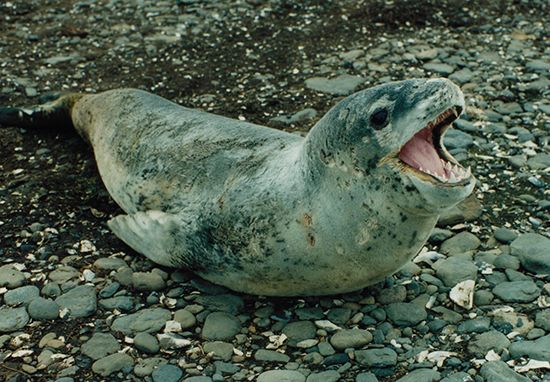
The leopard seal (Hydrurga leptonyx) is a solitary, earless seal native to Antarctic and sub-Antarctic waters. Named for its distinctive black-spotted, gray coat, this slender marine mammal can grow up to 3.5 meters (12 feet) in length and weigh as much as 380 kilograms (840 pounds), with females typically being larger than males.12
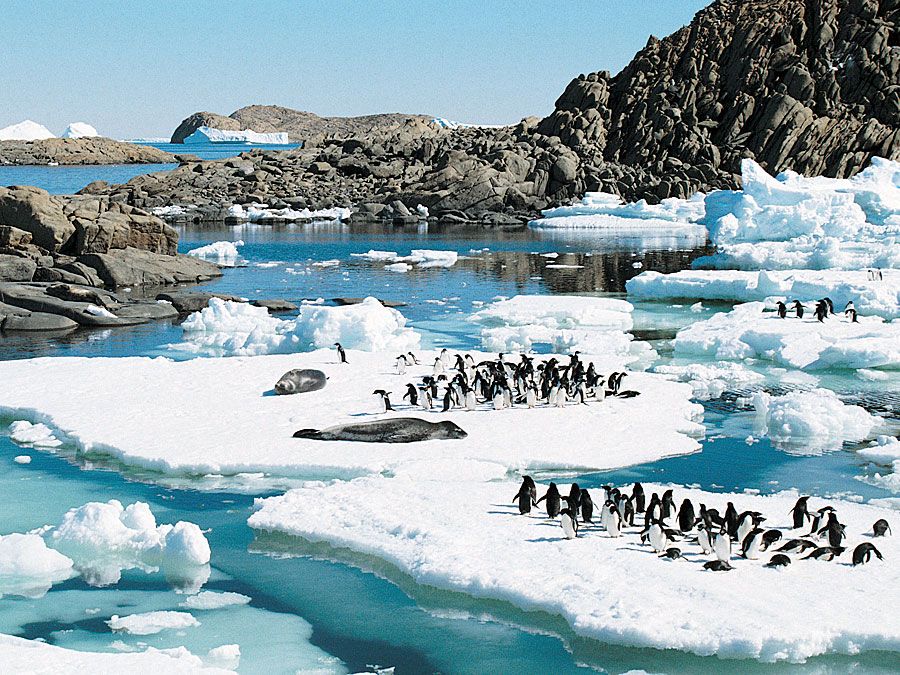
Unlike many other seals, the leopard seal is a versatile predator. While it consumes krill and fish, it is uniquely known for being the only seal that regularly hunts warm-blooded prey, including penguins and young seals. Despite its reputation for ferocity, it is not known to launch unprovoked attacks on humans and holds no commercial importance.12
How do leopard seals hunt penguins?
The leopard seal is a highly specialized predator known for being the only seal species that regularly hunts warm-blooded prey, including penguins.12
While the provided search results confirm that the leopard seal feeds on penguins, they do not detail the specific hunting behaviors or tactical maneuvers used to capture them. The leopard seal is physically adapted for this role with a slender body, a relatively long head, and specialized three-cusped cheek teeth that assist in processing its varied diet of krill, fish, young seals, and penguins.1
What other animals live in the Antarctic region?
The Antarctic region supports a diverse array of wildlife, primarily concentrated in its nutrient-rich marine environments.
Marine Mammals
Antarctic native mammals are exclusively marine. These include:
- Seals: Species include the Weddell seal, crabeater seal, leopard seal, Ross seal, and the southern elephant seal.3
- Cetaceans: Various whales, porpoises, and dolphins inhabit these waters. Notable species include the killer whale, sperm whale, and several baleen whales like the blue whale and humpback whale.3
Birds
Approximately 45 bird species live south of the Antarctic Convergence.
- Penguins: The Adélie and emperor penguin breed along the Antarctic coastline.4
- Seabirds: The region hosts various petrels, albatrosses, skuas, cormorants, gulls, and sheathbills.4
Marine Life and Invertebrates
The foundation of the Antarctic food chain is krill, which supports a wide variety of fish, squid, and zooplankton. The sea floor is home to sponges, corals, sea stars, mollusks, and various crustaceans.3
How do leopard seals differ from other seal species?
The leopard seal (Hydrurga leptonyx) is distinct from other seal species primarily due to its specialized diet and physical adaptations. While most seals are carnivores that feed mainly on fish, squid, mollusks, and crustaceans, the leopard seal is the only seal species that regularly hunts warm-blooded prey, including penguins, seabirds, and other seals.15
Physically, the leopard seal is characterized by a slender body, a relatively long head, and specialized three-cusped cheek teeth that assist in processing its diverse diet. It is named for its distinctive black-spotted, gray coat. Unlike many other seals that are gregarious during breeding, the leopard seal is generally solitary. Furthermore, while many seal species have been historically hunted for commercial purposes, the leopard seal is of no commercial importance.1
Sources
- leopard seal — Encyclopædia Britannica
- leopard seal — Merriam-Webster
- Antarctica - Sea life — Encyclopædia Britannica
- Antarctica - Birds — Encyclopædia Britannica
- seal — Encyclopædia Britannica
Published on · 2 min read