Falkland Sound
Falkland Sound is a strait located in the South Atlantic Ocean that separates East Falkland and West Falkland islands.
What is Falkland Sound?
Falkland Sound is a strait located in the South Atlantic Ocean that separates East Falkland and West Falkland islands.1
The sound extends approximately 50 miles (80 km) from the northeast to the southwest. Its width varies significantly, ranging from about 1 1/2 miles (2 km) at its narrowest points to 20 miles (32 km) at its widest, and it contains numerous small islands.1
The strait was named by the English captain John Strong, who made the first recorded landing in the Falkland Islands in 1690. He named the body of water after the Viscount Falkland, a British naval official; this name was later adopted for the entire island group.2
What kind of wildlife can be found on the Falkland Islands?
The Falkland Islands host a diverse array of wildlife, though it is important to note that there are no longer any indigenous land mammals, as the wild fox is now extinct.2
The islands are particularly renowned for their bird populations and marine life:
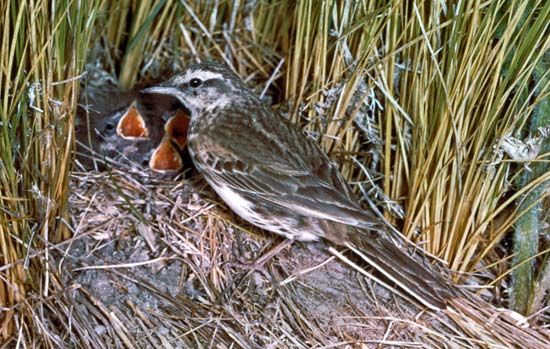
- Birds: There are approximately 65 species of birds, including black-browed albatrosses, Falkland pipits, peregrine falcons, and striated caracaras.2
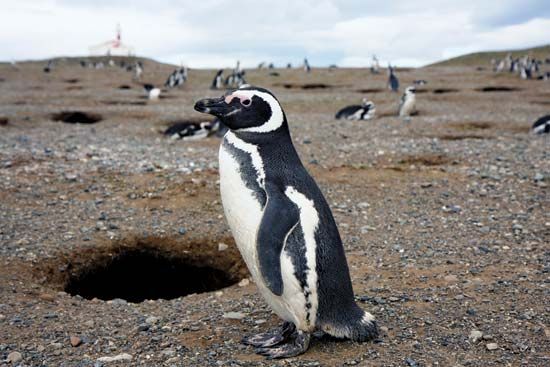
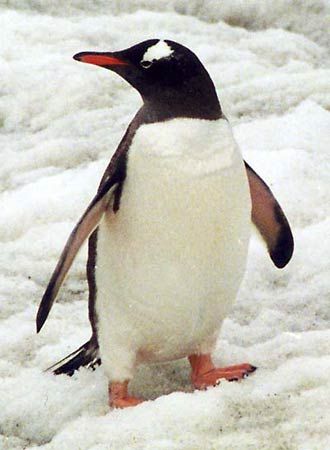
- Penguins: The islands serve as vital breeding grounds for several million penguins, primarily rockhopper, Magellanic, and gentoo penguins, along with smaller populations of king and macaroni penguins.2
- Marine Mammals: Dolphins and porpoises are common in the surrounding waters. Southern sea lions and elephant seals are numerous, while fur seals can be found at isolated sites.2
Additionally, the surrounding waters are abundant in squid, which play a significant role in the local marine ecosystem.2
How did the Falkland Islands get their name?
The Falkland Islands derive their name from the body of water that separates the two main islands, East Falkland and West Falkland.
In 1690, the English captain John Strong made the first recorded landing on the archipelago. He named the strait between the islands Falkland Sound in honor of the Viscount Falkland, a British naval official. Over time, this name was extended to apply to the entire island group.
It is worth noting that the islands have been known by other names throughout their history. For instance, the French navigator Louis-Antoine de Bougainville, who established the first settlement on the islands in 1764, named them the Malovines—a name that remains the basis for the Argentine term, Malvinas.63
What are some key events of the Falkland Islands War?
The Falkland Islands War was a 10-week conflict in 1982 between Argentina and Great Britain over sovereignty of the Falkland Islands and their dependencies.73
Key Events of the Conflict
- Invasion (April 2): Seeking to bolster domestic support, Argentina’s military government invaded the islands, quickly overcoming the British garrison at Stanley.3
- British Mobilization: Prime Minister Margaret Thatcher declared a 200-mile war zone and dispatched a naval task force, which received critical intelligence and logistical support from the United States.3
- Naval Engagements: On May 2, a British nuclear-powered submarine sank the Argentine cruiser General Belgrano. Subsequently, Argentine forces utilized Exocet missiles to sink the destroyer HMS Sheffield.3
- Amphibious Landing (May 21): British forces landed at Port San Carlos on East Falkland, establishing a beachhead despite heavy air attacks from Argentine forces.3
- Ground Campaign: British infantry advanced across the islands, engaging in hard fighting at Darwin and Goose Green before surrounding the capital.3
- Surrender (June 14): Argentine General Mario Menéndez surrendered at Stanley, effectively ending the war.83
The conflict resulted in the loss of approximately 650 Argentine and 255 British lives. The defeat led to the collapse of Argentina’s military government and the restoration of civilian rule in 1983, while bolstering Margaret Thatcher’s political standing in Britain.3
Sources
- Falkland Sound — Encyclopædia Britannica
- Falkland Islands - Land — Encyclopædia Britannica
- Falkland Islands - History of the Falkland Islands — Encyclopædia Britannica
- Magellanic penguin — Encyclopædia Britannica
- What Is a Marine Mammal? — Encyclopædia Britannica
- Falkland Islands: Top Questions — Encyclopædia Britannica
- Falkland Islands War: Top Questions — Encyclopædia Britannica
- Falkland Islands War — Encyclopædia Britannica
Published on · 3 min read