Great Barrier Island
Great Barrier Island, known to the Māori as Aotea, is the largest island off the coast of the North Island in New Zealand. Located at the northeastern corner…
What is Great Barrier Island?
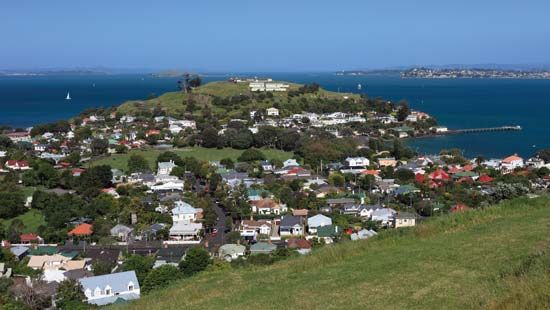
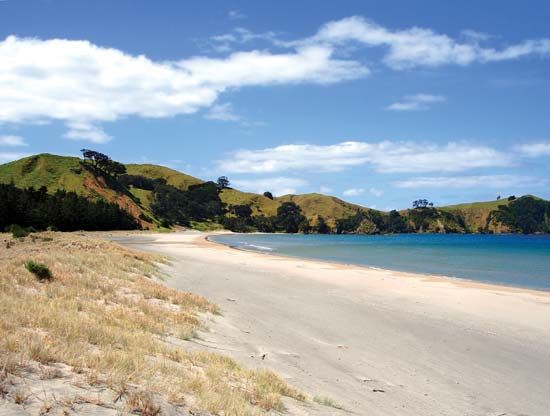
Great Barrier Island, known to the Māori as Aotea, is the largest island off the coast of the North Island in New Zealand. Located at the northeastern corner of the Hauraki Gulf/Tīkapa Moana, it covers approximately 110 square miles (285 square km) and features a mountainous landscape dominated by the volcanic Mount Hobson (Hirakimata).1
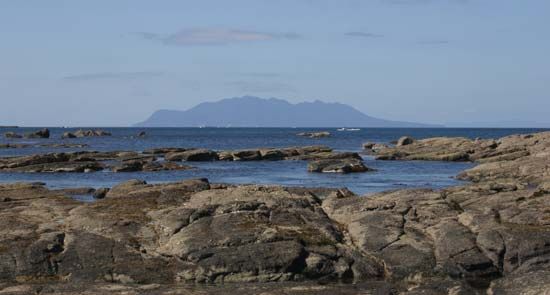
Named by Captain James Cook in 1769, the island has transitioned from its history of mining to a local economy centered on sheep and dairy farming. Today, it serves primarily as a popular summer resort, accessible by boat from Auckland boat from Auckland. It is distinct from the smaller Little Barrier Island, which lies to the west and functions as a restricted wildlife sanctuary.12
What is the significance of the name Aotea to the Māori people?
While the name Aotea is used by the Māori to refer to Great Barrier Island, the provided search results do not contain information regarding the specific cultural or historical significance of the name Aotea to the Māori people. The available information only notes that the island is known by this name.1
How does Little Barrier Island differ from Great Barrier Island?
Little Barrier Island and Great Barrier Island differ significantly in their size, accessibility, and purpose:
- Size and Geography: Little Barrier Island is much smaller, covering approximately 11 square miles (28 square km), whereas Great Barrier Island is significantly larger at about 110 square miles (285 square km). While both are of volcanic origin, Little Barrier Island is characterized by its steep, wooded terrain rising to Mount Hauturu.2
- Accessibility and Inhabitation: Great Barrier Island is a popular summer resort with a local economy and permanent residents. In contrast, Little Barrier Island is a restricted wildlife sanctuary with no permanent inhabitants; visitors are required to obtain a permit from the Department of Conservation to land there.2
- Location: The two islands are separated by the Cradock Channel, with Little Barrier Island situated to the west of Great Barrier Island.2
What kind of wildlife can be found on these New Zealand islands?
New Zealand’s prolonged isolation has fostered a unique ecosystem where many indigenous species are found nowhere else on Earth. Because the islands lacked predatory mammals for millions of years, they became a sanctuary for diverse birds, particularly flightless species.2
Indigenous Wildlife
- Birds: Notable flightless species include the kiwi, wekas, and takahes. Other native birds include tuis, fantails, bellbirds, and saddlebacks. Coastal areas support gannets, skuas, penguins, shags, and albatrosses.25
- Reptiles and Mammals: The islands are home to skinks, geckos, and the ancient tuatara. The only native land mammals are two species of bats.2
- Marine Life: Outlying groups like the Auckland Islands host fur seals, sea lions, and sea elephants.5
Introduced Species
European settlement introduced various animals that have significantly impacted the environment, including red deer, opossums, goats, and rabbits. Managing these populations remains a critical conservation challenge to protect native vegetation and wildlife.2
Sources
- Great Barrier Island — Encyclopædia Britannica
- Little Barrier Island — Encyclopædia Britannica
- Green Island — Encyclopædia Britannica
- Papahānaumokuākea Marine National Monument: Top Questions — Encyclopædia Britannica
- New Zealand - Plant and animal life — Encyclopædia Britannica
- Auckland Islands — Encyclopædia Britannica
Published on · 2 min read