What’s the Difference Between a Bee and a Wasp?
While bees and wasps are both members of the order Hymenoptera, they possess distinct biological and behavioral differences.
What’s the Difference Between a Bee and a Wasp?
While bees and wasps are both members of the order Hymenoptera, they possess distinct biological and behavioral differences.123
Key Differences
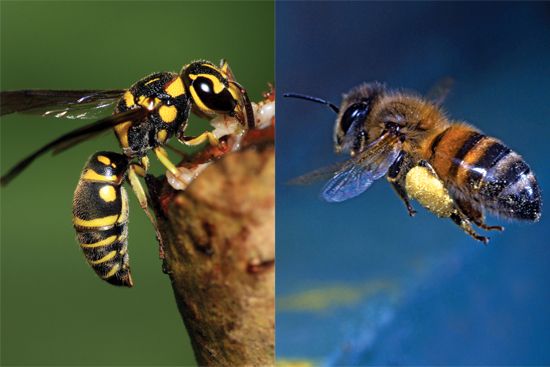
- Diet and Provisioning: The primary biological distinction is that bees (except for parasitic species) feed their young a mixture of pollen and honey. In contrast, most wasps are predatory or parasitic, feeding their larvae insects or spiders.3415
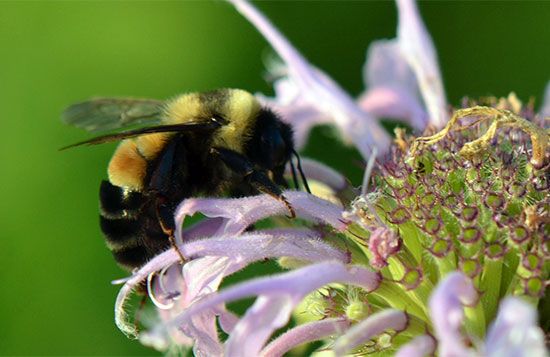
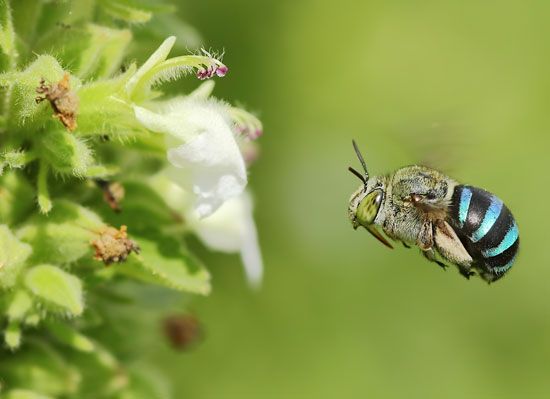
- Physical Appearance: Bees typically have a heavier, fuzzier appearance with at least some branched or feathered hairs that help collect pollen. Wasps generally have slender, smooth bodies with unbranched hairs and a narrow “waist” (petiole) connecting the abdomen to the thorax.53412
- Stinging Ability: Honeybees can typically sting only once, as the process is fatal to them. Many wasp species, however, can sting multiple times without dying.2
- Ecological Role: Bees are vital pollinators entirely dependent on flowers for food. Wasps are important for natural pest control, as they often hunt other insects.53
Why are bees considered so important for global food production?
Bees are essential to global food production primarily due to their role as pollinators. They are the most significant insect pollinators, facilitating the reproduction of flowering plants and the development of fruits and seeds.7
In industrial agriculture, managed colonies—particularly of western honeybees—are vital for the success of approximately 90 commercially grown crops in the United States, including almonds, apples, blueberries, and cucumbers. Pollination by bees not only enables these crops to grow but also increases yields and improves the quality of the produce. The economic impact is profound; for instance, the pollination services of western honeybees in the U.S. contribute over $15 billion in crops annually. Without these insects, the cost and scale of producing many essential foods would be drastically affected, leading to reduced availability and higher prices.789
How do social wasps build their paper-like nests?
Social wasps, such as those in the subfamilies Polistinae (paper wasps) and Vespinae (e.g., yellow jackets), construct their nests using a unique paperlike material. The process involves the following steps:
- Material Collection: Female workers gather dry plant material, typically wood fibers from sources like dead trees, fence posts, or unpainted lumber, by gnawing off small particles.101
- Processing: The wasps chew these wood fibers and mix them with their saliva to create a paste. This mixture is then regurgitated and formed into small balls.101
- Construction: Upon returning to the nest site, the wasps roll these balls into thin layers to build cell walls. The nest is composed of one or more layers of cells, which are arranged vertically with the openings facing downward.101
- Insulation: Species in the Vespinae subfamily often construct an outer covering for the nest in several layers. The air trapped between these layers serves as insulation to help regulate the interior temperature, which the colony maintains at a precise level through body heat and muscle contraction.1
What are some other insects that belong to the Hymenoptera order?
The order Hymenoptera is one of the largest and most diverse insect orders, comprising over 150,000 described species. While ants, bees, and wasps are the most well-known members, the order includes a wide variety of other fascinating insects categorized into two main suborders: Apocrita and Symphyta.1415
Suborder Apocrita
This group includes the familiar social insects as well as many specialized parasitic forms:
- Parasitic Wasps: This diverse group includes ichneumon wasps, braconid wasps, chalcid wasps, gall wasps, and cuckoo wasps, which play a critical role in controlling other insect populations.141615
- Ants: Beyond common garden varieties, the family Formicidae includes specialized types such as bullet ants, leafcutter ants, weaver ants, and velvet ants (which are actually wingless wasps).1615
Suborder Symphyta
Often considered the most primitive members of the order, these insects lack the characteristic “waist” found in Apocrita.17
- Sawflies: These insects are named for the sawlike blades on the female’s ovipositor, which are used to cut into plants to lay eggs. They include typical sawflies, conifer sawflies, and argid sawflies.1713
- Horntails and Wood Wasps: These insects, such as those in the family Siricidae, are also part of this suborder.1615
Sources
- wasp — Encyclopædia Britannica
- 12 Pairs of Commonly Confused Animal Words | Bee/Wasp — Merriam-Webster
- What’s the Difference Between a Bee and a Wasp? — Encyclopædia Britannica
- bee — Encyclopædia Britannica
- bee: Top Questions — Encyclopædia Britannica
- western honeybee - Physical description — Encyclopædia Britannica
- Why are bees important? — Encyclopædia Britannica
- Beekeeping - Pollination — Encyclopædia Britannica
- western honeybee - Importance — Encyclopædia Britannica
- paper wasp — Encyclopædia Britannica
- paper wasp — Merriam-Webster
- Hymenoptera - Social forms — Encyclopædia Britannica
- Hymenoptera - Solitary forms — Encyclopædia Britannica
- Hymenoptera — Encyclopædia Britannica
- List of insects - ants , bees , and wasps (order Hymenoptera ) — Encyclopædia Britannica
- list of ants, bees, and wasps — Encyclopædia Britannica
- sawfly — Encyclopædia Britannica
Published on · 3 min read