Why Are Pterodactyls Not Dinosaurs?
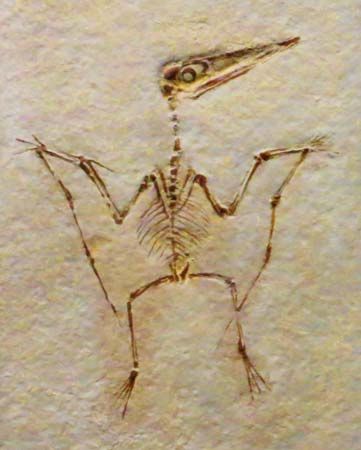
Although pterosaurs and dinosaurs both lived during the Mesozoic Era and are both classified as archosaurs, they are distinct groups that diverged…
Why Are Pterodactyls Not Dinosaurs?
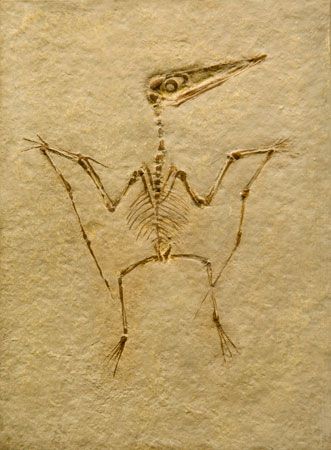
Although pterosaurs and dinosaurs both lived during the Mesozoic Era and are both classified as archosaurs, they are distinct groups that diverged approximately 250 million years ago.12
While they share a common ancestor, they belong to different lineages within the clade Avemetatarsalia. Dinosaurs are part of the Dinosauromorpha group, whereas pterosaurs fall into a separate evolutionary line.2
Skeletally, the two groups can be distinguished by specific anatomical features. Dinosaurs are characterized by an open hip socket and a long crest on the upper arm bone (humerus), features that pterosaurs lack. Furthermore, while pterosaurs were the first vertebrates to achieve flight using a membrane of skin supported by an elongated fourth finger, they are not the ancestors of modern birds—that distinction belongs to a lineage of theropod dinosaurs.3214
What are some other animals that belong to the archosaur group?
The archosaur group, often referred to as “ruling reptiles,” includes a diverse array of living and extinct animals. Beyond the well-known dinosaurs and pterosaurs, the group is divided into two primary branches:
The Pseudosuchia Branch
This branch includes crocodiles and all archosaurs more closely related to them than to birds. Most members of this group are extinct and date back to the Triassic Period, including:
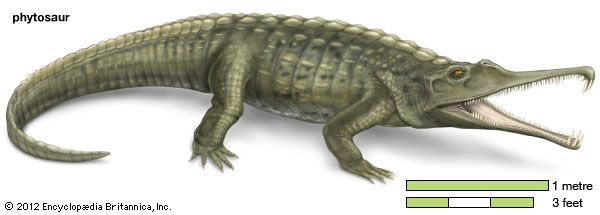
- Phytosaurs: Large, crocodile-like predators.
- Aetosaurs: Heavily armored, herbivorous reptiles.
- Prestosuchids, Rauisuchids, and Poposaurs: Various groups of extinct carnivorous forms.
The Ornithosuchia Branch
This branch includes birds and all archosaurs more closely related to them than to crocodiles. In addition to dinosaurs and pterosaurs, this group includes several extinct Triassic forms:
- Lagosuchids and Lagerpetontids: Small, agile reptiles that provide insight into the early evolution of the lineage.
- Basal Archosaurs: Primitive forms such as Euparkeria, which have historically been studied as potential ancestors to later archosaur groups.
How did the wings of pterosaurs differ from the wings of birds?
The wings of pterosaurs and birds represent two distinct evolutionary solutions to the challenge of powered flight. While both groups evolved forelimbs into wings, their structural designs differ significantly:
- Wing Surface: The most prominent difference is the wing material. Pterosaur wings were formed by a membrane of skin, similar to that of bats, whereas bird wings are composed of feathers attached to the arm and hand bones.8
- Skeletal Support: In pterosaurs, the wing membrane was supported primarily by a single, greatly elongated fourth finger, while the first three fingers remained small, clawed, and used for clutching. In contrast, bird wings involve the fusion of several hand bones into a carpometacarpus, and the primary flight feathers are attached directly to these fused bones and the remaining digits.81
- Structural Reinforcement: Pterosaur wings contained a system of fine, parallel keratinous fibers that provided strength and maneuverability. Bird wings rely on the ulna to transmit force from the flight muscles to the secondary feathers, with the entire limb structure highly modified for feather attachment.81
What are some common misconceptions about dinosaurs?
Common misconceptions about dinosaurs often stem from popular media and outdated scientific understandings. Here are some of the most frequent inaccuracies:
1. Pterosaurs are Dinosaurs
A common error is labeling flying reptiles like pterodactyls as dinosaurs. While both groups belong to the larger clade Archosauria, they diverged about 250 million years ago. Skeletally, dinosaurs are distinguished by an empty hole in their hip socket and a specific crest on their upper arm bone, features that pterosaurs lack.3
2. Humans and Dinosaurs Coexisted
Despite depictions in fiction, non-avian dinosaurs went extinct approximately 66 million years before the first humans appeared. However, because birds are direct descendants of small theropod dinosaurs, they are technically living dinosaurs, meaning humans do technically coexist with them today.1112
3. All Dinosaurs Died Out Suddenly
It is a misconception that all dinosaurs vanished simultaneously at the end of the Cretaceous Period. Fossil records suggest that many dinosaur groups were already in decline before the mass extinction event. Furthermore, the lineage that evolved into modern birds survived, ensuring the dinosaur legacy continues.1312
4. Sauropods Were Aquatic
Early interpretations often visualized sauropods as swamp or lake dwellers, assuming water buoyancy was necessary to support their massive weight. Modern research has debunked this; their limb bones were capable of supporting their bulk on land, and there is no skeletal evidence to suggest an aquatic or amphibious lifestyle.14
Sources
- pterosaur — Encyclopædia Britannica
- dinosaur - Dinosaur ancestors — Encyclopædia Britannica
- Why Are Pterodactyls Not Dinosaurs? — Encyclopædia Britannica
- dinosaur — Merriam-Webster
- dinosaur — Merriam-Webster
- archosaur — Encyclopædia Britannica
- crocodile - Annotated classification — Encyclopædia Britannica
- Bird - Skeleton — Encyclopædia Britannica
- Origins of Birds — Encyclopædia Britannica
- Pteranodon — Encyclopædia Britannica
- Did Humans Live at the Same Time as Dinosaurs? — Encyclopædia Britannica
- reptile — Encyclopædia Britannica
- How long did dinosaurs live? — Encyclopædia Britannica
- dinosaur - Sauropoda — Encyclopædia Britannica
- dinosaur - Extinction — Encyclopædia Britannica
- dinosaur — Encyclopædia Britannica
- Jurassic Period - Vertebrates — Encyclopædia Britannica
Published on · 3 min read