Did Humans Live at the Same Time as Dinosaurs?
No, humans did not live at the same time as the large, extinct dinosaurs commonly depicted in popular culture. Those dinosaurs went extinct approximately 66…
Did Humans Live at the Same Time as Dinosaurs?
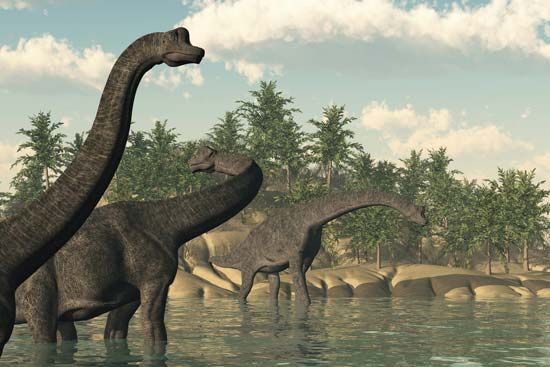
No, humans did not live at the same time as the large, extinct dinosaurs commonly depicted in popular culture. Those dinosaurs went extinct approximately 66 million years ago at the end of the Cretaceous Period, following a massive asteroid impact.1
In contrast, the earliest members of the genus Homo did not appear until roughly 2.8 million years ago, and the oldest known remains of Homo sapiens date back only about 315,000 years. While humans and the famous prehistoric dinosaurs never coexisted, modern birds are the closest living relatives to those extinct creatures. In this biological sense, humans do live alongside dinosaurs today—we simply refer to them as chickens, parakeets, and other avian species.21
How are modern birds scientifically classified as dinosaurs?
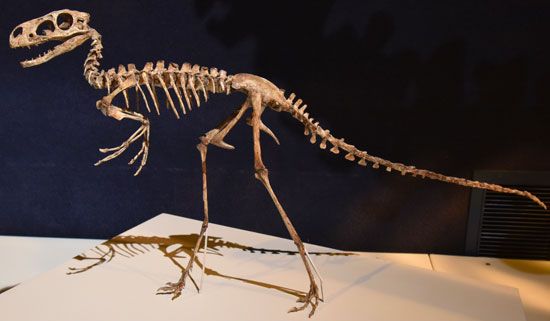
Modern birds are scientifically classified as dinosaurs because they evolved from a specific lineage of small, carnivorous theropod dinosaurs more than 150 million years ago.78
In modern biological classification, organisms are grouped based on their phylogeny—their branching evolutionary history. According to the principles of genealogy, descendants are classified as members of the group from which they evolved. Because birds are nested within the dinosaurian family tree, they are considered living dinosaurs in the same way that humans are classified as primates and mammals.8
Key evidence supporting this classification includes:
- Anatomical Similarities: Birds share numerous skeletal features with theropods, such as a specific wrist joint that allows for sideways motion, a similar pelvis structure, and hollow, lightweight bones.98
- Feathers: Fossil discoveries, particularly from the Early Cretaceous Period in China, have revealed that many non-avian theropods possessed filamentous structures and true feathers. These structures likely evolved for insulation, display, or camouflage long before they were adapted for flight.78
- Shared Lineage: The oldest known birds, such as Archaeopteryx, exhibit a mix of avian and dinosaurian traits, confirming their position as a bridge between the two groups.78
We could dive deeper into the specific evolutionary transition from ground-dwelling theropods to flight-capable birds, or perhaps examine the fossil record of other feathered dinosaurs.
What evidence suggests that dinosaurs were warm-blooded?
While it is impossible to directly measure the body temperature of extinct animals, paleontologists use several lines of indirect evidence to suggest that many dinosaurs may have possessed high metabolic rates or warm-bloodedness:
- Bone Histology: The long bones of most dinosaurs are composed of well-vascularized, fibro-lamellar tissue, which is characteristic of modern mammals and birds. This type of bone structure is associated with rapid growth rates that typically require high metabolic support.12
- Anatomical Posture: Unlike modern ectothermic reptiles, which often sprawl, dinosaurs maintained an upright, parasagittal gait with their legs positioned directly under their bodies. This posture is consistent with the high-energy demands of active, non-aquatic endotherms.12
- Cardiovascular Capacity: Many dinosaurs, particularly large sauropods, possessed heads positioned several meters above their hearts. This anatomy suggests the presence of a four-chambered heart capable of pumping oxygenated blood at high pressure to the brain, a feature necessary for animals with high metabolic requirements.12
- Insulation: The discovery of filamentous, feather-like coverings on various theropods—including large species like Yutyrannus—indicates that these animals possessed insulation. Such coverings would have helped stabilize body temperature, a hallmark of endothermy.13
- Efficient Digestion: Specialized dentition in groups like hadrosaurs and ceratopsians suggests an ability to process food efficiently, potentially providing the high energy intake required to sustain a warm-blooded metabolism.12
It is important to note that these features do not conclusively prove that all dinosaurs were fully endothermic; some scientists suggest they may have utilized a range of metabolic strategies.1214
What other animals survived the mass extinction event 66 million years ago?
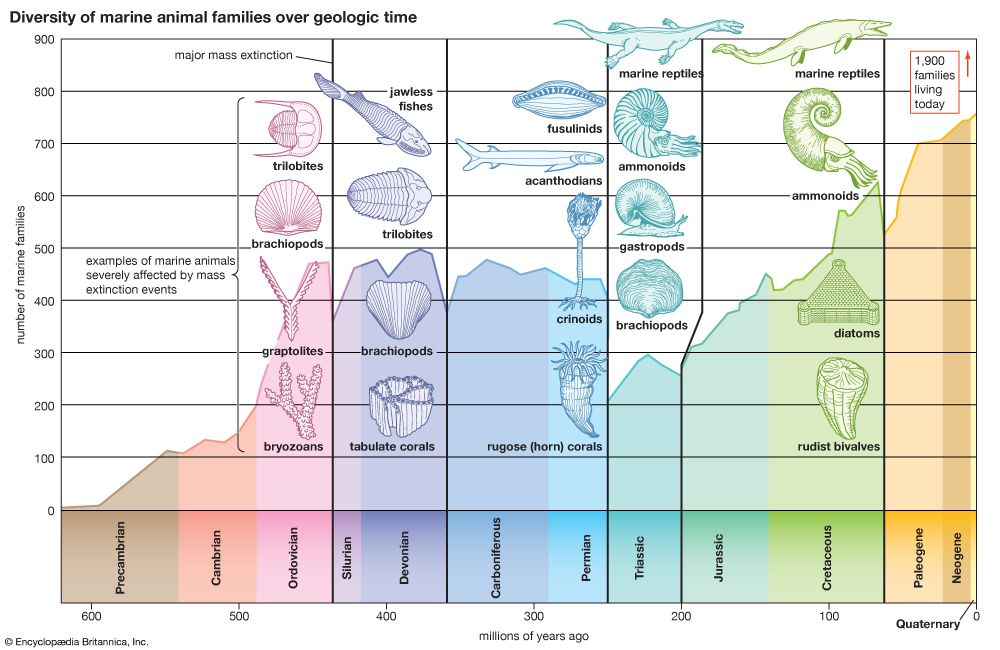
The mass extinction event 66 million years ago, known as the K–T extinction, resulted in the loss of approximately 80 percent of all animal species. While many prominent groups, such as non-avian dinosaurs, pterosaurs, and various marine reptiles, perished, several lineages survived to populate the subsequent Cenozoic Era.1617
Survivors of the K–T Extinction
- Birds: As descendants of theropod dinosaurs, birds survived the event and subsequently underwent significant diversification.1618
- Mammals: Both placental mammals and marsupials had evolved during the Cretaceous and were among the groups that survived, eventually rising to ecological dominance.171918
- Reptiles: Several groups of reptiles were either unaffected or only slightly impacted, including turtles, crocodilians, lizards, and snakes.16
- Amphibians: Like mammals, amphibians experienced relatively mild effects during the extinction.16
- Marine Life: While many marine invertebrates and planktonic organisms suffered heavy losses, some groups persisted, including approximately 13 percent of coccolithophore and planktonic foraminiferal genera.2016
Sources
- Did Humans Live at the Same Time as Dinosaurs? — Encyclopædia Britannica
- dinosaur - The K–T boundary event — Encyclopædia Britannica
- dinosaur - Habitats — Encyclopædia Britannica
- dinosaur - Faunal changes — Encyclopædia Britannica
- human evolution: Top Questions — Encyclopædia Britannica
- Homo sapiens - The genus Homo — Encyclopædia Britannica
- How Do We Know That Dinosaurs May Have Had Feathers? — Encyclopædia Britannica
- dinosaur - Theropoda — Encyclopædia Britannica
- dinosaur - Dinosaur descendants — Encyclopædia Britannica
- dinosaur - Classification — Encyclopædia Britannica
- reptile - Critical appraisal — Encyclopædia Britannica
- dinosaur - Clues to dinosaurian metabolism — Encyclopædia Britannica
- feathered dinosaur — Encyclopædia Britannica
- dinosaur - Ectothermy and endothermy — Encyclopædia Britannica
- dinosaur - Body temperature — Encyclopædia Britannica
- Mesozoic Era - Mesozoic life — Encyclopædia Britannica
- Cretaceous Period - Mass extinction — Encyclopædia Britannica
- Triassic Period - Permian-Triassic extinctions — Encyclopædia Britannica
- K–T extinction — Encyclopædia Britannica
- Cretaceous Period - Terrestrial life — Encyclopædia Britannica
- 5 Questions About Dinosaurs Answered — Encyclopædia Britannica
- Cretaceous Period - Cretaceous life — Encyclopædia Britannica
- Animal - Rise of vertebrates — Encyclopædia Britannica
Published on · 3 min read