Are Black Caimans Larger Than Alligators?
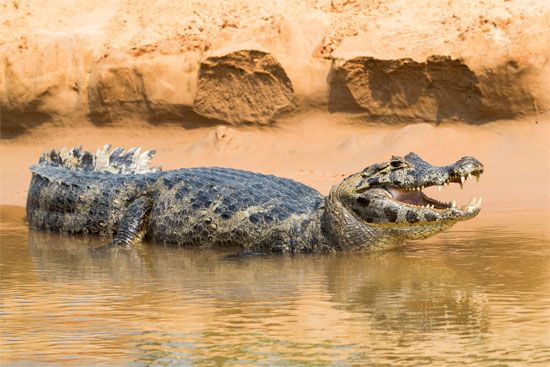
Yes, black caimans are larger than alligators. While both belong to the family Alligatoridae, the black caiman is the largest member of this group.
Are black caimans larger than alligators?
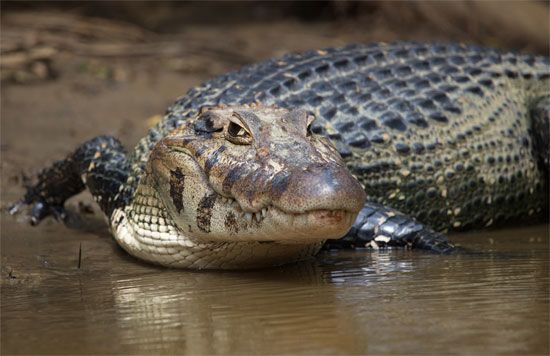
Yes, black caimans are larger than alligators. While both belong to the family Alligatoridae, the black caiman is the largest member of this group.12
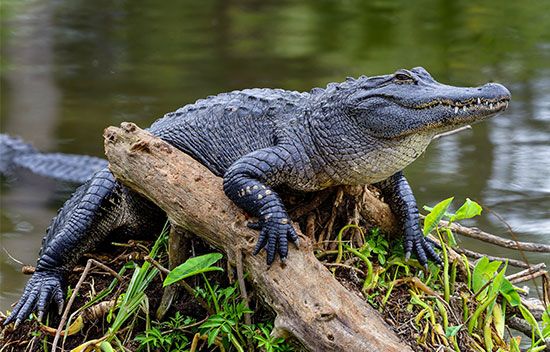
Average adult black caimans typically reach lengths of 4 to 5 meters (13 to 16 feet) and weigh approximately 350 kg (770 pounds), with the largest specimens reaching nearly 6 meters (20 feet) and weighing over 400 kg (882 pounds). In comparison, the American alligator—the largest of the two alligator species—typically grows to between 3 and 3.4 meters (9.8 to 11.1 feet) and weighs about 150 kg (331 pounds), though some individuals can reach up to 4.5 meters (15 feet) and 363 kg (800 pounds). The Chinese alligator is significantly smaller, reaching a maximum length of only about 2.1 meters (7 feet).123
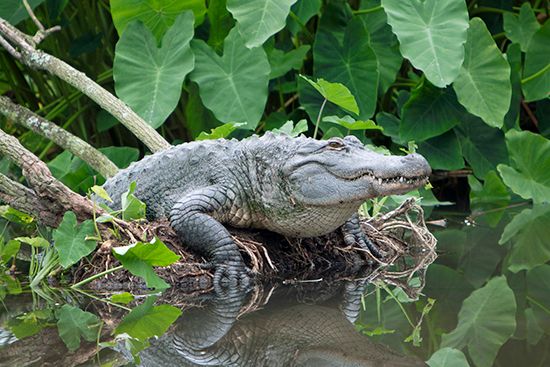
What are the main physical differences between alligators and crocodiles?
Although alligators and crocodiles are often confused, they can be distinguished by several key physical and behavioral characteristics:
- Snout Shape: Alligators possess a broad, U-shaped snout, whereas crocodiles have a narrower, V-shaped snout.435
- Teeth: When an alligator’s mouth is closed, its lower teeth are generally hidden by an “overbite,” where the lower teeth fit inside the upper teeth. In contrast, a crocodile’s teeth are often visible when its mouth is shut, most notably the large fourth tooth on the lower jaw, which projects outside the upper snout.435
- Coloration: Alligators typically appear darker, ranging from gray to black, while crocodiles tend to be lighter, appearing olive or tan.4
- Habitat: Alligators generally prefer freshwater environments like lakes and swamps, while crocodiles are more commonly found in saltwater habitats.4
- Behavior: Crocodiles are generally considered to be more aggressive than alligators.4
How do apex predators like the black caiman maintain their ecological niche?
The black caiman (Melanosuchus niger) maintains its ecological niche as an apex predator in the Amazon River basin primarily through its massive size, specialized hunting behaviors, and lack of direct competition.2
As the largest member of the alligator family, the black caiman occupies the top rank of the trophic pyramid in its freshwater environment. Its niche is secured by several key factors:26
- Dietary Flexibility: Adults primarily consume fish and mollusks, but they are opportunistic feeders that also prey on capybaras, deer, boars, and other vertebrates.2
- Behavioral Adaptations: They hunt primarily at night, striking from the water, and bask on riverbanks during the day. This distinct behavioral pattern helps them avoid competition with other large predators in the same geographic range.2
- Size Advantage: Their formidable size as adults effectively deters other predators, allowing them to dominate their biological community.2
While juveniles are vulnerable to jaguars and anacondas, the species’ reproductive strategy—including nest guarding and the formation of protective pods—ensures the survival of the next generation.2
What are some other endangered species within the order Crocodilia?
Several species within the order Crocodilia are currently facing significant threats to their survival. According to the International Union for Conservation of Nature and Natural Resources (IUCN), many of these animals are classified as critically endangered due to habitat loss, overhunting, and human-wildlife conflict.8
Notable endangered species include:
- Chinese alligator: One of the most endangered crocodilians, with fewer than 200 individuals estimated to remain in the wild.9
- Orinoco crocodile: The largest predator in South America, this species has seen its population plummet due to historical commercial hunting for its hide.10
- Philippine crocodile: A small, freshwater species whose range has become severely fragmented, with estimates suggesting fewer than 150 adults remain in the wild.11
- Cuban crocodile: Listed as critically endangered, this species also faces the unique threat of hybridization with other crocodile species.812
- Siamese crocodile and Slender-snouted crocodile: Both are also recognized as critically endangered.8
- Gavial and False gharial: These specialized species are also under severe pressure, with the latter classified as endangered.8
Sources
- Are black caimans larger than alligators? — Encyclopædia Britannica
- black caiman — Encyclopædia Britannica
- alligator — Encyclopædia Britannica
- What’s the Difference Between Alligators and Crocodiles? — Encyclopædia Britannica
- crocodile - Distinguishing taxonomic features — Encyclopædia Britannica
- apex predator — Encyclopædia Britannica
- caiman — Encyclopædia Britannica
- crocodile - Distribution and abundance — Encyclopædia Britannica
- Chinese alligator — Encyclopædia Britannica
- Philippine crocodile — Encyclopædia Britannica
- Orinoco crocodile — Encyclopædia Britannica
- American crocodile — Encyclopædia Britannica
Published on · 3 min read