Mosquitofish
The mosquitofish (Gambusia affinis and G. holbrooki) is a small, hardy, surface-feeding freshwater fish belonging to the family Poeciliidae. Native to the…
What is mosquitofish?
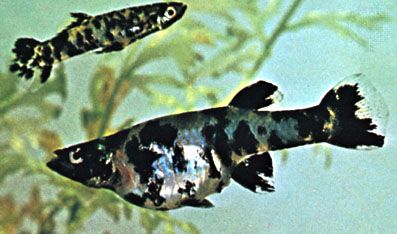
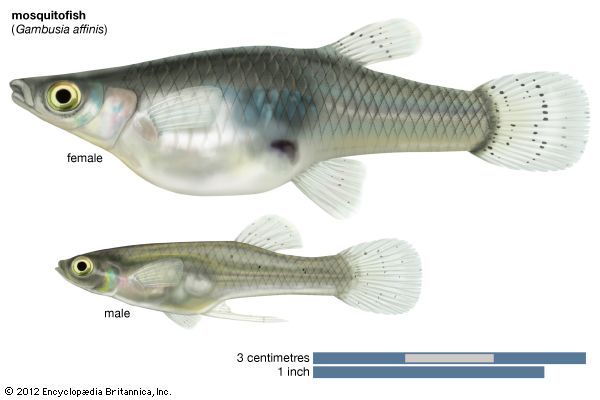
The mosquitofish (Gambusia affinis and G. holbrooki) is a small, hardy, surface-feeding freshwater fish belonging to the family Poeciliidae. Native to the fresh waters of North and Central America, these live-bearers are typically light grayish in color, though they may occasionally appear spotted or blotched with black. Females generally reach lengths of about 6.4 cm (2.5 inches), while males are smaller, measuring approximately 4 cm (1.5 inches).12
These fish are widely recognized for their role in biological control programs. Because they possess a prodigious appetite for mosquito larvae, they have been introduced into various bodies of water globally to help manage mosquito populations and reduce the transmission of infectious diseases. By feeding on larvae, they serve as a natural alternative to chemical insecticides, which can sometimes have unintended negative impacts on broader aquatic ecosystems.312
What are the risks of introducing non-native species into an ecosystem?
Introducing non-native species into an ecosystem carries significant ecological risks, as these organisms can become invasive species that disrupt the balance of their new environment. While many introduced species fail to survive, those that possess a competitive advantage—often due to a lack of natural predators—can establish thriving populations that displace native life.4
The primary risks include:
- Biodiversity Loss: Invasive species may outcompete native organisms for essential resources like food, water, and living space, often leading to the localized extinction of native species.45
- Predatory Pressure: Invasive predators can be so efficient at hunting that they cause rapid declines in prey populations, sometimes eliminating them entirely from the ecosystem.45
- Disease Transmission: Non-native organisms can act as vectors, introducing new parasites and pathogens that native species are not equipped to handle.4
- Ecosystem Disruption: Even when introduced for biological control—such as using specific insects to manage weeds—there is a danger that these agents will harm native plants or animals, creating further ecological instability.16
Because these interventions can have irreversible consequences, any introduction of non-native species requires careful, rigorous scientific consideration before implementation.1
How do live-bearing fish differ from egg-laying fish?
The primary difference between egg-laying and live-bearing fish lies in their reproductive strategies and the development of their offspring.
Egg-Laying Fish (Oviparous)
Most bony fishes are oviparous, meaning they lay eggs that are fertilized and develop outside the female’s body.89
- Fertilization: Typically external; males release milt (sperm) over eggs that have been scattered in open water, deposited on the substrate, or placed among plants.89
- Survival: Because these eggs are exposed to the environment, they often face high mortality rates. To compensate, many species produce a large number of small eggs.89
- Parental Care: While many species provide no care, some exhibit behaviors like nest building, egg guarding, or oral incubation to protect their offspring.8109
Live-Bearing Fish (Viviparous and Ovoviviparous)
In live-bearing species, fertilization occurs internally, requiring males to possess specialized intromittent organs (such as gonopodia or claspers) to transfer sperm into the female.81112
- Development: The embryos develop within the female’s body. In ovoviviparous species, embryos are nourished by the egg yolk until they hatch internally. In viviparous species, embryos receive nourishment directly from the female’s body tissues.8913
- Offspring: Young are born at a larger size and in much smaller numbers compared to egg-layers, which provides a survival advantage by reducing their vulnerability to predators.89
What are other examples of biological control in nature?
Biological control involves using living organisms to manage pest populations, often by introducing natural enemies like predators, parasites, or disease-causing agents. While humans often facilitate these interactions, many examples exist where these mechanisms function within natural ecosystems or through managed applications.615
Examples of Biological Control
- Predatory Insects: The vedalia beetle (Rodolia cardinalis) is a classic example of successful biological control; when introduced to California, it effectively reduced populations of the cottony cushion scale that threatened the citrus industry.616
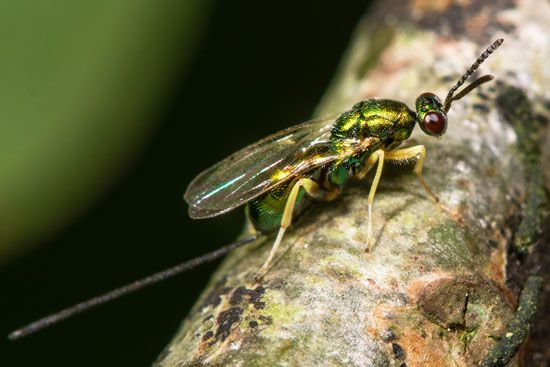
- Parasitic Wasps: The citrophilus mealybug in California was controlled by the introduction of two parasitic chalcid wasp species, Coccophagus gurneyi and Tetracnemus pretiosus, imported from Australia.6
- Microbial Pathogens: The bacterium Bacillus thuringiensis (Bt) produces toxins that target specific herbivorous insects, such as caterpillars and fly larvae, without harming most beneficial insects or mammals. Similarly, the myxoma virus has been used to limit European rabbit populations in Australia.617
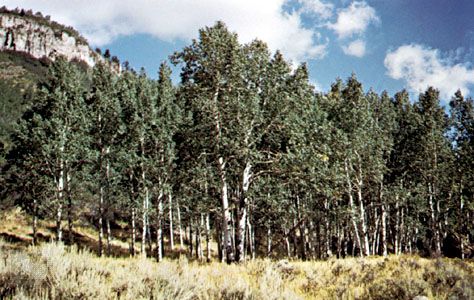
- Trophic Cascades: In natural ecosystems, top predators exert control over lower levels of the food chain. For instance, the presence of wolves can limit elk populations, which in turn allows for the increased growth of aspen and willow trees. Similarly, sea otters control sea urchin populations, preventing the overconsumption of kelp forests.18
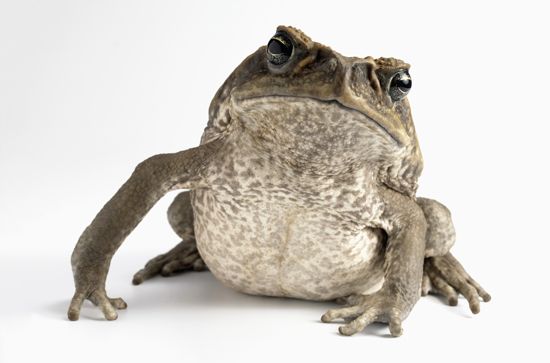
Because introducing non-native species can lead to unintended ecological damage—such as the case of the cane toad in Australia—it is ethically imperative that any biological control strategy undergoes rigorous scientific evaluation to prevent the creation of new invasive threats.6
Sources
- mosquitofish — Encyclopædia Britannica
- mosquito - Mosquito control — Encyclopædia Britannica
- mosquito fish — Merriam-Webster
- invasive species — Encyclopædia Britannica
- habitat loss — Encyclopædia Britannica
- Biological control — Encyclopædia Britannica
- conservation - Removing invasive species — Encyclopædia Britannica
- How do fish reproduce? — Encyclopædia Britannica
- ostariophysan - Parental care — Encyclopædia Britannica
- Animal reproductive system - Adaptations for internal fertilization — Encyclopædia Britannica
- live-bearer — Encyclopædia Britannica
- live-bearer — Merriam-Webster
- fish - Reproduction — Encyclopædia Britannica
- Reproductive behaviour - Fishes — Encyclopædia Britannica
- biological control — Merriam-Webster
- trophic cascade — Encyclopædia Britannica
- Pest — Encyclopædia Britannica
- Bacillus thuringiensis — Encyclopædia Britannica
Published on · 4 min read