Karakum Desert
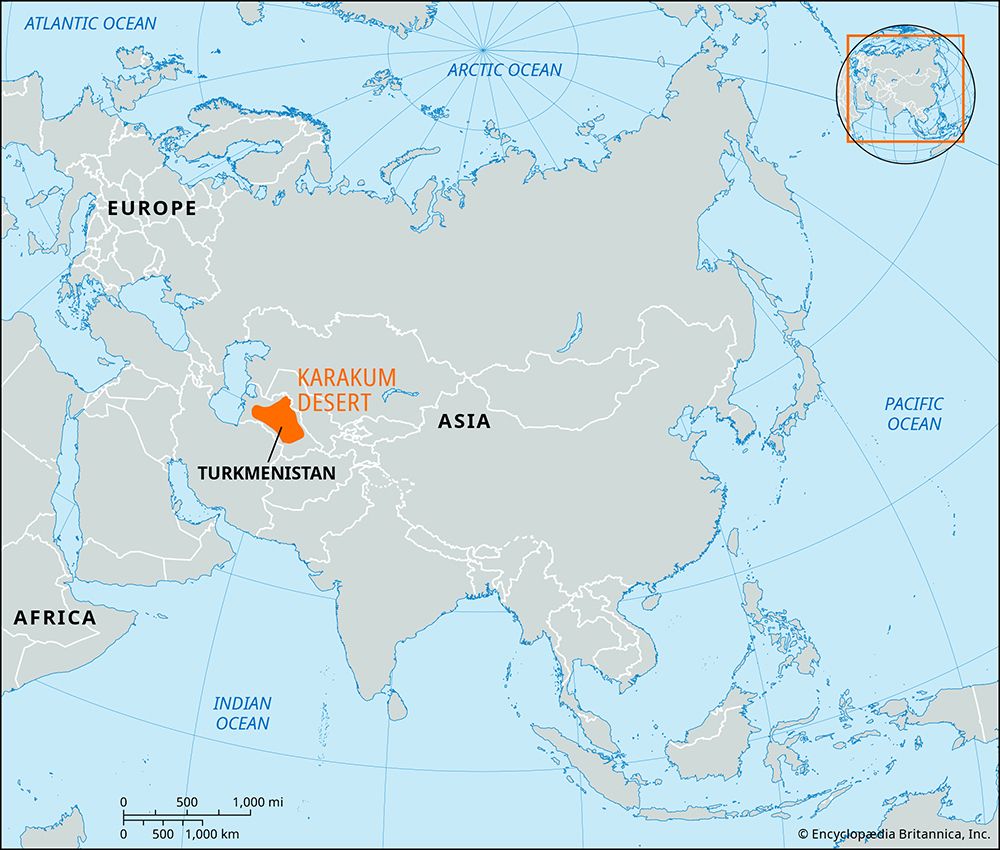
The Karakum Desert, located in Central Asia and covering about 70 percent of Turkmenistan, is a significant arid region spanning approximately 350,000 square…
How does the Karakum Desert compare to other major deserts around the world?
The Karakum Desert, located in Central Asia and covering about 70 percent of Turkmenistan, is a significant arid region spanning approximately 350,000 square kilometers (135,000 square miles).123
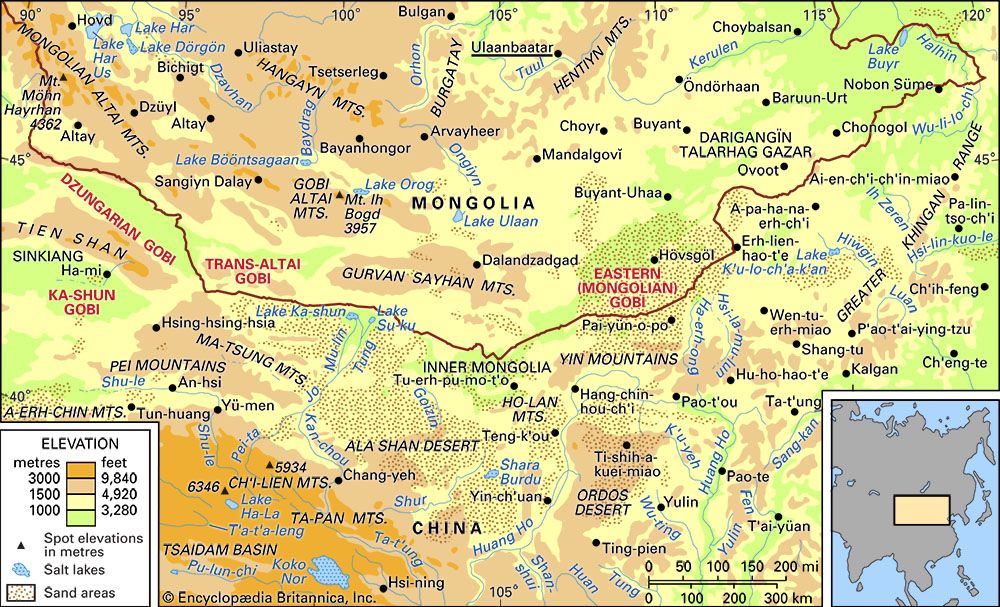
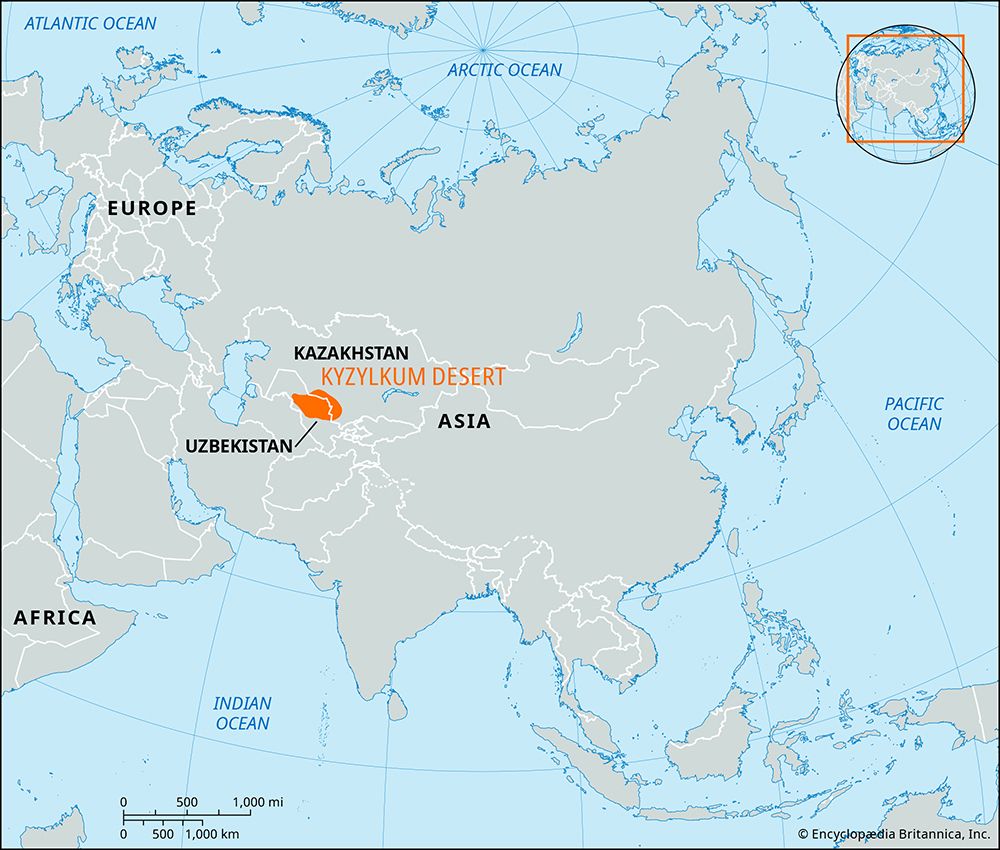
In terms of global scale, the Karakum ranks among the world’s major deserts, though it is smaller than the largest examples like the Sahara (8,600,000 square km) or the Gobi (1,300,000 square km). It is categorized alongside other notable Asian deserts such as the Kyzylkum and Takla Makan.24
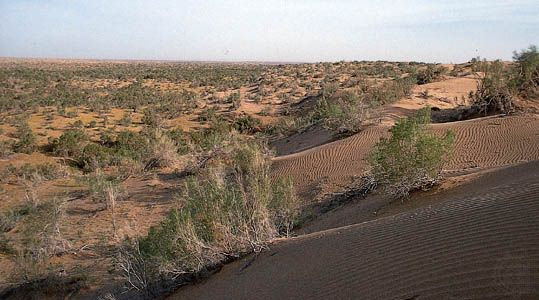
Unlike the polar deserts, which are defined by ice, the Karakum features a continental climate characterized by hot, dry summers and relatively mild winters. Its landscape is defined by wind-accumulated sand ridges and crescent-shaped dunes known as barchans, as well as interdune depressions called takyr that collect limited precipitation. While animal life is not numerous, the region supports specialized vegetation, including various shrubs and saxaul trees, which serve as fodder for livestock.2536
What natural resources are found in the Karakum Desert, and how are they utilized?
The Karakum Desert is a significant zone for fuel and mineral resources, which have driven intensive industrial development in the region since World War II.78
Fuel and Mineral Resources
The desert contains substantial deposits of oil and natural gas, which are extracted and transported via extensive pipeline networks. Additionally, the region is exploited for:78
- Minerals: Deposits of sulfur and various mineral salts are mined.7
- Salts: The area contains rock salt and common lake salt, which are of great economic importance.8
- Construction: Various building materials are extracted to support the growth of new settlements and infrastructure.7
Agricultural Utilization
Beyond industrial extraction, the desert’s resources are utilized for agriculture, particularly through the use of the Karakum Canal, which provides water for irrigation.7
- Livestock: The desert serves as vast rangeland for raising Karakul sheep, goats, and camels.78
- Crops: In oasis areas, irrigation supports the cultivation of fine-fibred cotton, fodder crops, fruits, and vegetables.7
What indigenous plants and animals have adapted to survive in the harsh conditions of the Karakum Desert?
The Karakum Desert supports a specialized range of flora and fauna that have adapted to its arid, continental climate.
Plant Life
Vegetation in the Karakum is varied, with growth patterns heavily influenced by water availability and seasonal changes.
- Ephemeral Plants: During the humid early spring, ephemeral plants flourish, providing essential fodder for animals.6
- Shrubs and Trees: Typical dune vegetation includes grasses, wormwood, and Ammodendron conollyi. Common bushes include species of Astragalus, Calligonum, and the salt-tolerant Salsola richteri.6
- Saxaul Trees: These are iconic to the region. White saxaul (Haloxylon persicum) thrives in areas with deep underground water, while black saxaul (H. aphyllum) is found where water is closer to the surface.6
Animal Life
While animal populations are not dense, the desert hosts a diverse array of species:
- Invertebrates: The desert is home to various insects and arachnids, including ants, termites, ticks, darkling beetles, dung beetles, and spiders.6
- Reptiles and Birds: The region supports various lizards, snakes, and turtles. Common birds include skylarks, wagtails, and Pander’s ground jays (Podoces panderi).6
- Mammals: Notable mammals include jerboas, the tolai hare, hedgehog, barchan cat, corsac fox, and the goitered gazelle.6
We could dive deeper into how these specific species manage water conservation in such an extreme environment.
Where is the Karakum Desert located, and what percentage of Turkmenistan does it cover?
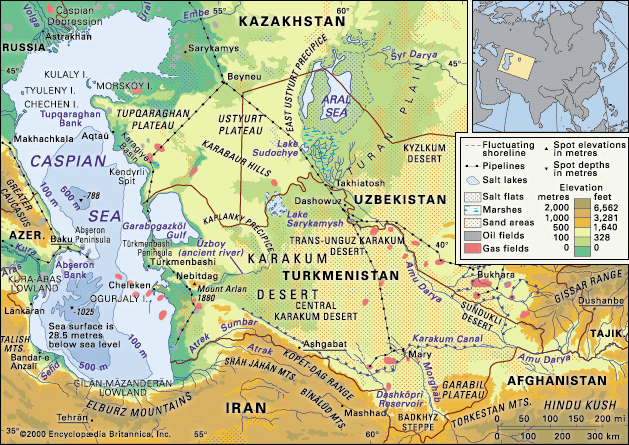
The Karakum Desert is a vast sandy region located in Central Asia. It covers approximately 70 percent of the total area of Turkmenistan.1
Spanning about 135,000 square miles (350,000 square km), the desert is bounded by several distinct geographical features:
- North: Sarykamysh Basin5
- Northeast and East: Amu Darya valley5
- Southeast: Garabil uplands and the Badkhyz steppe5
- South and Southwest: Kopet-Dag Mountains5
- West and Northwest: The ancient valley of the Uzboy River5
The region is further divided into the elevated northern Trans-Unguz Karakum, the low-lying Central Karakum, and the southeastern Karakum.5
Sources
- Karakum Desert — Encyclopædia Britannica
- list of deserts — Encyclopædia Britannica
- world’s largest deserts — Encyclopædia Britannica
- Karakum Desert - Climate of the Karakum Desert — Encyclopædia Britannica
- Karakum Desert - Physiography — Encyclopædia Britannica
- Karakum Desert - Plant and animal life — Encyclopædia Britannica
- Karakum Desert - People and economy — Encyclopædia Britannica
- Turkmenistan - Deserts — Encyclopædia Britannica
- Kyzylkum Desert — Encyclopædia Britannica
- Arabian Desert - Soils — Encyclopædia Britannica
Published on · 3 min read