Calyx
The term calyx refers to several distinct, cup-shaped structures in biology:
What is Calyx?
The term calyx refers to several distinct, cup-shaped structures in biology:1
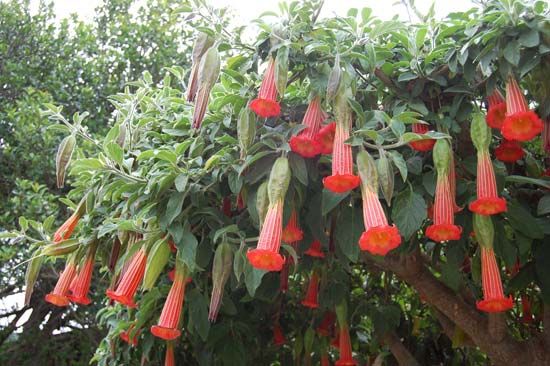
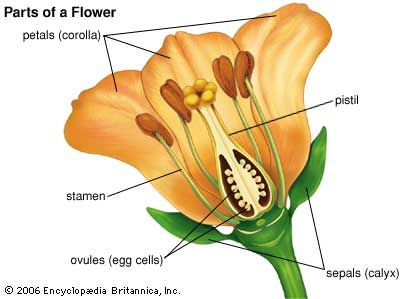
- Botany: The calyx is the outermost whorl of a flower, composed of individual or fused sepals. It serves as an accessory part of the flower, primarily protecting the developing bud and sometimes supporting the bloom. Botanists use the arrangement and fusion of sepals as key characteristics to identify flowering plant species.21
- Anatomy: In the human body, a calyx is a cuplike division of the renal pelvis that surrounds the renal papillae.1
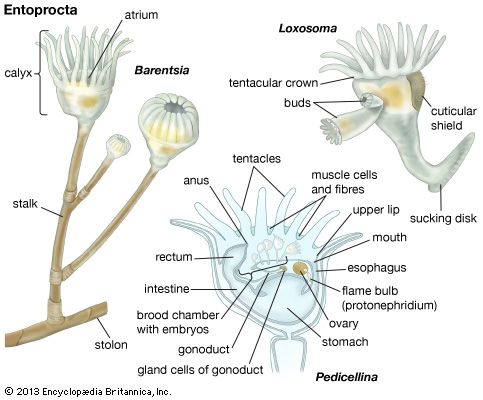
- Zoology: It describes various cup-shaped structures found in animals, such as the body wall of a crinoid.1
The word originates from the Greek kalyx, which is related to the term “chalice”.1
What are the other parts of a flower besides the calyx?
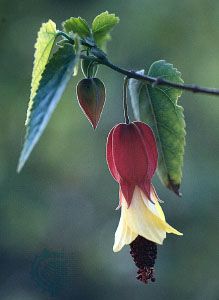
Beyond the calyx (the collection of sepals), a complete flower is typically composed of three other primary organs attached to a receptacle:34
- Corolla: This layer consists of petals, which are often brightly colored or fragrant to attract pollinators. Together, the calyx and the corolla form the perianth.345
- Androecium: This is the male reproductive portion of the flower, composed of stamens. Each stamen typically includes a filament supporting an anther, which produces pollen.364
- Gynoecium: Located at the center of the flower, this is the female reproductive portion. It consists of one or more carpels (collectively referred to as the pistil). The pistil is generally divided into the stigma, style, and ovary, which houses the ovules.34
Additionally, flowers are often attached to the plant by a stalk known as a peduncle or, in clustered inflorescences, a smaller stalk called a pedicel.4
How do pollinators interact with the different parts of a flower?
Pollinators interact with various floral parts through a complex array of adaptations designed to facilitate the transfer of pollen from the anthers to the stigma. These interactions are often highly specialized:78
- Attraction and Landing: Many flowers use the corolla (petals) as a visual or olfactory lure. Bee-pollinated flowers often feature a bilaterally symmetrical corolla with a lower lip that serves as a landing platform. In contrast, wind-pollinated flowers are typically reduced, lacking showy petals to save energy.7910
- Nectar and Feeding: Many pollinators visit flowers to feed on nectar, which is often produced at the base of the corolla or in specialized nectaries. As pollinators like bees reach for nectar, they brush against the stamens and stigma, inadvertently picking up or depositing pollen.79
- Deception and Manipulation: Some plants, particularly orchids, use deceptive tactics. For example, Ophrys orchids mimic the scent and appearance of female insects to attract males, which then pick up pollen packets called pollinia during attempted copulation. Other plants, like the cuckoopint, use traps to temporarily hold insects, ensuring they are coated in pollen before release.1011
- Specialized Mechanisms: Some plants require specific interactions, such as “buzz pollination” (sonication), where bees must vibrate the anthers at a specific frequency to release pollen. Others, like certain tropical plants, use “puff pollination,” where a bird’s movement triggers a mechanism that blasts pollen onto the visitor.10
What is the role of the calyx in the human kidney?
The term “calyx” in human anatomy refers to cuplike cavities within the kidney that collect urine, rather than a part of a flower. These structures are essential components of the renal pelvis, which serves as the initial reservoir for urine before it travels to the ureter and bladder.1213
The system is organized into two types of calyces:
- Minor calyxes: These are small, cuplike cavities into which the renal papillae project. Urine flows from the collecting tubules of the nephrons into these minor calyxes.1413
- Major calyxes: Several minor calyxes open into two or three larger major calyxes, which subsequently drain into the renal pelvis.1413
The calyxes play an active role in urine transport. Their muscle fibers initiate peristaltic movements—periodic waves of contraction—that help push urine through the renal pelvis and into the ureter.1214
Sources
- Calyx — Encyclopædia Britannica
- calyx — Merriam-Webster
- Angiosperm - General features — Encyclopædia Britannica
- Stamen — Encyclopædia Britannica
- 5 Fast Facts About Flower Anatomy — Encyclopædia Britannica
- Angiosperm - The corolla — Encyclopædia Britannica
- Angiosperm - Pollination — Encyclopædia Britannica
- Botanical Sex: 9 Alluring Adaptations — Encyclopædia Britannica
- Plant - Flowers — Encyclopædia Britannica
- mimicry - Orchids — Encyclopædia Britannica
- orchid - Bee pollination — Encyclopædia Britannica
- renal pelvis — Encyclopædia Britannica
- nephron — Encyclopædia Britannica
- renal system - Urine collection and emission — Encyclopædia Britannica
- renal system - Internal configuration — Encyclopædia Britannica
Published on · 3 min read