Nepal Himalayas
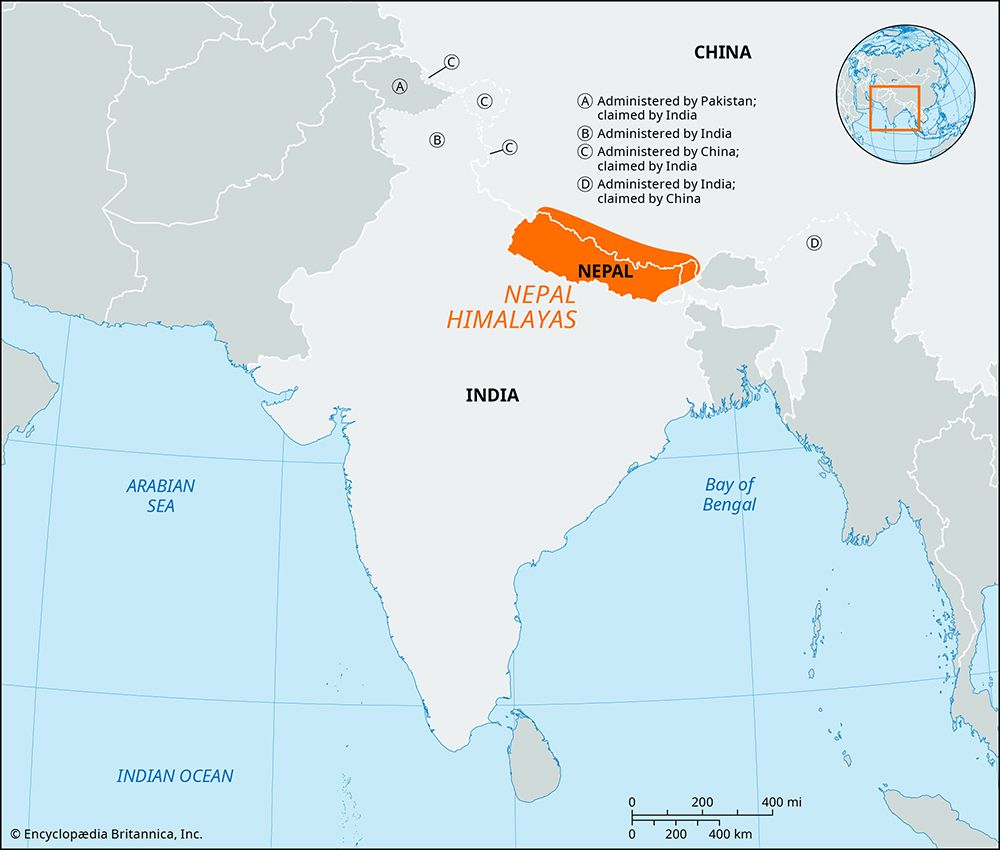
The Nepal Himalayas serve as a critical geopolitical buffer, defining Nepal’s status as a landlocked nation positioned between the regional powers of India…
How do the Nepal Himalayas influence the geopolitical relationships between Nepal and its neighboring countries?
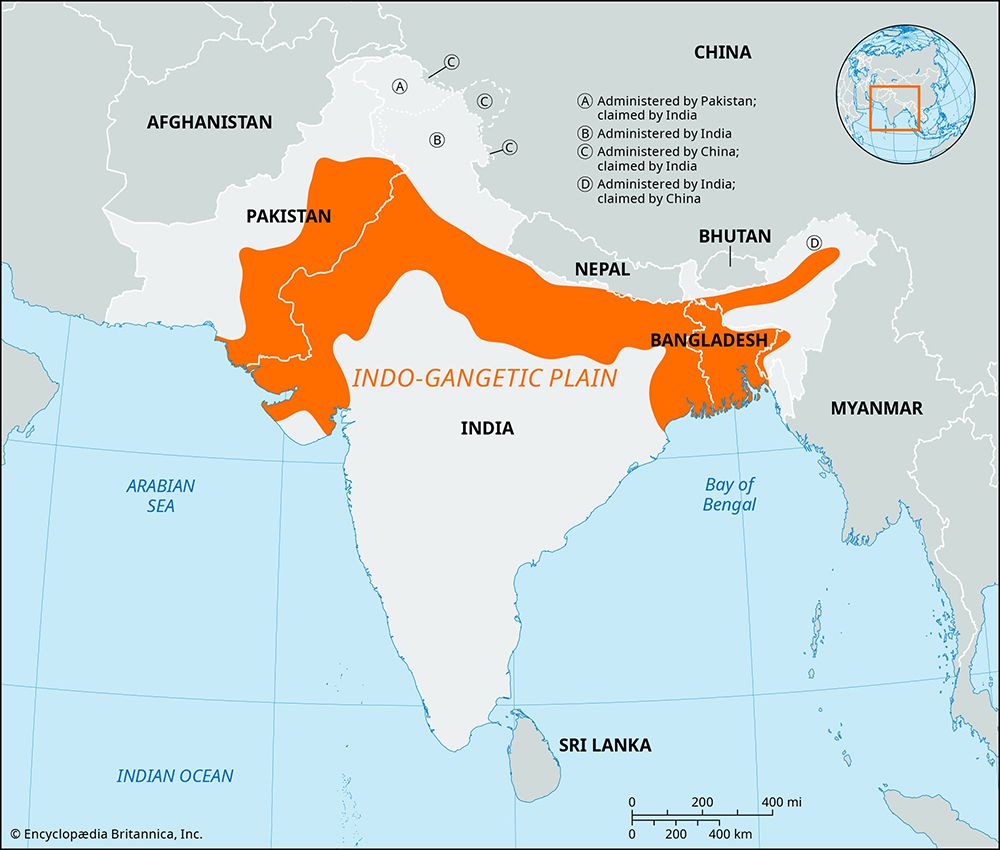
The Nepal Himalayas serve as a critical geopolitical buffer, defining Nepal’s status as a landlocked nation positioned between the regional powers of India and China.1
The mountain range acts as a formidable physical barrier that has historically influenced Nepal’s foreign policy, which centers on maintaining a delicate balance between its two neighbors to preserve its independence. Strategically, a sovereign Nepal prevents China from gaining direct access to the Gangetic Plain, marking the southern limit of the Chinese sphere of influence.1
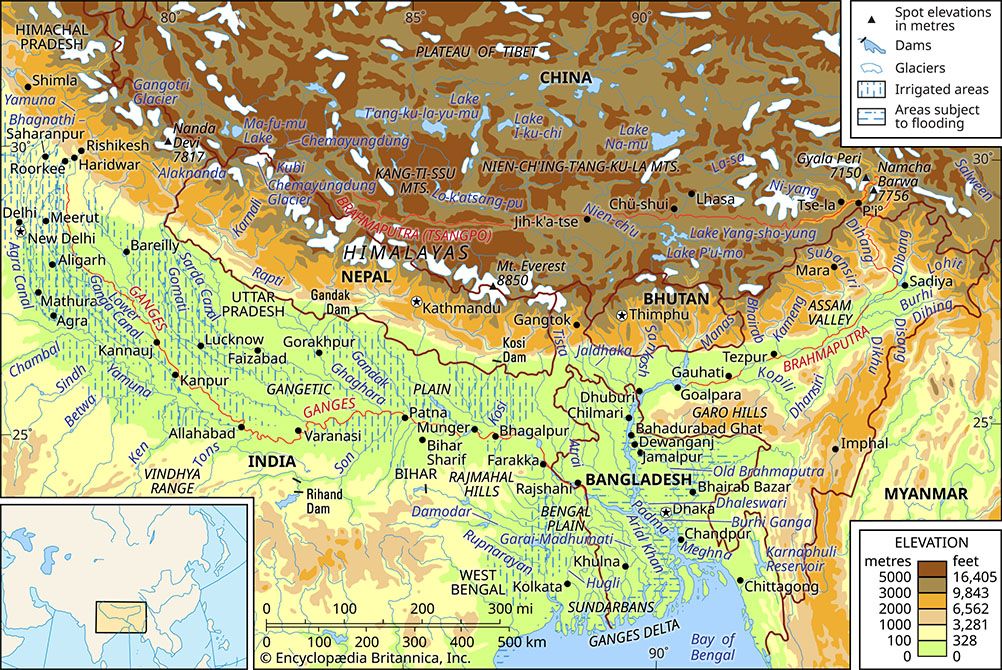
While the mountains historically impeded travel, modern infrastructure—such as highways connecting Kathmandu to both India and Tibet—has increased accessibility. Despite this, Nepal remains economically dependent on India for trade and sea access, a reliance that has occasionally caused friction. Consequently, Nepal’s strategic location has made it a focus for international economic assistance, as global powers recognize the importance of its position between these two giants.231
What is the importance of the Nepal Himalayas in terms of water resources for Asia?
The Nepal Himalayas are a vital “water tower” for Asia, serving as a primary source for major river systems that sustain hundreds of millions of people across the continent.89
Hydrological Significance
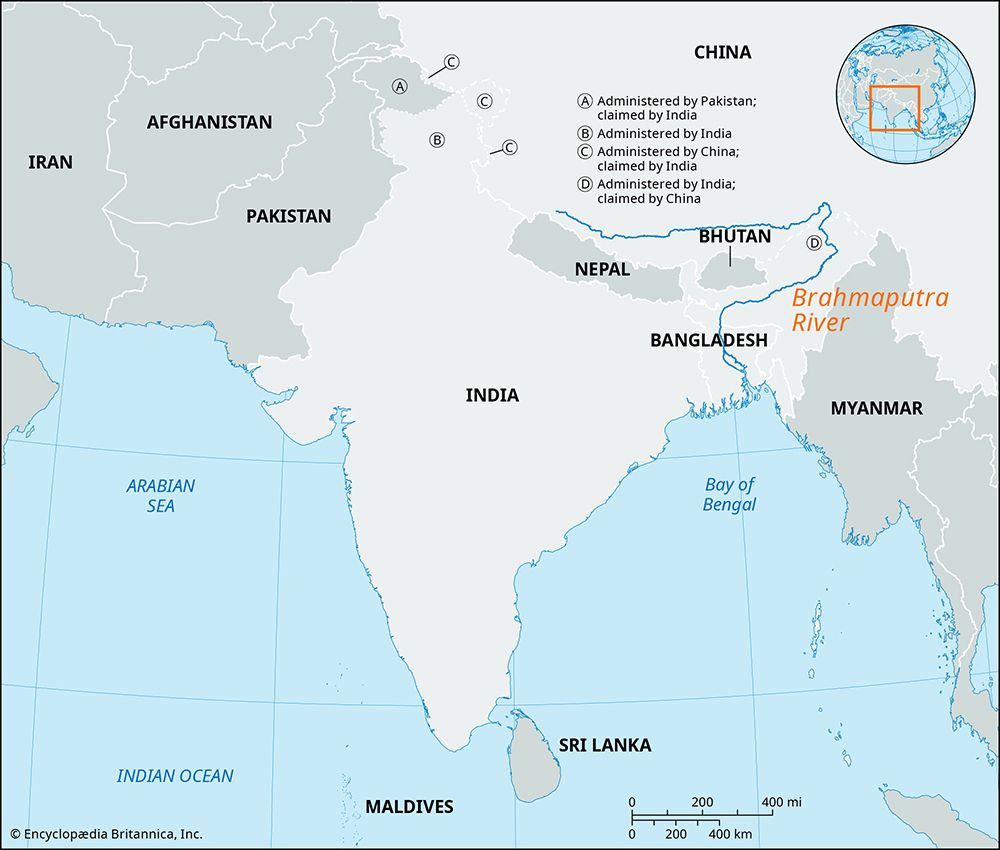
The region experiences some of the heaviest precipitation on Earth during the summer monsoon, which feeds into critical river systems, including the Ganges and Brahmaputra basins. These rivers are essential for irrigation, flood control, and food security throughout South Asia. Additionally, glaciers in the high elevations play a crucial role in regulating water flow, though many are currently in retreat due to climate change8.289
Economic and Strategic Potential
The steep topography of the Nepal Himalayas offers vast theoretical potential for hydroelectric power generation. While this resource could significantly benefit the region, its development is complex because the river basins span multiple countries, including Nepal, India, China, Bangladesh, and Bhutan. Consequently, water management remains a focal point of regional cooperation and occasional diplomatic tension regarding infrastructure projects, water allocation, and flood mitigation.1089
What unique flora and fauna can be found in the Nepal Himalayan region?
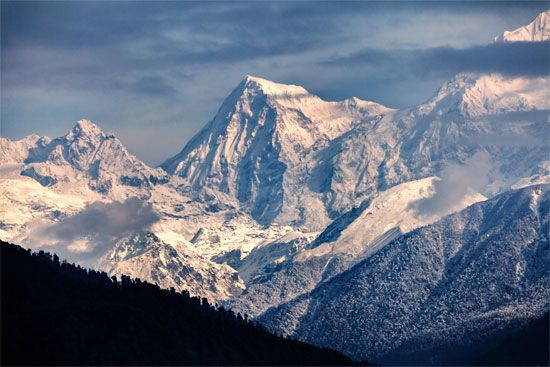
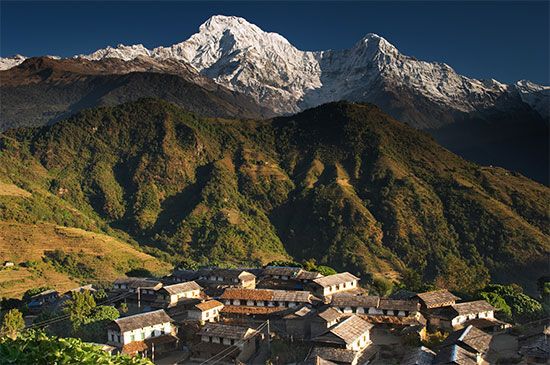
The Nepal Himalayan region possesses extraordinary biodiversity, with flora and fauna distributed across distinct zones determined by elevation, climate, and precipitation.12
Flora
The vegetation transitions from tropical to alpine as elevation increases:
- Tropical and Subtropical Zones: The Tarai and lower hills feature deciduous forests dominated by sal, sissoo, and Acacia catechu.1312
- Temperate Zone: Mid-mountain forests contain a mix of oaks, pines, walnuts, and rhododendrons.1312
- Alpine Zone: Above the tree line, vegetation includes juniper, birch, and various flowering plants, mosses, and lichens.1312
Fauna
The region hosts a diverse array of wildlife, though many species are endangered due to habitat loss and poaching:1415
- Lowlands (Tarai): Home to Bengal tigers, Indian rhinoceroses, elephants, and various deer species like sambar and swamp deer.161415
- Forests and Mid-mountains: Denizens include Asiatic black bears, clouded leopards, langurs, and muntjacs.121415
- High Elevations: Remote areas support snow leopards, brown bears, lesser pandas, musk deer, tahr, and Tibetan yaks.161415
- Avian and Aquatic Life: The region is rich in bird life, including lammergeiers and various pheasants, while rivers host fish such as the mahseer.1415
How has tourism in the Nepal Himalayas impacted the local economy and environment?
Tourism has become a vital component of the economy in the Nepal Himalayas, serving as an increasingly important source of income and employment for the region. While traditionally concentrated in the Kathmandu Valley, the industry has expanded significantly to include areas like Pokhara and the Mount Everest region, driven by improved air and ground transportation infrastructure.181913
However, this growth has introduced substantial environmental challenges. The influx of large numbers of trekkers and mountaineers has placed immense pressure on the region’s limited resources. Key environmental impacts include:18
- Resource Depletion: Excessive consumption of local resources by visitors and overgrazing by livestock have damaged fragile habitats, affecting species such as snow leopards, lesser pandas, and various birds.20
- Waste Accumulation: Mountaineering expeditions have historically left behind significant quantities of refuse, including tents, oxygen containers, and human waste.20
- Environmental Degradation: Increased traffic and human activity have threatened the delicate ecological balance of high-altitude zones.3
In response, local communities and the government have implemented reforestation programs and cleanup initiatives, such as the Eco Everest Expeditions, to mitigate these damages and promote more sustainable practices.20
Sources
- Himalayas — Encyclopædia Britannica
- Nepal Himalayas — Encyclopædia Britannica
- Himalayas - Transportation — Encyclopædia Britannica
- India-China relations - China’s relations with India’s neighbors — Encyclopædia Britannica
- Nepal - Trade — Encyclopædia Britannica
- Nepal - Prehistory and early history — Encyclopædia Britannica
- Nepal — Encyclopædia Britannica
- Himalayas - Drainage of the Himalayas — Encyclopædia Britannica
- Nepal - Drainage — Encyclopædia Britannica
- Asia - Water resources — Encyclopædia Britannica
- South Asia - Water sharing — Encyclopædia Britannica
- Exploring 7 of Earth’s Great Mountain Ranges - Himalayas — Encyclopædia Britannica
- Mount Everest - Environmental issues — Encyclopædia Britannica
- Himalayas - Animal life — Encyclopædia Britannica
- Nepal - Animal life — Encyclopædia Britannica
- Nepal - Plant life — Encyclopædia Britannica
- Himalayas - Plant life — Encyclopædia Britannica
- Nepal - Tourism — Encyclopædia Britannica
- Himalayas - Resources — Encyclopædia Britannica
- Himalayas - Study and exploration — Encyclopædia Britannica
- Uttarakhand - Services — Encyclopædia Britannica
Published on · 3 min read