Parry Islands
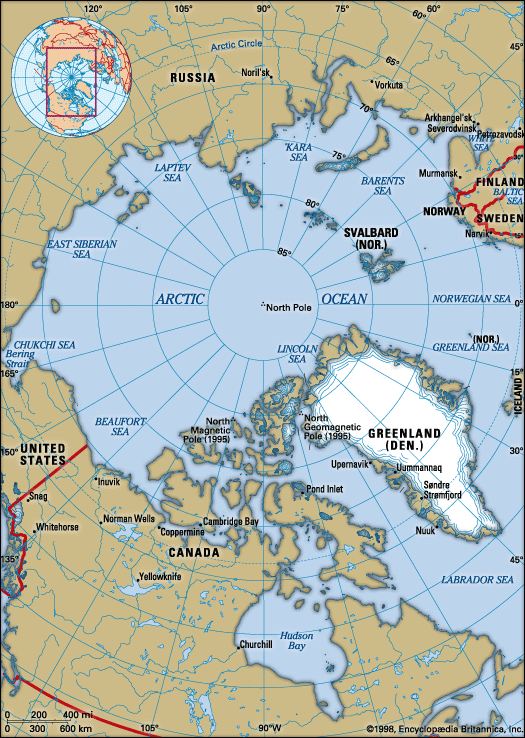
The Parry Islands are an archipelago located in the Arctic Ocean within Canada, spanning the territories of Nunavut and the Northwest Territories. They form…
What is Parry Islands?
The Parry Islands are an archipelago located in the Arctic Ocean within Canada, spanning the territories of Nunavut and the Northwest Territories. They form part of the Queen Elizabeth Islands and are situated south and west of Ellesmere Island.12
The major islands within this group include:
- Devon Island
- Cornwallis Island
- Bathurst Island
- Melville Island
- Prince Patrick Island
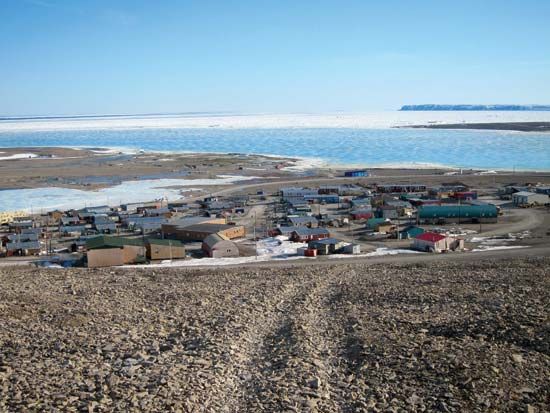
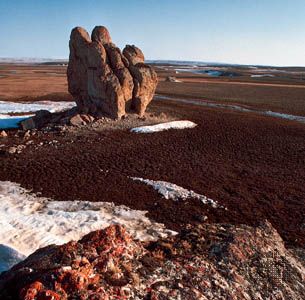
These islands were discovered in 1819 by the British explorer Sir William Parry. The region is characterized by its remote Arctic environment and generally lacks permanent human habitation.34
Who was Sir William Parry?
Sir William Parry was a prominent British naval officer and explorer best known for his significant contributions to the search for the Northwest Passage during the 19th century.5
Initially serving as second-in-command to John Ross in 1818, Parry became convinced that a navigable route existed where others had seen only bays. His subsequent independent expeditions demonstrated his persistence and skill in Arctic exploration:5
- 1819–1820: Commanding the HMS Hecla and Griper, he successfully navigated through Lancaster Sound to Melville Island, where he spent the winter.5
- 1821–1823: He explored the route through Foxe Basin, though his progress was ultimately halted by ice in the Fury and Hecla Strait.5
- 1824–1825: On a third voyage, he conducted further exploration of Prince Regent Inlet.5
Parry’s efforts were instrumental in mapping large portions of the Canadian Arctic Archipelago and provided a foundation for later explorers seeking to unlock the mysteries of the Arctic.5
What wildlife lives in the Canadian Arctic?
The Canadian Arctic is home to a diverse range of wildlife adapted to its harsh, cold environment. Because the region lacks frost-free winter refuges, there are no reptiles, and only one amphibian—the wood frog—is found just north of the tree line in Arctic Canada.6
Land Mammals
Many land mammals are circumpolar in distribution. Key species include:
- Herbivores: Caribou, musk oxen, Arctic hares, and various lemmings (brown and collared).678
- Predators: Arctic wolves, Arctic foxes, red foxes, wolverines, ermines, and grizzly bears6.78
Marine Life
The coastal waters and sea ice support a distinct set of animals:
- Marine Mammals: Polar bears are essentially aquatic animals that rely on sea ice to hunt seals. Other species include beluga whales, narwhals, bowhead whales, walruses, and various seals.698
- Fish: Freshwater and anadromous species include Arctic char, lake trout, whitefish, and Arctic grayling.689
Birds
While most Arctic birds are migratory, a few species remain year-round, such as the snowy owl, gyrfalcon, and ptarmigan. During the summer, millions of migratory birds, including ducks, geese, and various shorebirds, nest in the region.68
What are the Queen Elizabeth Islands?
The Queen Elizabeth Islands are a group of islands located within the Canadian Arctic Archipelago, encompassing all landmasses north of latitude 74°30′ N.14
Geography and Composition
This region includes the Parry and Sverdrup island groups and covers a total land area exceeding 150,000 square miles (390,000 square km). The largest islands in the group include:14
- Ellesmere Island
- Melville Island
- Devon Island
- Axel Heiberg Island14
History and Administration
While the islands were likely first visited by the Vikings around 1000 CE, they were partially explored by English navigators William Baffin and Robert Bylot between 1615 and 1616. They were officially named in 1953 to honor Queen Elizabeth II. Administratively, the region is divided between the Northwest Territories, which governs the westernmost areas, and the territory of Nunavut, which administers the majority of the islands.1415
Sources
- Parry Islands — Encyclopædia Britannica
- Parry Islands — Merriam-Webster
- Melville Island — Encyclopædia Britannica
- Bathurst Island — Encyclopædia Britannica
- Arctic - 19th-century attempts at the passage — Encyclopædia Britannica
- Arctic - Animals of the land and fresh water — Encyclopædia Britannica
- Polar ecosystem - Biota of the Arctic — Encyclopædia Britannica
- Inuit: Top Questions — Encyclopædia Britannica
- Arctic - Adaptations to local environments — Encyclopædia Britannica
- Nunavut - Plant and animal life — Encyclopædia Britannica
- Arctic - Climate of the Arctic — Encyclopædia Britannica
- Arctic - Marine fauna — Encyclopædia Britannica
- Arctic National Wildlife Refuge — Encyclopædia Britannica
- Queen Elizabeth Islands — Encyclopædia Britannica
- Queen Elizabeth Islands — Merriam-Webster
Published on · 3 min read