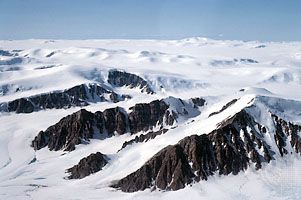
Queen Elizabeth Islands
The Queen Elizabeth Islands are a group of islands located within the Canadian Arctic Archipelago, specifically comprising all islands situated north of…
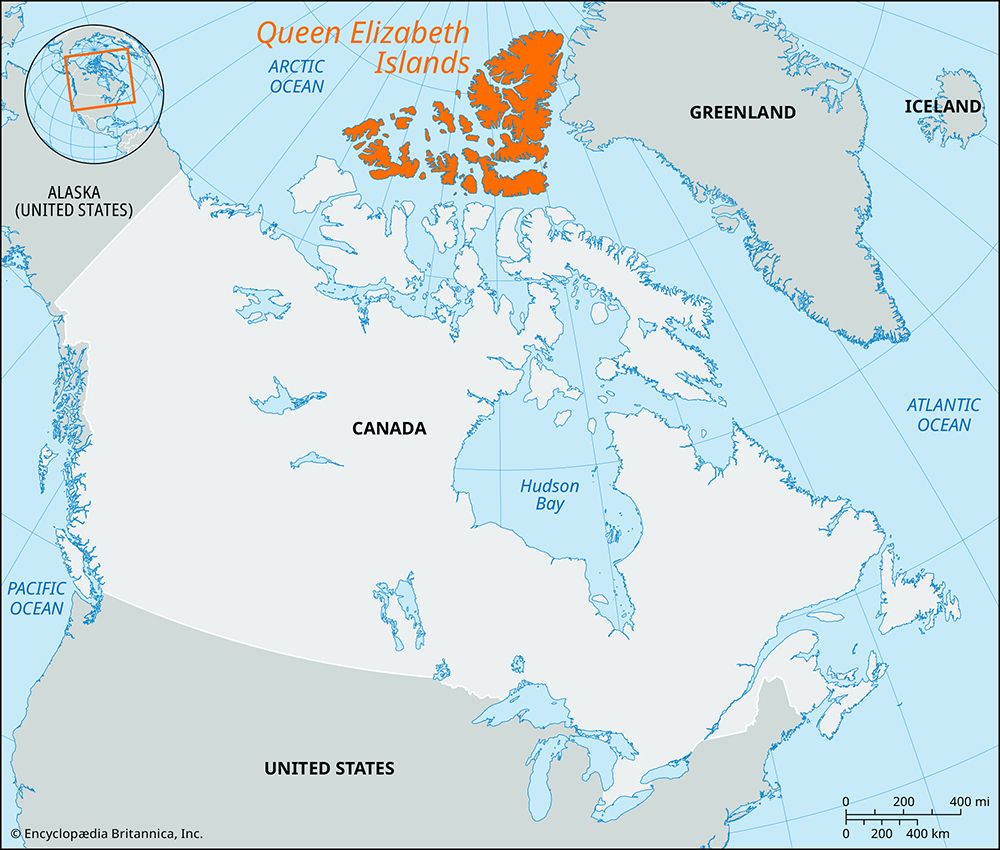
What is Queen Elizabeth Islands?
The Queen Elizabeth Islands are a group of islands located within the Canadian Arctic Archipelago, specifically comprising all islands situated north of latitude 74°30′ N. This region includes the Parry and Sverdrup island groups, with major landmasses such as Ellesmere Island, Melville Island, Devon, and Axel Heiberg.12
Spanning a total land area exceeding 150,000 square miles (390,000 square km), the islands were named in 1953 to honor Queen Elizabeth II. While Vikings likely first visited the area around 1000 CE, European exploration was later conducted by navigators such as William Baffin and Robert Bylot. Administratively, the region is divided between the Northwest Territories, which governs the westernmost areas like Prince Patrick Island, and the territory of Nunavut, which administers the majority of the islands.12
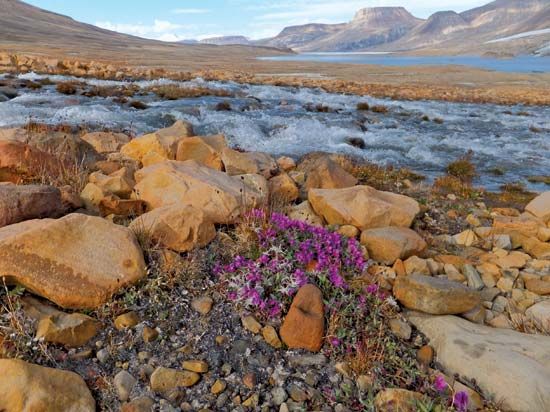
What kind of wildlife lives in the Canadian Arctic?
The wildlife of the Canadian Arctic is adapted to a harsh, fragile environment characterized by long, cold winters and short growing seasons. Because the region lacks the species diversity found in temperate or tropical zones, its ecosystems are highly sensitive to environmental changes.34
Mammals
The Arctic is home to a variety of land and marine mammals. Key species include:
- Herbivores: Caribou, musk oxen, and Arctic hares graze on the sparse tundra vegetation.354
- Predators: Wolves, Arctic foxes, wolverines, and ermines are common predators.35
- Marine Mammals: Polar bears are iconic residents that rely on sea ice to hunt seals. Coastal waters also host walruses, beluga whales, narwhals, and bowhead whales.345
- Small Mammals: Various species of lemmings and ground squirrels are present.36
Birds
While many birds are migratory, visiting the Arctic during the summer to breed, only a few species remain year-round.
- Resident Species: The snowy owl, gyrfalcon, ptarmigan, and raven are among the few birds that endure the Arctic winter.354
- Migratory Species: Millions of birds, including snow geese, Canada geese, peregrine falcons, and various shorebirds, nest in the region during the summer months.354
Other Fauna
- Fish: Freshwater species include Arctic char, lake trout, and whitefish.6
- Insects: During the brief summer, the tundra is home to large populations of insects, particularly mosquitoes and blackflies.65
- Amphibians: There are no reptiles in the Arctic, and only one amphibian, the wood frog, is known to penetrate just north of the tree line in Canada.36
How does the climate affect life on these islands?
The climate of the Queen Elizabeth Islands and the broader Arctic exerts a profound influence on life, creating a harsh, fragile environment that dictates the survival strategies of all local species.1112
Environmental Challenges
Arctic life must contend with extreme conditions, including low temperatures, strong winds, and a very short growing season. Because there are no frost-free winter refuges, warm-blooded animals cannot hibernate and must remain active throughout the winter. Plants are similarly adapted, often growing in compact cushions for protection or reproducing asexually to survive the brief, intense summer cycle.1213
Adaptations to Climate
- Physical Traits: Large herbivores like musk oxen possess thick coats and large body sizes, which help conserve heat by reducing surface area relative to volume.11
- Behavioral Shifts: Many animals, such as Arctic foxes and ptarmigans, undergo seasonal color changes, developing white coats in winter for camouflage against the snow.11
- Migration: Many bird species migrate to the Arctic during the summer to take advantage of the long daylight hours and high food productivity, returning to warmer climates for the winter.13
Impact of Climate Change
Climate change is significantly altering these ecosystems. Rising temperatures are causing a reduction in sea ice, which is critical for species like polar bears that rely on ice floes to hunt seals. As ice cover decreases and gaps widen, these predators face increased difficulty in capturing prey, leading to declines in their physical condition and reproductive success.1415
What are the main differences between Nunavut and the Northwest Territories?
The primary difference between Nunavut and the Northwest Territories is rooted in their political and cultural history, specifically the division of the latter to create the former in 1999.1718
Key Distinctions
- Origin and Creation: Nunavut was established on April 1, 1999, out of the eastern portion of the Northwest Territories following the Nunavut Land Claims Agreement Act. This division was driven by the Inuit desire for greater control over their own administration and resource development.1719
- Demographics and Culture: Nunavut is an ethnic-based territory where the Inuit constitute the vast majority of the population, reflecting a reawakening of native culture. In contrast, the Northwest Territories has a more diverse population, with First Nations (primarily Dene) and Métis making up more than one-third of the residents, alongside a significant population of European descent.1720
- Geography: The creation of Nunavut reduced the land area of the Northwest Territories by more than half. The Northwest Territories is now bordered by Nunavut to the east, while its own economy is heavily influenced by energy and diamond-mining industries.1819
Sources
- Queen Elizabeth Islands — Encyclopædia Britannica
- Queen Elizabeth Islands — Merriam-Webster
- Polar ecosystem - Biota of the Arctic — Encyclopædia Britannica
- Arctic - Animals of the land and fresh water — Encyclopædia Britannica
- Falconiform - Migration — Encyclopædia Britannica
- Inuit: Top Questions — Encyclopædia Britannica
- Arctic - Adaptations to local environments — Encyclopædia Britannica
- Nunavut - Plant and animal life — Encyclopædia Britannica
- Arctic National Wildlife Refuge — Encyclopædia Britannica
- Canada - Tundra — Encyclopædia Britannica
- Tundra - Arctic mammals — Encyclopædia Britannica
- Arctic - Vegetation — Encyclopædia Britannica
- Antarctica - Plant life — Encyclopædia Britannica
- sea ice - The emerging impacts of recent changes to sea ice — Encyclopædia Britannica
- Arctic - Environmental concerns — Encyclopædia Britannica
- Global warming: Top Questions — Encyclopædia Britannica
- Nunavut - History of Nunavut — Encyclopædia Britannica
- Northwest Territories - History of the Northwest Territories — Encyclopædia Britannica
- Northwest Territories — Encyclopædia Britannica
- Northwest Territories - Population composition — Encyclopædia Britannica
Published on · 4 min read