Melville Island
There are two distinct locations known as Melville Island.
What is Melville Island?
There are two distinct locations known as Melville Island.
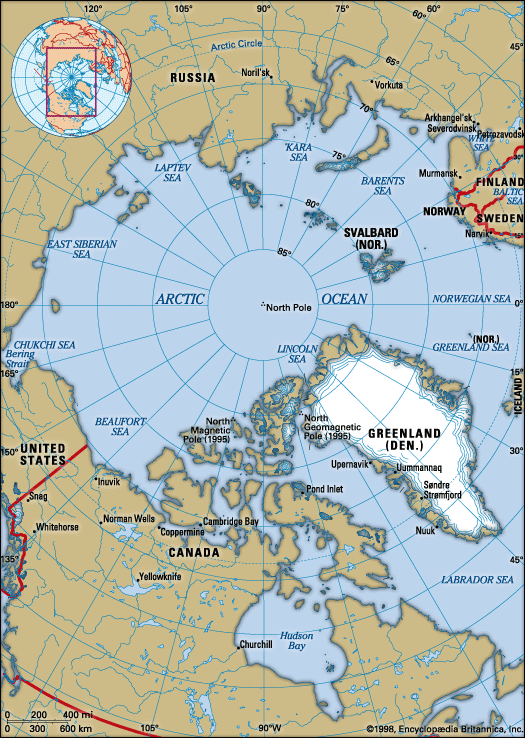
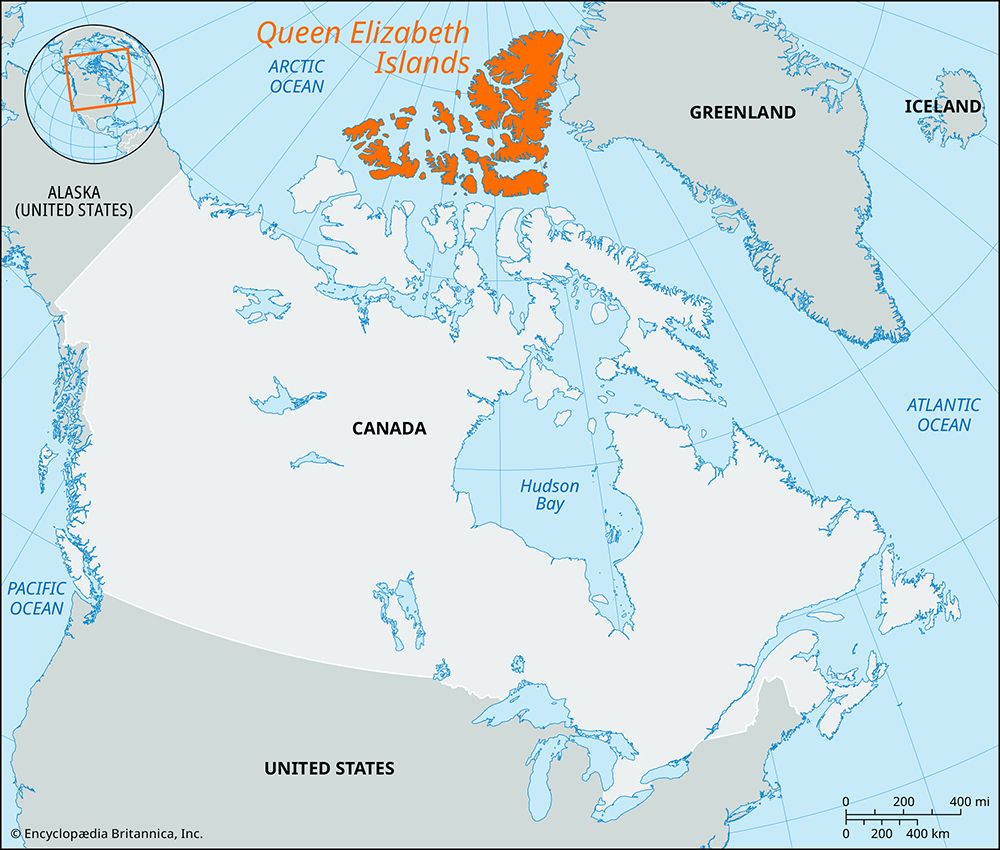
The first is a large, uninhabited island in the Arctic Ocean, Canada. Part of the Parry Islands and the Queen Elizabeth Islands, it is divided between the Northwest Territories and Nunavut. Covering 16,274 square miles, it features natural-gas deposits and supports wildlife like musk-oxen. It was discovered in 1819 by Sir William Parry.12
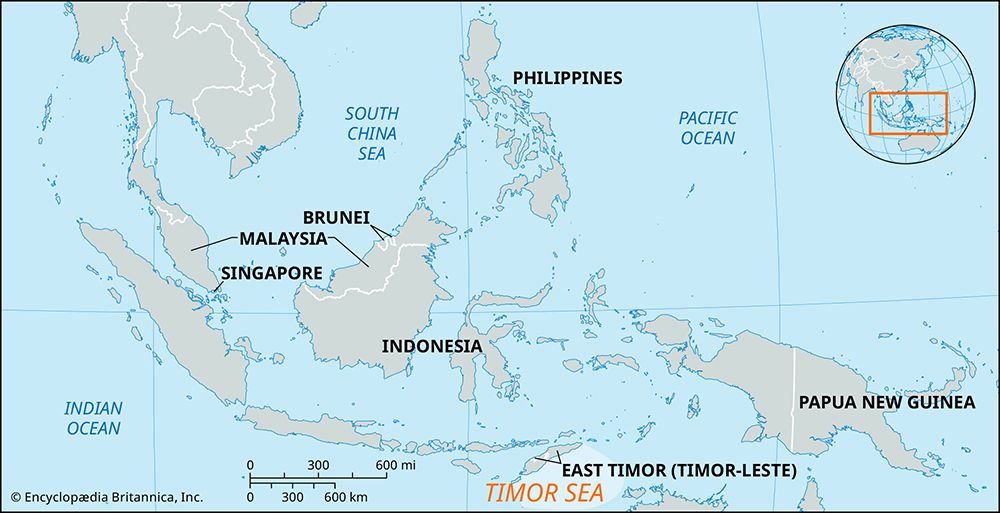
The second is an island in the Timor Sea, Australia, located in the Northern Territory. Along with Bathurst Island, it forms the Tiwi Islands, which have been home to the Aboriginal Tiwi people for thousands of years. Since 1978, ownership has been held by the Tiwi Land Council, and the islands are governed by the Tiwi Islands Local Government.3
What are the Queen Elizabeth Islands?
The Queen Elizabeth Islands are a group of islands located within the Canadian Arctic Archipelago, situated north of latitude 74°30′ N. This region encompasses both the Parry and Sverdrup island groups, covering a total land area exceeding 150,000 square miles (390,000 square km).25
Key features of the region include:
- Major Islands: The largest islands in the group are Ellesmere, Melville, Devon, and Axel Heiberg.2
- Administration: The islands are divided between the Northwest Territories, which governs the westernmost areas, and the territory of Nunavut, which administers the majority of the region.2
- History: While Vikings likely visited the area around 1000 CE, European exploration began with William Baffin and Robert Bylot in 1615–16. The islands were officially named in 1953 to honor Queen Elizabeth II.2
What kind of wildlife lives in the Canadian Arctic?
The Canadian Arctic supports a specialized range of wildlife adapted to the harsh, cold conditions of the tundra and polar barrens. Because the region lacks the diversity found in temperate zones, its ecosystems are particularly fragile and sensitive to environmental change.67
Land Mammals
The region is home to several iconic herbivores and predators:
- Herbivores: Caribou, musk oxen, Arctic hares, and lemmings are primary residents that feed on tundra vegetation.687
- Predators: Arctic foxes, wolves, wolverines, and ermine are common. Larger predators include grizzly bears and brown bears.689
Marine and Coastal Life
The coastal areas and sea ice are vital habitats for:
- Polar Bears: These are primarily creatures of the sea ice that rely on seals for food.67
- Marine Mammals: Walrus, beluga whales, bowhead whales, and narwhals inhabit the coastal waters.8
Birds and Other Fauna
- Resident Birds: Only a few species, such as the snowy owl, ptarmigan, and gyrfalcon, remain year-round.687
- Migratory Birds: Millions of aquatic birds, including snow geese and Canada geese, migrate to the tundra during the summer to nest.87
- Other: The region contains limited freshwater fish species, such as Arctic char and lake trout, and is plagued by biting insects like mosquitoes during the brief summer.1089
Who was Sir William Parry?
Sir William Parry (1790–1855) was a prominent British explorer and naval officer best known for his significant contributions to the search for the Northwest Passage during the 19th century.
Initially serving as second-in-command under Captain John Ross in 1818, Parry became convinced that a passage existed where Ross had seen only bays. His subsequent expeditions demonstrated his persistence and skill in Arctic navigation:
- 1819–1820: Commanding HMS Hecla and Griper, he successfully navigated through Lancaster Sound to Melville Island, where he spent the winter.
- 1821–1823: He attempted a route through the Foxe Channel, leading to the discovery of the Fury and Hecla Strait, which was named after his ships.
- 1824–1825: On his third voyage, he explored the Prince Regent Inlet.
Parry’s extensive mapping and exploration efforts were foundational to the geographic understanding of the Canadian Arctic Archipelago. His legacy is also reflected in the naming of the Parry Islands, a group within the Queen Elizabeth Islands.
Sources
- Melville Island — Encyclopædia Britannica
- Queen Elizabeth Islands — Encyclopædia Britannica
- Melville Island — Merriam-Webster
- Bathurst Island — Encyclopædia Britannica
- Queen Elizabeth Islands — Merriam-Webster
- Polar ecosystem - Biota of the Arctic — Encyclopædia Britannica
- Arctic - Animals of the land and fresh water — Encyclopædia Britannica
- Nunavut - Plant and animal life — Encyclopædia Britannica
- Inuit: Top Questions — Encyclopædia Britannica
- Arctic - Adaptations to local environments — Encyclopædia Britannica
- Arctic National Wildlife Refuge — Encyclopædia Britannica
- sea ice - The emerging impacts of recent changes to sea ice — Encyclopædia Britannica
- Canada - Tundra — Encyclopædia Britannica
- Parry Islands — Encyclopædia Britannica
- Arctic - 19th-century attempts at the passage — Encyclopædia Britannica
Published on · 3 min read