Sea Kale
Sea kale (Crambe maritima) is a hardy perennial plant belonging to the mustard family (Brassicaceae). Native to the seashores and cliffs of Eurasia, it is…
What is sea kale?
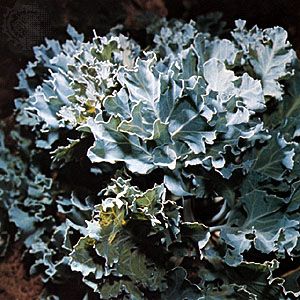
Sea kale (Crambe maritima) is a hardy perennial plant belonging to the mustard family (Brassicaceae). Native to the seashores and cliffs of Eurasia, it is well-adapted to salty, sandy, and well-drained soils.12
The plant is characterized by its waxy, blue-green, coarsely toothed leaves and fragrant, white, four-petaled flowers that bloom in early summer.1
Sea kale is sometimes cultivated as a potherb for its edible parts:
- Leaves: Young or blanched leaves are prepared similarly to kale or spinach.
- Shoots: These are often cooked and served in a manner similar to asparagus.1
The plant relies on cross-pollination to reproduce and develops round, corky seed pods.1
What other plants belong to the mustard family?
The mustard family, Brassicaceae, is a large and diverse group of flowering plants comprising approximately 350 genera and over 4,100 species. Often called “crucifers” due to their cross-shaped flowers, these plants are known for their pungent, sulfur-containing compounds called glucosinolates.34
Many members of this family are economically significant, serving as essential food crops or popular ornamentals.53
Common Food Crops
- Brassica genus: Includes broccoli, cabbage, Brussels sprouts, cauliflower, kale, kohlrabi, rutabaga, and turnip.563
- Other vegetables and herbs: Arugula, bok choy, horseradish, maca, radish, wasabi, and watercress.54
- Mustards: Brown mustard and white mustard.53
Ornamental Species
- Basket-of-gold (Aurinia saxatilis)
- Candytuft (Iberis species)
- Dame’s rocket (Hesperis matronalis)
- Honesty (Lunaria species)
- Rock cress (Arabis species)
- Stock (Matthiola species)
- Sweet alyssum (Lobularia maritima)
- Wallflower (Erysimum species)543
How does the process of blanching vegetables work?
Blanching is a thermal process primarily used to prepare vegetables for freezing, drying, or canning. The process involves heating vegetables in hot water (typically 88 °C or 190 °F) for two to five minutes, or exposing them to steam (100 °C or 212 °F) for one-half to one minute.78
This technique serves several critical functions:
- Enzyme Inactivation: It stops the activity of natural enzymes that would otherwise cause discoloration, off-flavors, and aromas during storage.87
- Microbial Reduction: It lowers the number of microorganisms present on the produce.87
- Tissue Preparation: It wilts or softens leafy vegetables, making them easier to pack into containers.87
- Gas Removal: It helps remove entrapped gases from the plant tissues.7
After the heating phase, vegetables must undergo rapid cooling in cold water or air to ensure quality retention. In some culinary contexts, the term is also used to describe pouring boiling water over produce to loosen its outer skin.89
What makes a plant able to survive in salty soil?
Plants that are adapted to survive in saline environments are known as halophytes. While high salt concentrations in soil typically cause plants to dehydrate through osmosis—a process where water is drawn out of the roots and into the salty soil—halophytes have evolved specialized mechanisms to thrive under these conditions.1112
Key adaptations include:
- Salt Accumulation: Some plants, such as glassworts, can tolerate high salinity by actively accumulating salts within their stems and leaves, which helps them maintain an internal osmotic balance.12
- Salt Excretion: Certain plants possess specialized structures called salt glands, which are capable of excreting concentrated salt solutions to prevent toxic buildup within their tissues.13
- Selective Uptake: Plants utilize structural barriers, such as the Casparian strip, to control the substances entering their roots. This allows them to regulate the uptake of ions, often favoring essential nutrients like potassium over sodium.14
These adaptations allow halophytes to maintain water uptake and metabolic function even in environments where most agricultural crops would suffer from dehydration and nutrient deficiency.1112
Sources
- sea kale — Encyclopædia Britannica
- sea kale — Merriam-Webster
- list of economically important members of the family Brassicaceae — Encyclopædia Britannica
- Brassicales - Brassicaceae , Capparaceae, and Cleomaceae — Encyclopædia Britannica
- brassica — Encyclopædia Britannica
- Brassicaceae — Encyclopædia Britannica
- vegetable processing - Blanching — Encyclopædia Britannica
- boiling — Encyclopædia Britannica
- vegetable processing - Freezing — Encyclopædia Britannica
- food preservation - Blanching — Encyclopædia Britannica
- salinity — Encyclopædia Britannica
- Salt marsh — Encyclopædia Britannica
- salt gland — Merriam-Webster
- Angiosperm - Uptake of water and mineral nutrients from the soil — Encyclopædia Britannica
Published on · 3 min read